Guide

DJI Alternatives: Non-DJI Drones for Industrial Use [New for 2026]

Looking for DJI alternatives? We’ve got you covered.

→ Jump to all the non-DJI drones currently available from MFE.

DJI has dominated the drone market for years—and in a lot of ways, it created that market. But recent uncertainty about the future availability of DJI platforms has people looking for other options.

U.S. policy shifts, procurement rules, and supply-chain uncertainty have made it harder to plan around DJI for the long term.

This is especially true now that new DJI drone models won’t be available in the U.S., following the FCC putting all new foreign-made drones to its Covered List. (This is commonly called the DJI ban—learn more in our in-depth guide.)

As a result, interest in DJI alternatives has surged.

This guide focuses on non-DJI drones used for commercial and industrial work, with an emphasis on platforms that MFE Inspection Solutions actively sells and rents. 

Quick DJI Alternatives Facts

  • New foreign-made drones face increasing barriers to entering the U.S. market
  • Existing DJI drones can still fly, but long-term availability and support are less certain
  • Many organizations now require NDAA-compliant or non-DJI platforms for procurement
  • MFE supports multiple non-DJI drones purpose-built for industrial and public-sector work

Non-DJI Drones Available from MFE

As access to new DJI platforms becomes less certain, many organizations are rethinking how they source and expand their drone fleets. The challenge isn’t finding “a DJI replacement” in the abstract—it’s identifying platforms that are available today, supported long term, and capable of handling real industrial work. Keep reading for the top DJI alternatives on the market.

Confined Space & Indoor Inspection

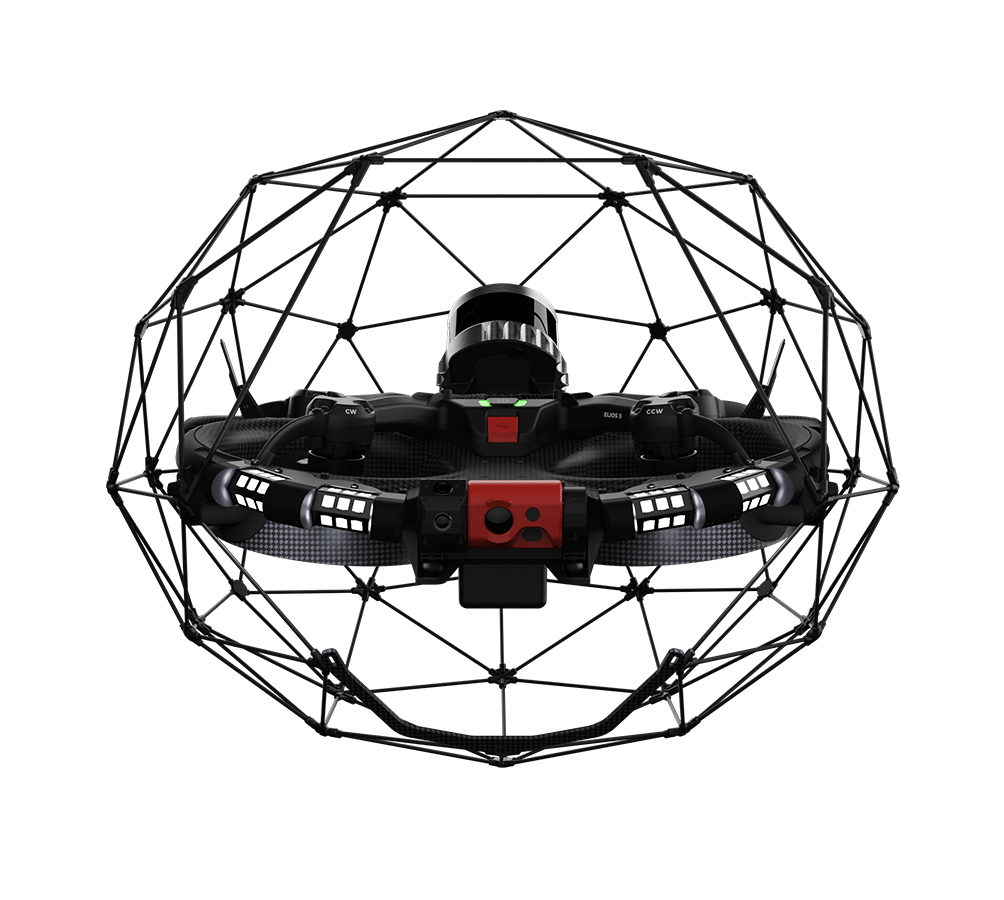
Elios 3

The Elios 3 is a purpose-built confined space inspection drone designed for environments where GPS is unavailable and human entry is dangerous or impractical. Unlike outdoor-focused DJI platforms, the Elios 3 is engineered from the ground up for indoor, enclosed, and complex assets.
  • Caged design for safe contact with structures in tight spaces.
  • Advanced stabilization and mapping for GPS-denied environments.
  • Optimized for tanks, vessels, boilers, sewers, and industrial enclosures.
  • Enables visual inspections without scaffolding, rope access, or shutdowns.
Buy or rent the Elios 3.

Elios 2

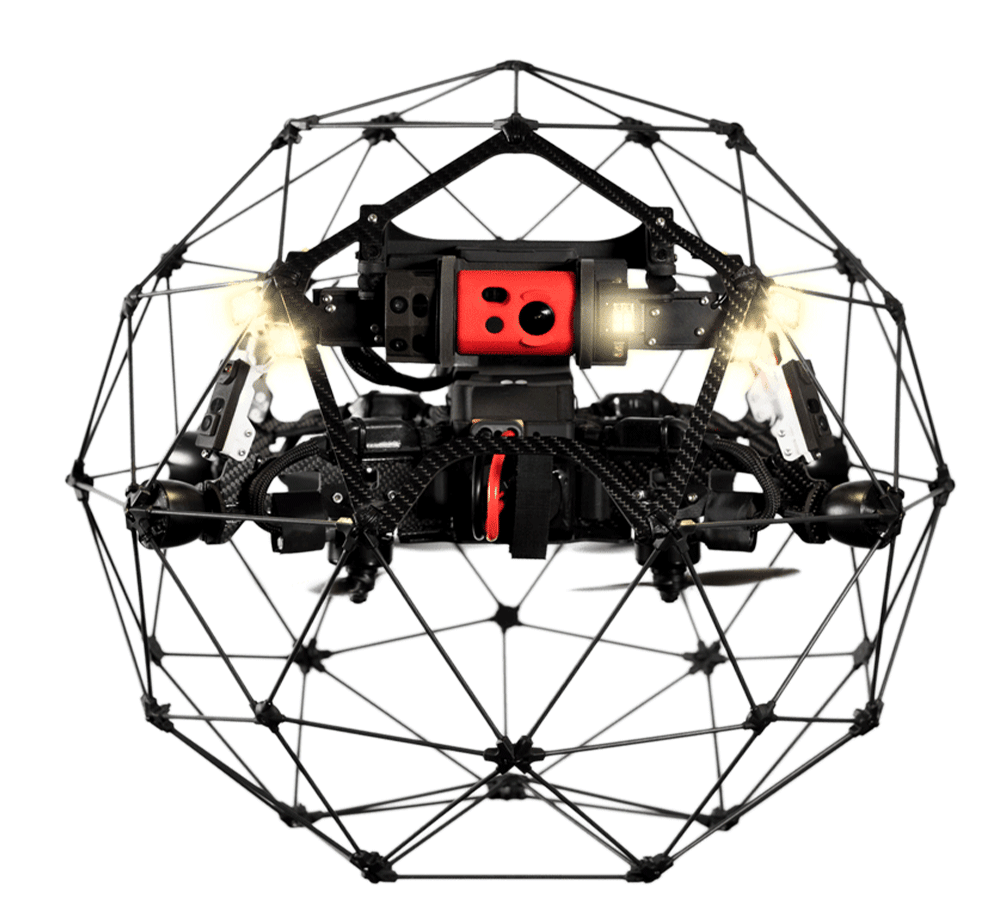
The Elios 2 remains a widely used platform for indoor and confined space inspections, particularly for teams that need a proven, robust solution for routine internal asset checks.
  • Proven caged platform for indoor inspection missions.
  • Simple deployment with minimal setup time.
  • Well suited for legacy assets and repeat inspection programs.
  • Commonly used alongside newer Elios 3 systems as a secondary platform.
Rent the Elios 2.

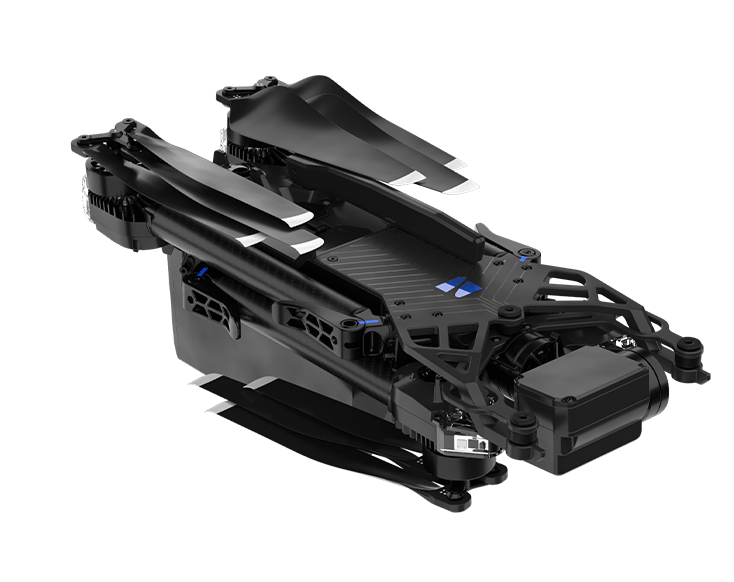
Skydio R10

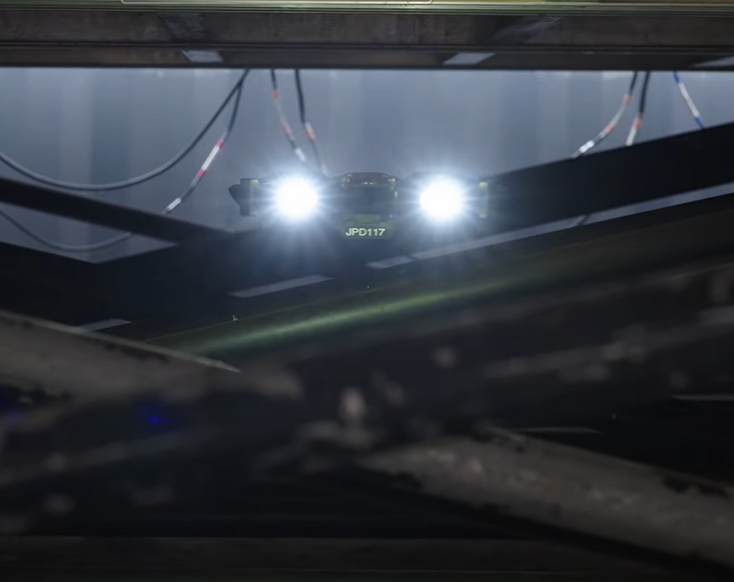
The Skydio R10 is a purpose-built indoor inspection drone designed for tight, complex environments where light is limited and contact with structures is likely. It’s a strong option for teams that want a compact platform for close-range visual checks inside industrial spaces.
  • Optimized for low-light confined space inspections with onboard lighting.
  • Protective design for operating in tight, cluttered environments.
  • Stable, close-range imaging for indoor infrastructure and facility inspections.
  • Useful for internal checks where GPS is unavailable and access is constrained.
Buy the Skydio R10.

Ultrasonic & NDT Inspection

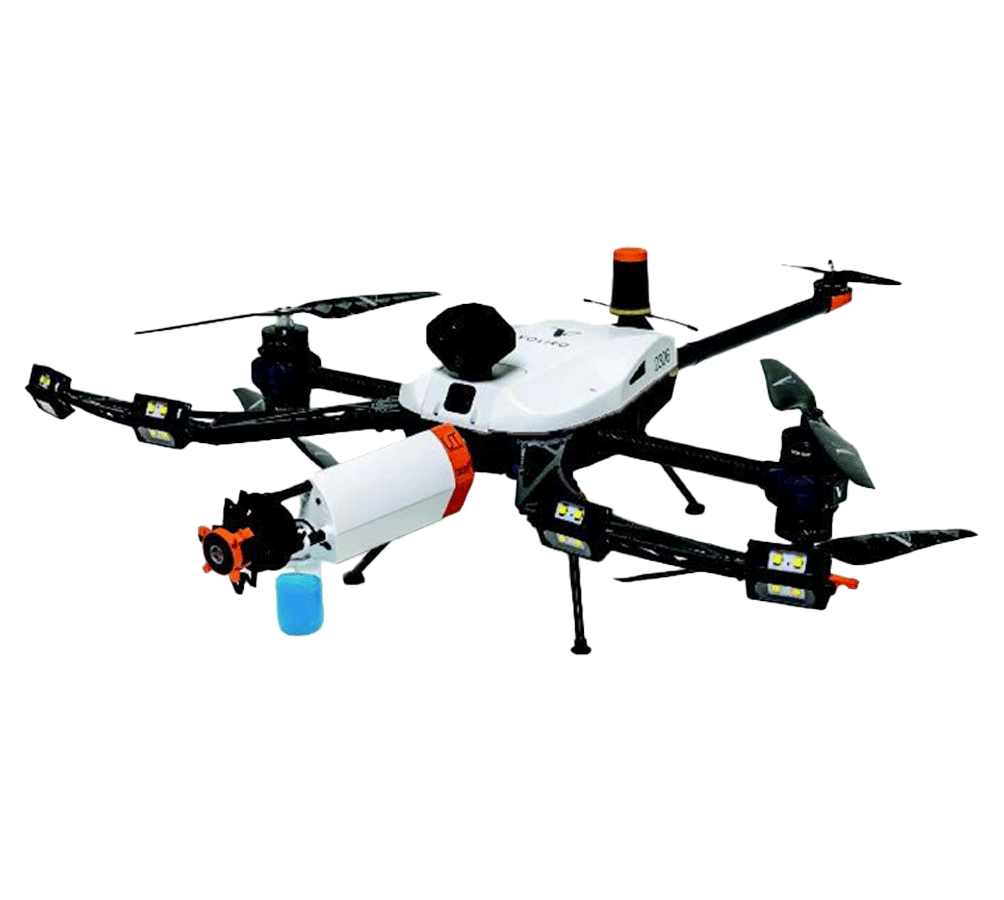
Voliro T

The Voliro T is a specialized inspection drone built specifically for ultrasonic thickness measurements on vertical and inverted surfaces. It replaces inspection workflows that DJI drones were never designed to handle.
  • Contact-based ultrasonic testing (UT) by drone.
  • Magnetic wheel system for stable sensor coupling.
  • Designed for stacks, tanks, wind turbines, and large vertical assets.
  • Reduces the need for rope access, scaffolding, or shutdowns.
Buy or rent the Voliro T.

Outdoor & Industrial Inspection

Skydio X10 / X10D

The Skydio X10 is a U.S.-made industrial inspection drone focused on autonomous flight, obstacle avoidance, and secure operations. It is often evaluated as a replacement for DJI enterprise platforms in outdoor inspection and public-sector use cases.
  • Advanced onboard autonomy for complex structures.
  • Integrated visual and thermal inspection payloads.
  • Designed for infrastructure, facilities, and public safety missions.
  • NDAA-aligned platform for organizations with compliance requirements.
Buy or rent the Skydio X10.

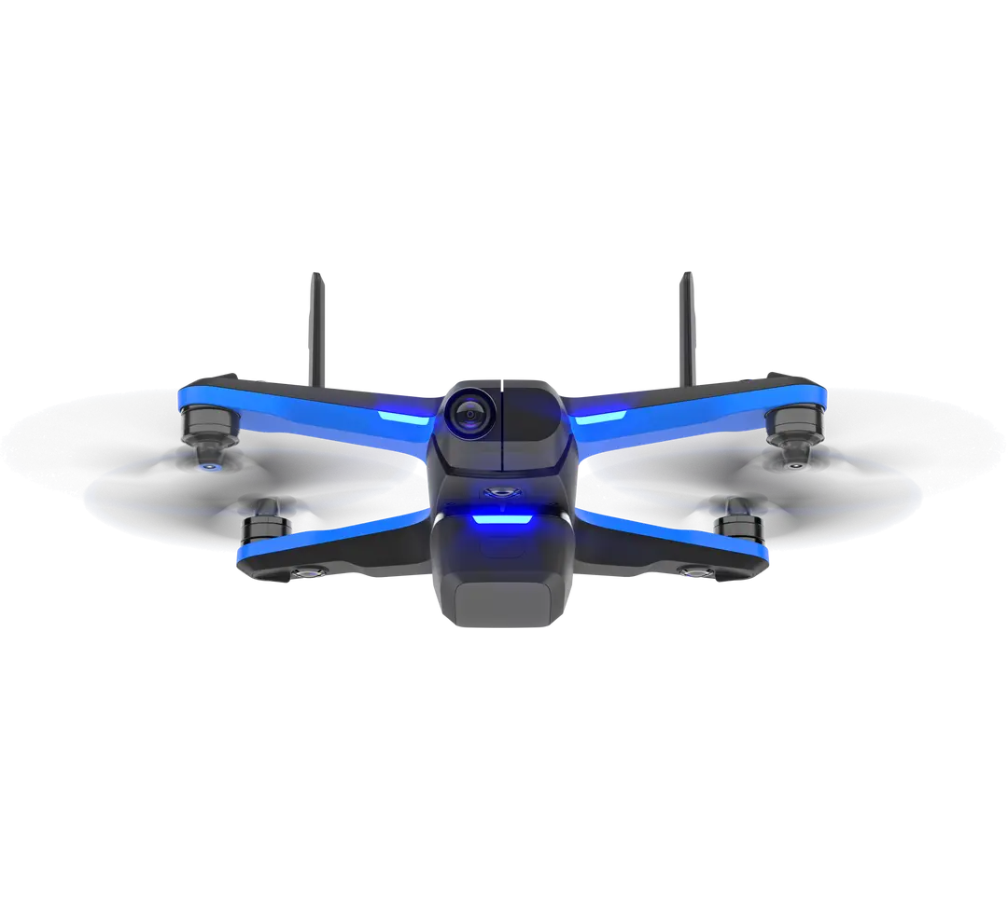
Skydio X2

The Skydio X2 is a ruggedized enterprise drone built for close-range inspection and situational awareness, with strong autonomy for navigating around complex structures. It’s commonly evaluated for public safety and critical infrastructure work where secure operations and reliability matter.
  • Rugged, portable platform designed for enterprise field use.
  • Skydio autonomy with advanced obstacle avoidance for complex environments.
  • Available configurations support visual imaging and thermal inspection workflows.
  • Strong fit for inspections, monitoring, and security patrol use cases.
Rent the Skydio X2.

Skydio S2

The Skydio S2 is a proven autonomous drone used for detailed visual inspections and aerial documentation in complex environments. For teams that want a straightforward platform with strong obstacle avoidance, it remains a reliable option.
  • AI-powered flight autonomy for safer close-proximity inspection work.
  • High-resolution imaging for documentation and routine inspection tasks.
  • Designed for capturing coverage around complex structures.
  • Well suited for infrastructure and facility inspections where obstacles are common.
Rent the Skydio S2.

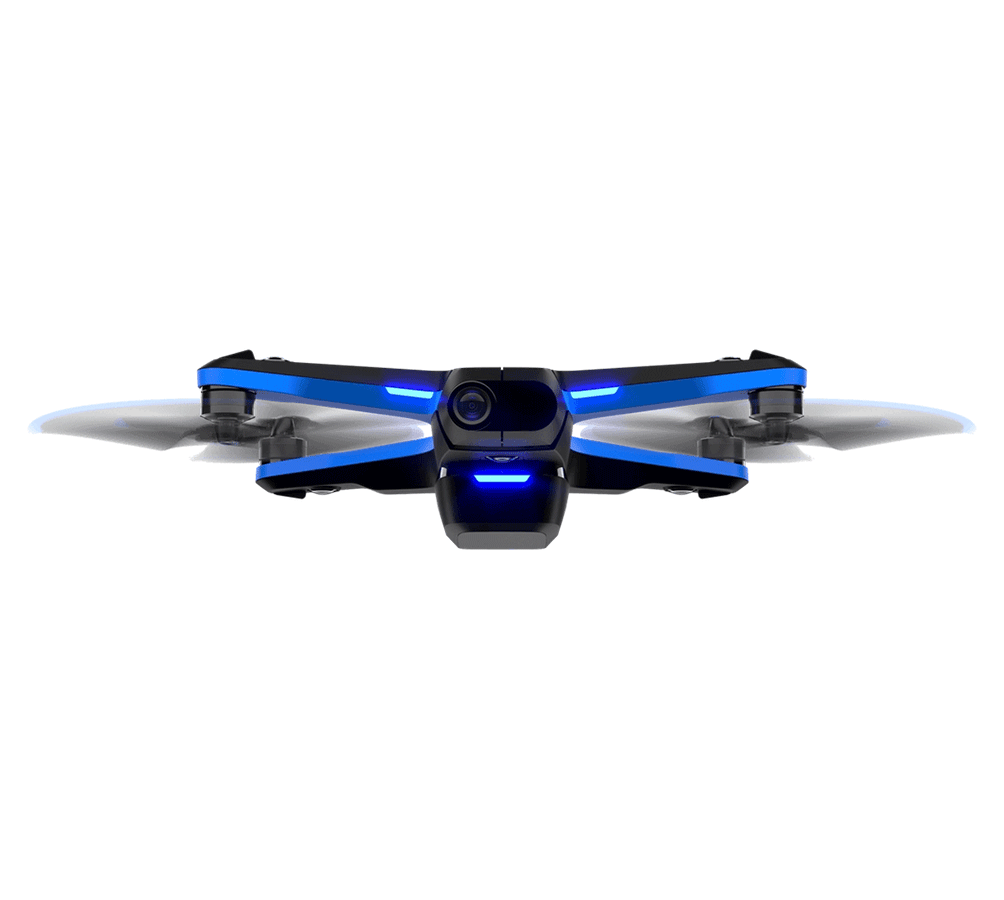
Skydio 2+

The Skydio 2+ is a compact, easy-to-deploy drone that pairs strong autonomy with high-quality imaging for professional field work. It’s often used when teams want a smaller platform for quick inspections without giving up obstacle avoidance and stability.
  • Compact form factor for rapid deployment in the field.
  • Autonomy and obstacle avoidance for safer close-range flight.
  • High-quality imaging for inspection documentation and mapping support.
  • Good fit for teams that need a lightweight platform for routine outdoor checks.
Buy or rent the Skydio 2+.

DJI Drones Still Available from MFE

Although people are looking for DJI alternatives right now, it’s important to note: DJI drones are still for sale and rent.

In 2025, there was a lot of fear that all DJI products might be banned.

But they weren’t. Any DJI drone that was already for sale is still for sale.

Only new DJI drones—drones that will be released in the future—are impacted. (DJI won’t be able to import and sell these new drones in the U.S.)

Here are all the DJI drones MFE currently has for sale and rent.

DJI Platforms Currently Listed by MFE

How to think about buying DJI right now
  • Existing DJI platforms are still available.
  • But it may become harder to find those existing DJI drones as time passes.
  • New DJI models cannot enter the U.S. market under current FCC rules.
  • DJI purchases today are best viewed as tactical or short-term decisions.
  • Many teams are combining DJI use with longer-term planning around non-DJI alternatives.

Why Operators Are Looking for DJI Alternatives

For years, DJI was the default choice for commercial drone operations.

The company’s platforms were reliable, widely supported, and easy to standardize across teams. For many organizations, that made DJI the simplest path forward.

What’s changed isn’t how DJI drones perform—it’s the environment around them.

U.S. policy decisions, procurement rules, and supply-chain constraints have made long-term planning around DJI more complicated, particularly for organizations that need predictable access to hardware, support, and approvals over multiple years.

Existing DJI drones can still fly, and many operators continue to rely on them today. The challenge is future fleet growth.

As access to new foreign-made drone models becomes more restricted, teams are reassessing whether they can confidently expand, replace, or standardize DJI platforms going forward.

This has pushed many commercial, industrial, and public-sector operators to evaluate non-DJI drones, not as a reactionary move, but as part of responsible operational planning.

Regulatory and Procurement Pressure

One of the biggest drivers behind the shift is regulatory and procurement pressure.

New foreign-made drone models face increasing barriers to U.S. approval and import, which directly affects organizations that need to purchase new aircraft over time.

For public safety agencies, government contractors, and inspection teams working on regulated assets, procurement eligibility matters.

Even when DJI platforms are technically capable, uncertainty around approvals and future availability can disqualify them from long-term programs or funded projects.

As a result, many teams are prioritizing platforms that can be sourced, approved, and supported with greater confidence under current procurement frameworks.

Supply Chain and Long-Term Support Risk

Drone programs are no longer short-term experiments.

Many organizations now operate multi-year inspection and monitoring programs that depend on consistent hardware, spare parts, and manufacturer support.

With DJI, the concern isn’t immediate failure. It’s attrition over time.

Batteries, replacement aircraft, repairs, and firmware support all depend on stable supply chains and authorized distribution. When future access becomes uncertain, even a reliable platform can become a liability.

Evaluating DJI alternatives allows teams to reduce dependence on a single manufacturer and build fleets that can be maintained, expanded, and supported over the full lifecycle of an inspection program.

Security and Data Governance Concerns

Security and data governance continue to influence drone procurement decisions, particularly for critical infrastructure and public-sector operations.

While DJI has implemented extensive privacy controls and undergone multiple independent reviews, some organizations operate under policies that restrict or discourage the use of foreign-manufactured systems—and especially systems made in China—regardless of technical safeguards.

In these cases, the issue is less about proven misuse and more about risk management, perception, and compliance with internal or client-driven requirements.

Non-DJI platforms can simplify approvals, reduce scrutiny, and align more easily with organizational data governance standards.

Taken together, these factors explain why interest in DJI alternatives has accelerated.

The goal for most operators isn’t to abandon DJI overnight. It’s to ensure their drone programs remain viable, supportable, and compliant well into the future.

5 Tips to Help You Find the Right DJI Alternative

There is no one-size-fits-all replacement for DJI. The right alternative depends less on brand and more on how, where, and why a drone is used in day-to-day operations.

Many non-DJI platforms are designed for specific inspection tasks rather than broad, general-purpose flying. And that specialization can be an advantage if the platform is matched correctly to the mission.

Choosing the right DJI alternative starts with understanding operational requirements and constraints, not simply looking for the closest visual or price comparison.

Here are 

1. Inspection Environment: Indoor vs. Outdoor

The physical environment is often the first deciding factor.

Outdoor inspections typically prioritize endurance, wind resistance, and sensor flexibility, while indoor and confined space inspections demand stability in GPS-denied environments and tolerance for close contact with structures.

  • General-purpose drones that perform well outdoors may struggle inside tanks, vessels, or enclosed industrial assets.
  • Purpose-built indoor platforms are designed to operate safely in these conditions, often replacing inspection methods that previously required scaffolding, rope access, or shutdowns.

2. Inspection Method: Visual, Thermal, or NDT

Not all inspections rely on the same type of data.

Visual and thermal inspections are common entry points for drone inspections, but many industrial programs also require nondestructive testing such as ultrasonic thickness measurements.

For teams that need to measure corrosion, wall thickness, or material loss, specialized NDT drones like the Voliro T or Elios 3 may be the strongest option.

3. Compliance and Procurement Requirements

Compliance requirements play an increasing role in drone selection.

Some organizations must meet NDAA-related procurement rules, internal security policies, or client-specific restrictions that limit the use of foreign-manufactured systems.

Even when a platform is technically capable, uncertainty around approvals, audits, or future availability can complicate long-term planning.

4. Workflow, Training, and Support

Switching platforms can affects more than just hardware. Evaluating alternatives includes understanding how quickly teams can get up to speed and how issues will be resolved in the field.

Training, flight planning, data management, and maintenance workflows all factor into operational efficiency.

Some non-DJI drones prioritize simplicity and repeatability, while others offer more flexibility at the cost of a steeper learning curve.

Support availability also matters, especially for inspection teams operating in remote or high-risk environments where downtime is costly.

5. Fleet Planning and Lifecycle Considerations

Drone programs are increasingly treated as long-term assets rather than disposable tools.

That means considering lifecycle support, replacement timelines, and the ability to scale or standardize fleets over time.

Relying on a single platform or manufacturer can introduce risk if availability changes or support becomes constrained. Many organizations now plan for mixed fleets, using different drones for different tasks to improve resilience.

Blue UAS and Green UAS as DJI Alternatives 

Blue UAS and Green UAS are U.S. programs that thoroughly vet drone makers and specific drones, certifying them as trusted and safe for different kinds of use.

Both programs are incredibly thorough. Any drone that appears on either list can be considered a trusted DJI alternative.

But it’s important to understand what these programs do and what they don’t. Just because a drone appears on a Blue or Green UAS list doesn’t mean that it’s the best drone for a specific type of inspection or other commercial use case.

Blue UAS–Cleared Platforms

Blue UAS is a Department of Defense–led initiative focused on identifying drone platforms that meet stringent security, cybersecurity, and supply-chain requirements for government and defense use.

Drones cleared under Blue UAS are typically designed for mission-critical operations where data security and system integrity are paramount.

These platforms prioritize robustness, encryption, and controlled software environments.

In return, they can come with higher costs, narrower payload options, and less flexibility than general-purpose commercial drones.

For inspection teams, Blue UAS–cleared drones may be a strong fit when procurement rules demand them—but they are not always optimized for industrial inspection workflows out of the box.

Green UAS–Cleared Platforms

Green UAS, administered by AUVSI, is designed to bridge the gap between defense-focused requirements and commercial operations.

Green UAS certification emphasizes NDAA alignment, cybersecurity posture, and supply-chain transparency, while allowing for a broader range of commercial use cases.

Compared to Blue UAS, Green UAS platforms often offer more flexibility and lower barriers to adoption.

Why “Approved” Doesn’t Always Mean “Right”

One of the most common misconceptions is that an approved or cleared drone is automatically the best choice for replacing DJI.

In reality, approval status answers only one question: whether a platform meets certain security or procurement criteria.

Inspection teams still need to consider how a drone performs in real environments, how data is captured and delivered, and how easily the platform integrates into existing workflows. Some approved drones are excellent for tactical or surveillance missions but less effective for detailed inspections, confined spaces, or specialized NDT work.

For many operators, the search for DJI alternatives feels overwhelming.

New policies, shifting procurement rules, and a growing list of “approved” platforms have created a market that looks clear on the surface but is difficult to navigate in practice.

One of the biggest challenges is separating signal from noise.

Headlines focus on bans, approvals, and compliance labels, while spec sheets emphasize cameras, flight time, and autonomy features. None of that fully explains whether a given platform will actually work inside a tank, along a stack, or across a multi-year inspection program.

Most organizations aren’t facing a single decision—they’re balancing safety requirements, operational constraints, compliance obligations, budgets, and timelines at the same time.

And navigating that complexity requires more than comparing drones side by side.

How MFE Helps Teams Navigate This Transition

MFE’s role is not simply to source equipment, but to help teams make decisions that hold up over time.

That means working with clients to clarify inspection goals, identify constraints, and evaluate which approaches make sense for their specific use cases.

In many cases, the right answer isn’t a single replacement platform. It’s a phased approach that combines existing assets with purpose-built tools, reduces risk gradually, and preserves inspection continuity.

We’re Here to Help

Need help mapping your inspection use cases to the right platform mix? MFE can help you evaluate fit, tradeoffs, and the most practical transition plan for your team.

Get in touch now to see how we can help.


From Policy Changes to Practical Decisions

Policy changes and procurement rules often trigger the initial search for DJI alternatives, but they rarely provide clear direction on what to do next.

Knowing that certain platforms are harder to source or may face future constraints doesn’t automatically translate into a viable inspection strategy.

In practice, teams need to interpret how high-level policy decisions affect day-to-day operations. That includes understanding which constraints are immediate, which are long-term, and which may not apply at all. Without that context, organizations risk overcorrecting—either replacing platforms unnecessarily or choosing alternatives that introduce new operational problems.

Why Context Can Matter More Than Comparisons

Side-by-side comparisons can be useful, but they often hide the factors that matter most in industrial inspections. Two drones with similar specifications can perform very differently once deployed in real environments.

Inspection context—asset type, access method, data requirements, and risk tolerance—determines whether a platform succeeds or fails.

A drone designed for outdoor situational awareness may struggle in confined spaces. A platform that meets compliance requirements may lack the tooling or support needed for repeat inspections.

Understanding these tradeoffs requires looking beyond labels and asking how a drone fits into an existing workflow, not how closely it resembles a familiar platform.

Get in touch now to see how we can help.

DJI Alternatives FAQ

Here are answers to some of the most commonly asked questions about DJI alternatives and why people are looking for non-DJI drones right now.

Are DJI drones banned in the U.S.?

DJI drones are not universally banned from being flown or sold in the U.S. However, new foreign-made drone models—including new DJI platforms—face significant barriers to approval and import due to federal policy and FCC equipment authorization rules.

Put simply, existing DJI drones can remain in use. But buying DJI drones or expanding fleets with future, as-yet-unreleased DJI models has become far more uncertain.

Can I still fly my existing DJI drones?

Yes. DJI drones that were already approved and in service can still be flown under existing FAA rules, including Part 107 operations. There has been no blanket grounding or remote disablement of DJI aircraft.

The primary concern for most operators is not current use, but long-term support, replacement aircraft, batteries, and the ability to expand fleets as inspection programs grow.

Why are organizations switching to DJI alternatives now?

The shift is driven by planning and risk management.

Many organizations are reassessing their dependence on DJI due to uncertainty around future availability, procurement eligibility, and long-term support.

For public-sector buyers and regulated industries, compliance requirements and internal policies also play a role. Even when DJI platforms perform well, uncertainty around approvals and sourcing can complicate multi-year inspection programs.

Do I need an NDAA-compliant drone?

Probably not. But it just depends on the rules of your specific company or organization.

NDAA requirements primarily apply to federal agencies, government-funded projects, and organizations working under specific security or procurement mandates.

Private-sector operators may legally continue using non-NDAA drones, including DJI platforms. That said, some companies choose NDAA-aligned alternatives to simplify procurement, reduce scrutiny, or align with client expectations, especially in critical infrastructure and public safety work.

Are DJI alternatives more expensive?

In many cases, yes. This is especially true for purpose-built or NDAA-aligned platforms.

Higher costs are often driven by specialized hardware, lower production volumes, and more robust support models.

What is the biggest mistake teams make when replacing DJI drones?

The most common mistake is looking for a one-to-one DJI replacement instead of evaluating what the operation actually requires.

Non-DJI drones are often designed for specific inspection tasks, not broad, general-purpose flying.

Teams that focus on mission requirements—inspection environment, data type, compliance needs, and lifecycle support—tend to make smoother transitions than those trying to match DJI features or form factors exactly.

Can DJI and non-DJI drones be used together?

Absolutely! In fact, this is a recommended practice. The aim is to use the right tool for the job, and not all drones are made for all jobs. 

[Case study: Acuren improves stack inspections by using three different drones in a single workflow]

Most organizations operate mixed fleets during a transition period. DJI drones may continue to handle certain tasks, while non-DJI platforms are introduced for specialized inspections or to meet procurement requirements.

This phased approach reduces disruption, spreads training effort over time, and allows teams to validate new platforms in real-world conditions before expanding their role in the fleet.

How long does it take to transition away from DJI?

There is no fixed timeline. Some teams introduce non-DJI drones immediately for specific inspection tasks, while others transition gradually as existing DJI aircraft reach end of life.

Successful transitions are typically incremental, focused on maintaining inspection continuity rather than forcing rapid fleet-wide changes.

Table of Contents