Guide

What Are NDAA-Compliant Drones? Best Options for Inspections & More

NDAA-compliant drones are drones that avoid using critical components or systems from specific manufacturers restricted by U.S. law—particularly those associated with China.

→Jump to the best NDAA-compliant drones for inspections

If you’re researching NDAA-compliant drones, you’re probably trying to answer a deceptively simple question: Which drones can I actually use—and trust—for my work?

But once you start digging, the answers can get complicated fast.

You’ll see references to NDAA compliance, Blue UAS, Green UAS, the DJI ban, and “American-made” drones—often used interchangeably, even though they don’t mean the same thing.

Some pages give you product lists. Others focus on policy. Very few explain how all of this fits together in a way that helps you make a decision.

This guide is designed to do exactly that.

We’ll break down what NDAA-compliant drones actually are, what compliance does and doesn’t mean, how NDAA compares to programs like Blue UAS and Green UAS, whether DJI drones qualify, and how to choose the right drone based on your specific use case—not just a compliance label.

Need something specific? NDAA compliance is only one part of the trusted-drone ecosystem. Use the guides below to compare it with Blue UAS, Green UAS, American-made drones, and current DJI-related restrictions.

If you’re looking for…Start here
A cleared list of Blue UAS drones and what Blue UAS means for federal and defense useBlue UAS guide
How Green UAS certification works and how it differs from Blue UAS and NDAA complianceGreen UAS guide
A guide to American-made drones, U.S.-based manufacturers, and trusted domestic or U.S.-aligned platformsAmerican-made drones guide
What the DJI ban means and how current restrictions affect drone buyersDJI ban guide
Non-DJI options for commercial, enterprise, and government drone programsDJI alternatives guide

What Is an NDAA-Compliant Drone?

NDAA-compliance is primarily about where the drone is made and where its parts come from.

An NDAA-compliant drone is a drone that avoids certain restricted components and manufacturers identified under U.S. law, especially the supply chain restrictions commonly associated with Section 848 of the National Defense Authorization Act.

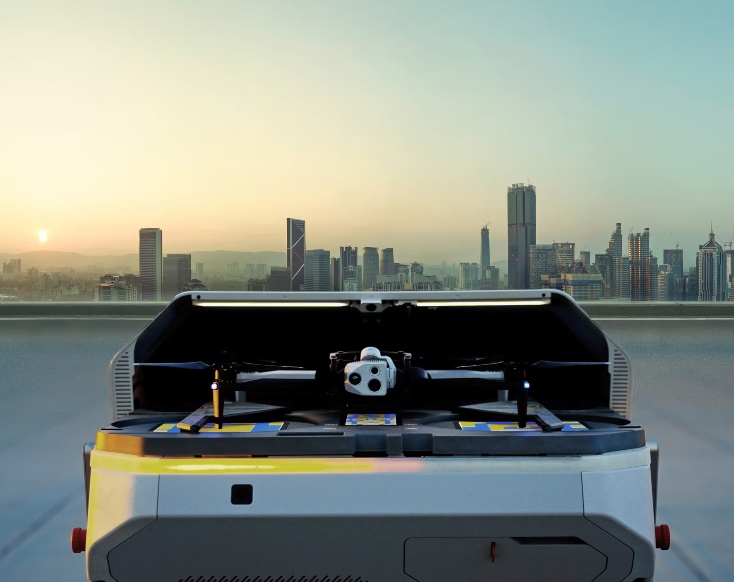
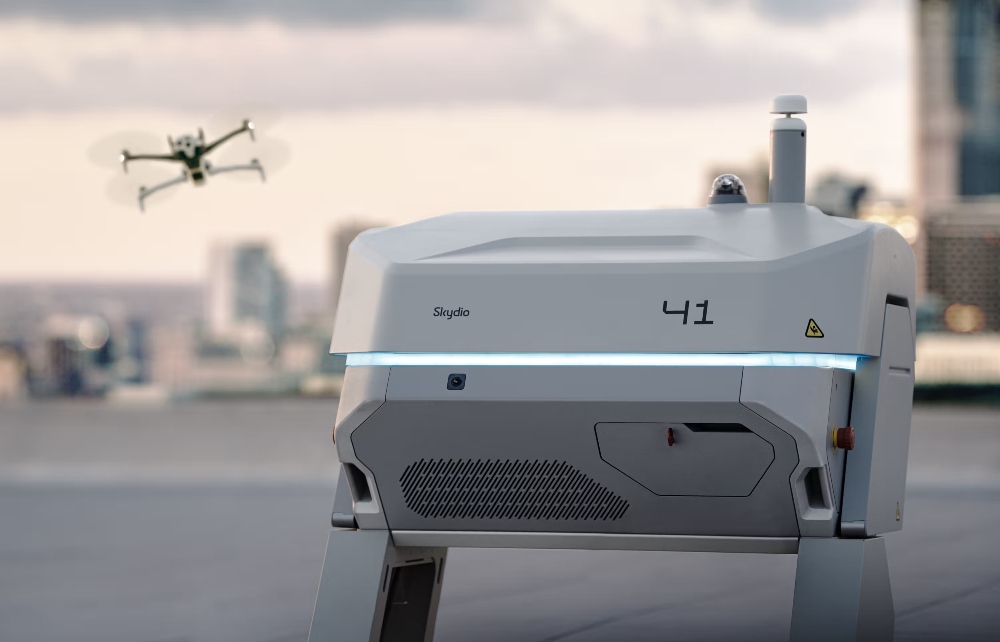
The Skydio X10 and the Dock for X10, which are both now Blue UAS-cleared | Credit: Skydio

In plain terms, an NDAA-compliant drone is typically a drone that doesn’t rely on China for key parts of its supply chain.

That means these drones are built without certain prohibited electronics, cameras, radios, flight controllers, or related components tied to “restricted entities”—again, companies identified by U.S. law (many of them based in China) as prohibited suppliers.

For most buyers, that makes NDAA compliance a sourcing and procurement issue, not a performance rating.

This distinction matters.

NDAA compliance does not tell you whether a drone is the best drone for your work. It tells you whether the system clears an important compliance hurdle tied to supply chain risk, procurement eligibility, and long-term policy exposure.

In practice, an NDAA-compliant drone typically avoids:

  • Core components from restricted manufacturers
  • Supply chains tied to restricted entities
  • System architectures that may create procurement or policy problems for government or security-sensitive buyers

Because of that, many organizations now use NDAA compliance as a baseline filter when evaluating drone platforms.

Why NDAA Compliance Matters for Drone Buyers

NDAA compliance matters because it can affect whether a drone can be purchased, approved, funded, or deployed in the first place.

For federal agencies, the issue is straightforward: drones and components from restricted sources cannot be purchased or used under the relevant procurement rules. But in practice, this standard now influences far more than federal buying decisions.

Today, many state and local governments, public safety departments, utilities, infrastructure operators, and enterprise teams treat NDAA compliance as a baseline requirement.

Even when it is not strictly mandated, it is often required by internal policy, funding sources, procurement review, or cybersecurity risk management.

There are a few reasons for this shift:

  • Procurement eligibility. If your organization receives federal funding—or may in the future—using non-compliant drones can create restrictions or force costly replacements later.
  • Data security concerns. NDAA compliance is often discussed alongside questions about how drone data is transmitted, processed, and stored.
  • Policy risk. Regulations continue to evolve, and many teams want to reduce the risk of future disruption.
  • Organizational standardization. Larger organizations often adopt NDAA compliance as a blanket requirement to simplify purchasing decisions across departments.

The result is that NDAA compliance is no longer just a federal issue.

It is now a practical consideration for any team building a drone program intended to scale, last, or align with stricter procurement expectations.

Are DJI Drones NDAA Compliant?

No, DJI drones are not NDAA compliant.

That is because DJI is based in China, which means its drones have sourcing concerns that fall within the broader set of restrictions that drive federal and security-sensitive procurement decisions.

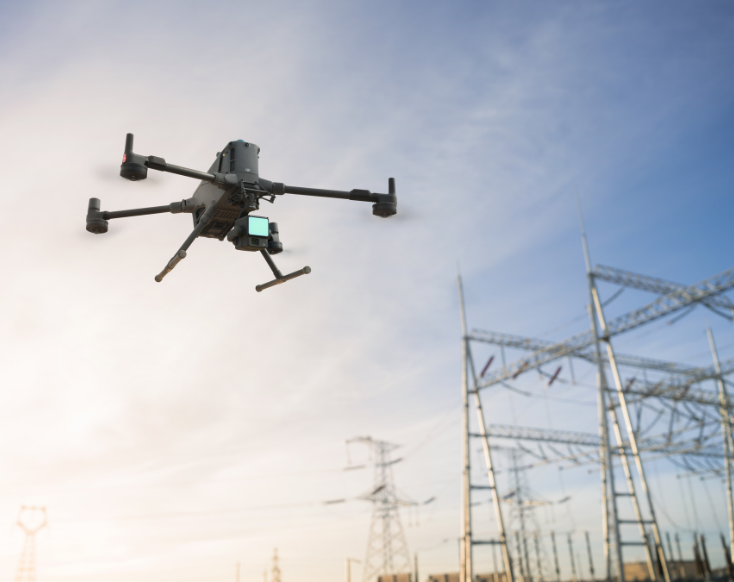
The DJI Matrice 400 industrial inspection drone | Credit: DJI

For many organizations, this has become a major deciding factor.

Even outside of federal use, DJI’s status has influenced how state agencies, public safety departments, utilities, and enterprise teams evaluate drone programs.

In many cases, organizations choose to avoid DJI platforms altogether to align with internal policy, funding requirements, or long-term risk management.

That said, the reality on the ground is more nuanced.

DJI drones are still widely used in commercial and industrial applications, especially where there are no formal compliance requirements. They are often favored for performance, ecosystem maturity, and cost efficiency.

The tradeoff is that using DJI can introduce constraints, including:

  • Procurement limitations. Certain contracts or funding sources may prohibit their use.
  • Policy uncertainty. Regulations and restrictions continue to evolve.
  • Operational restrictions. Some organizations limit where and how DJI drones can be deployed, especially around sensitive infrastructure.

Best NDAA-Compliant Drones for Industrial Inspections

Not every NDAA-compliant drone is a good fit for industrial inspection work.

The drones below stand out for inspection applications ranging from close visual and thermal inspection to confined-space work, mapping, LiDAR, and specialized sensor deployments.

They include platforms from Skydio, Teledyne FLIR, Freefly, and WISPR, with options ranging from compact autonomous drones to heavy-lift systems built to carry advanced inspection payloads.

1. Skydio X10
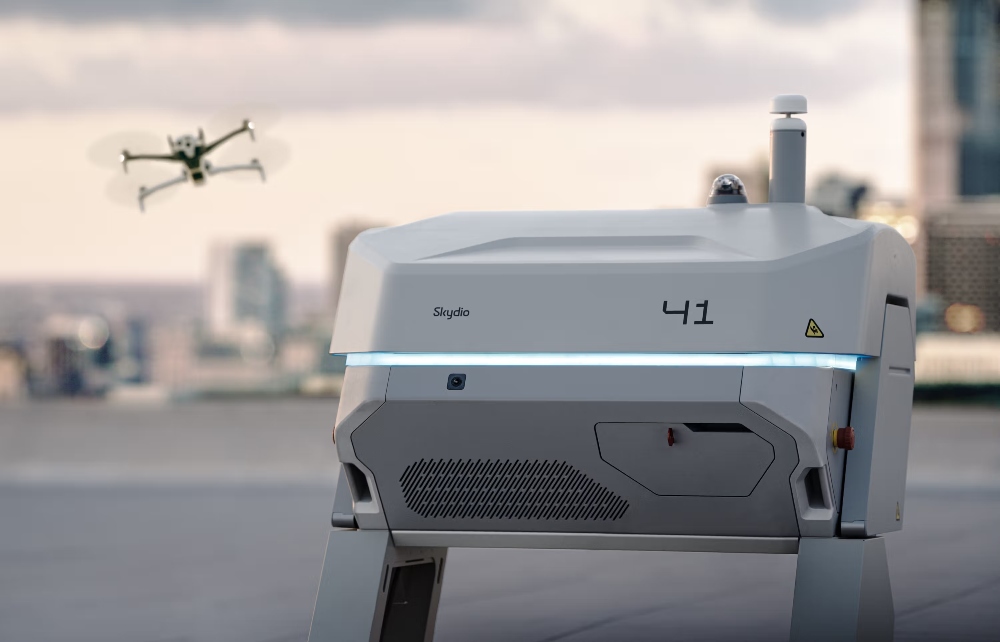
The Skydio X10 is a Blue UAS-cleared, NDAA-compliant drone built for demanding enterprise and infrastructure work.

For inspection teams, its combination of autonomous flight, high-resolution visual imaging, and radiometric thermal imaging makes it particularly useful around complex structures where close access and detailed data collection matter.

  • Blue UAS cleared and NDAA compliant
  • High-resolution visual imaging for identifying small defects and asset details
  • Available with a Teledyne FLIR Boson+ radiometric thermal sensor
  • 360° obstacle avoidance and autonomous flight capabilities for operating around complex structures

Skydio’s Dock for X10 is also Blue UAS cleared and can be combined with the X10 for remote, repeatable inspection and monitoring workflows.

Learn more about the Skydio X10.

2. Skydio X10D
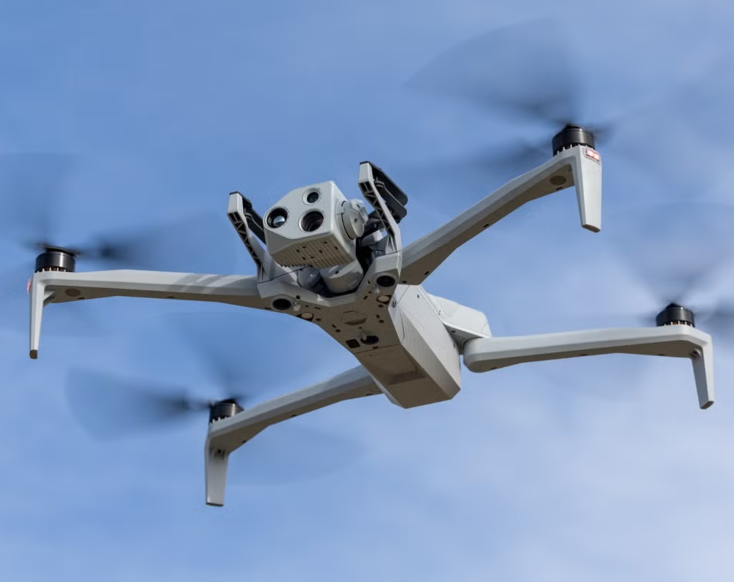
Skydio-X10D-blue-uas

The Skydio X10D is the offline variant of the X10, combining the same core airframe and sensor options with features designed for secure, disconnected, and specialized operating environments.

For inspection teams, that makes the X10D particularly useful when work takes place at sensitive facilities, in locations where cloud or network connectivity is unavailable or undesirable, or in environments where GPS may be unreliable.

Like the X10, R10, and Dock for X10, the X10D is both NDAA compliant and Blue UAS cleared.

  • Blue UAS cleared and NDAA compliant
  • Fully offline operation with no reliance on cloud applications
  • High-resolution visual and radiometric thermal imaging for inspection data collection
  • 360° obstacle avoidance and vision-based navigation for GPS-denied environments
  • Open, modular architecture with MAVLink support for specialized integrations

For inspection teams that need the X10 platform’s imaging and autonomy but have stricter requirements around connectivity, data security, communications, or system integration, the X10D provides a distinct option within Skydio’s Blue UAS-cleared lineup.

Learn more about the Skydio X10D.

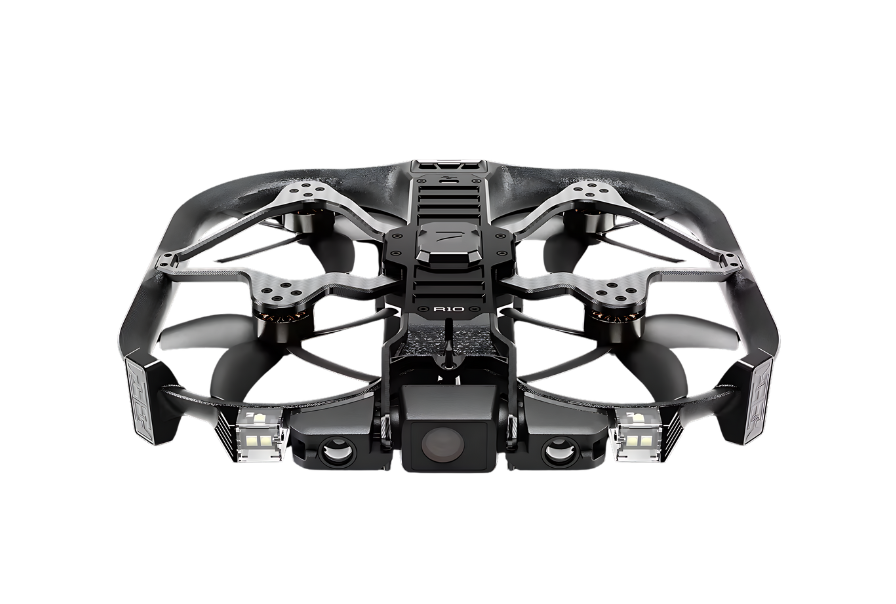
3. Skydio R10
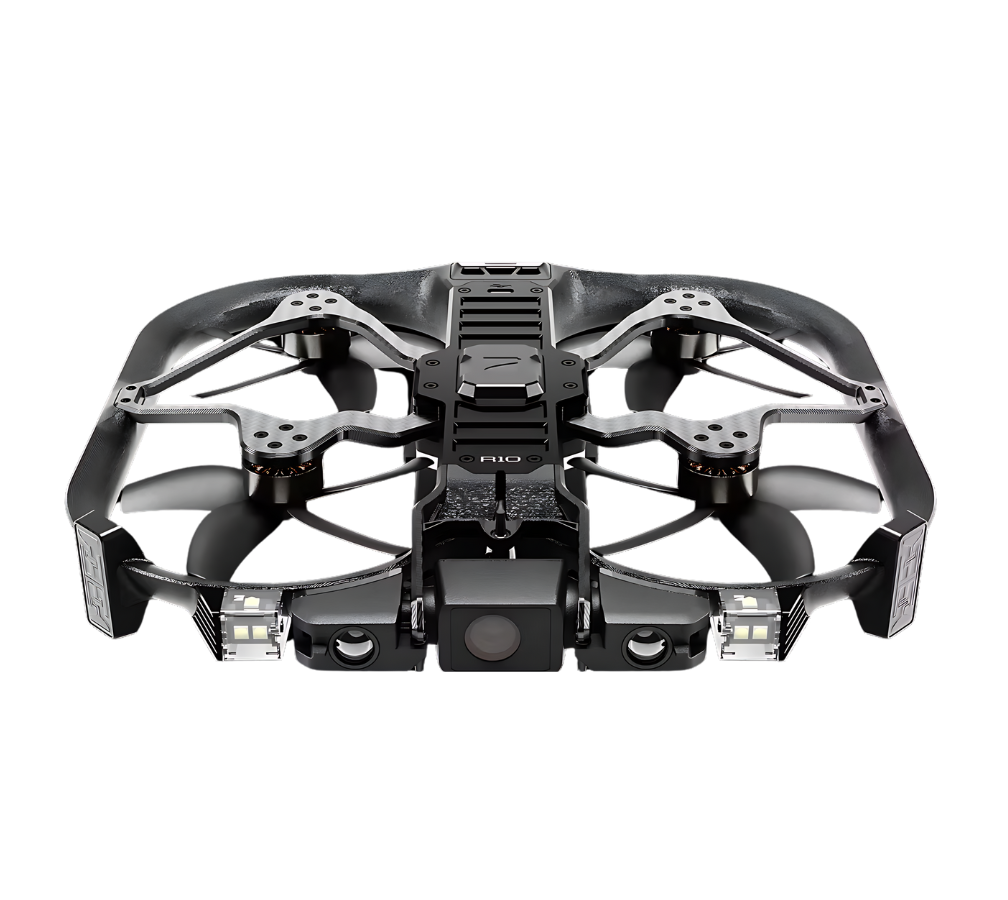
The Skydio R10 is a Blue UAS-cleared, NDAA-compliant indoor drone designed for confined, dark, cluttered, and GPS-denied environments.

For industrial teams, that makes the R10 fundamentally different from the outdoor inspection platforms on this list. It is designed to help inspectors collect data inside difficult or hazardous spaces where conventional outdoor drones may not be appropriate.

  • Blue UAS cleared and NDAA compliant
  • Autonomous navigation and obstacle avoidance for confined and GPS-denied environments
  • Visual and thermal imaging for condition assessment and anomaly detection
  • Compact, rugged design with enclosed propellers for indoor and close-quarters inspections

Learn more about the Skydio R10.

4. Teledyne FLIR SkyRanger R70
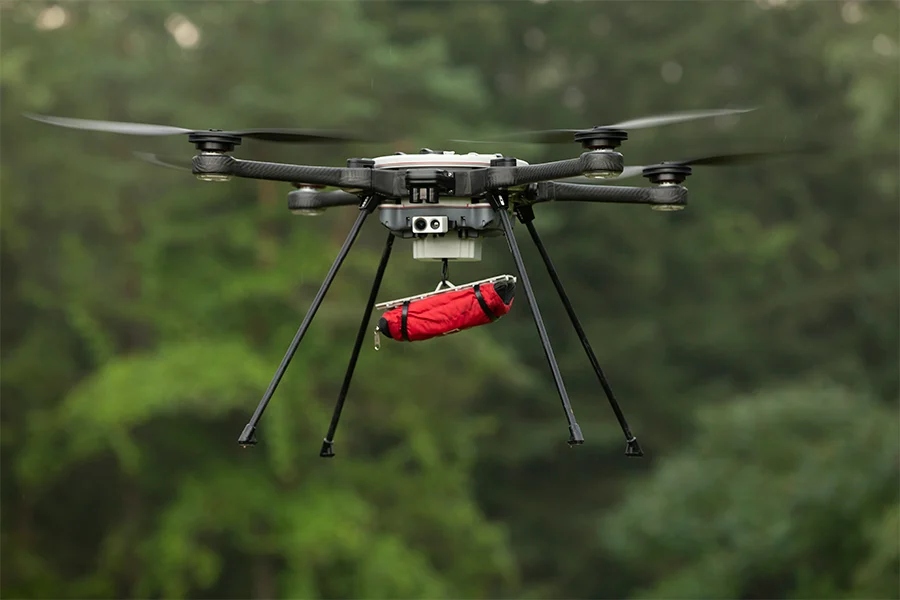
The SkyRanger 70 NDAA-compliant drone

The Teledyne FLIR SkyRanger R70 is a rugged, multi-mission drone platform with payload flexibility that makes it relevant for infrastructure inspection and other demanding field operations.

For inspection teams, its value lies in combining a durable aircraft with interchangeable imaging and sensing options, allowing the system to be configured around different data-collection requirements.

  • Rugged platform designed for demanding field environments
  • Supports multiple payload configurations for visual, thermal, and specialized data collection
  • Designed for operations requiring a larger, more capable aircraft than compact inspection drones

Learn more about the SkyRanger R70.

5. Freefly Astro Max (NDAA/Blue)
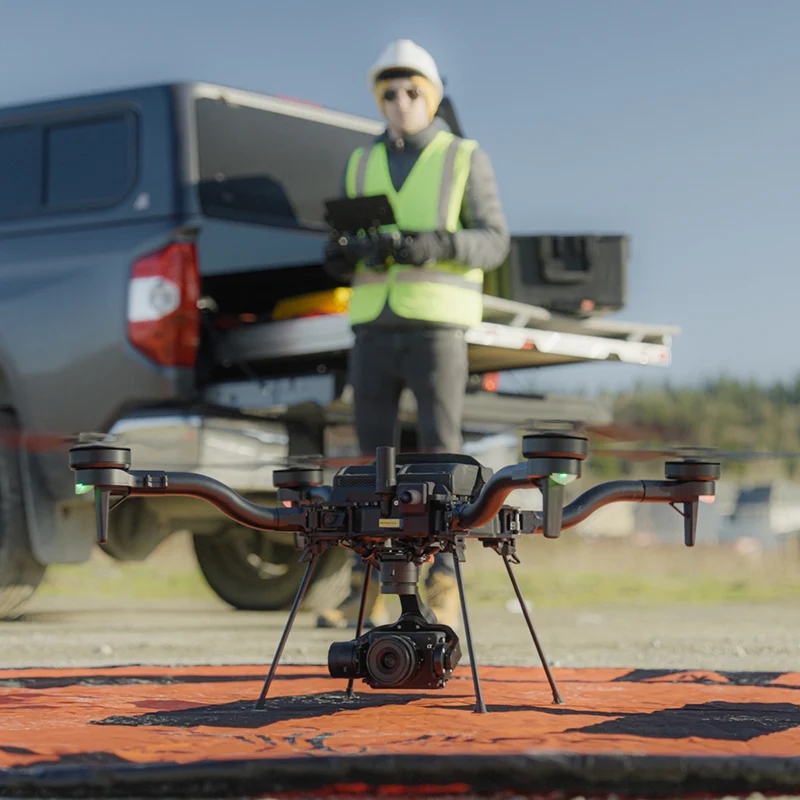
The NDAA-compliant Freefly Astro Max

The Freefly Astro Max is a compact industrial drone platform built around payload flexibility, making it a strong option for inspection teams that need to move between different sensors and data-collection workflows.

Freefly offers a dedicated NDAA/Blue configuration that is both NDAA compliant and Blue UAS approved. Its payload ecosystem supports applications ranging from detailed visual inspection to thermal imaging, optical gas imaging, and LiDAR.

  • Dedicated configuration that is NDAA compliant and Blue UAS approved
  • Supports high-resolution RGB and thermal inspection payloads
  • Compatible with optical gas imaging and LiDAR payload options
  • Open payload architecture provides flexibility across different industrial inspection workflows

Learn more about the Freefly Astro Max (NDAA/Blue).

6. Freefly Alta X Gen2 (NDAA)
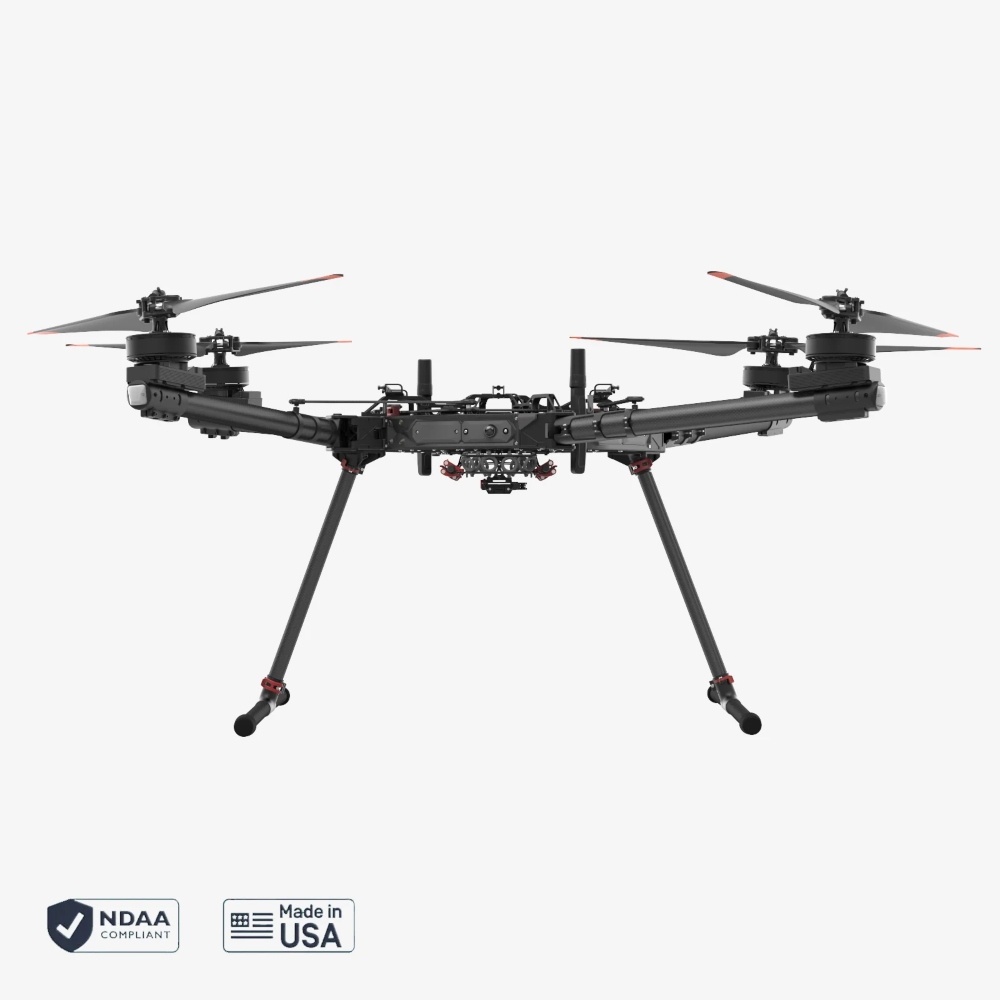
The NDAA-compliant Freefly Alta X Gen2 drone

The Freefly Alta X Gen2 is a heavy-lift NDAA-compliant option for industrial teams that need to carry larger LiDAR systems, imaging equipment, or other specialized inspection payloads.

With a payload capacity of up to 35 pounds and interfaces designed to support custom integrations, the Alta X Gen2 fills a different role from compact inspection drones. It is best suited to missions where sensor requirements drive the choice of aircraft.

  • Available in a dedicated NDAA-compliant configuration
  • Up to 35-pound payload capacity for large or specialized sensors
  • Smart payload interface and onboard connectivity support custom integrations
  • Designed to support enterprise and inspection data-collection workflows

Unlike the Astro Max NDAA/Blue configuration, the Alta X Gen2 NDAA configuration is not currently Blue UAS cleared.

Learn more about the Freefly Alta X Gen2 (NDAA).

7. WISPR SkyScout 2+
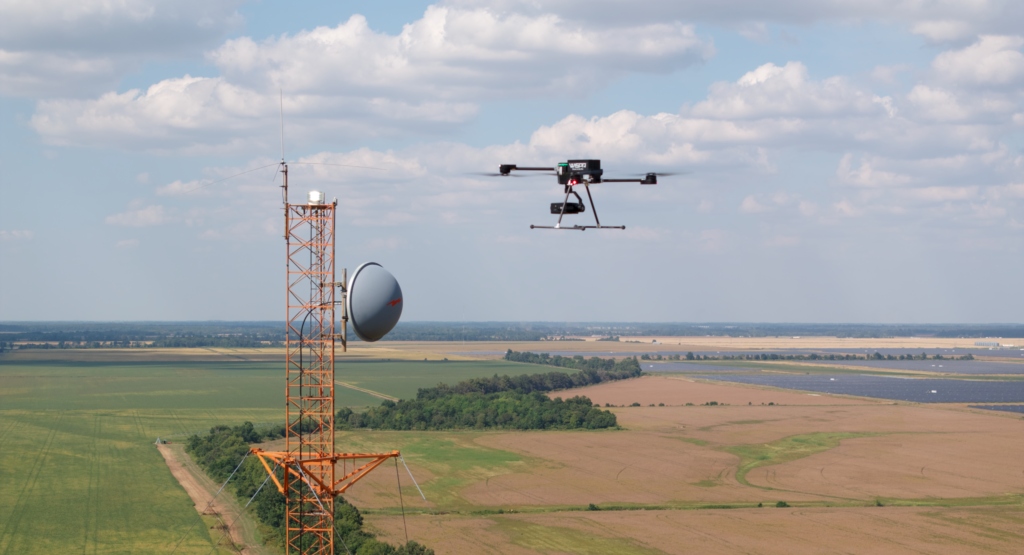
The WISPR SkyScout 2+ is an NDAA-compliant, Blue UAS-cleared platform built for professional mapping, inspection, and data-collection workflows.

Its combination of RTK/PPK positioning and interchangeable payloads makes it especially relevant for infrastructure teams that need a flexible aircraft for high-resolution imaging, thermal inspection, LiDAR, and related applications.

  • Blue UAS cleared, Green UAS approved, and NDAA compliant
  • RTK/PPK positioning for survey-grade workflows
  • Supports RGB, thermal, LiDAR, and other inspection payloads
  • Built for professional infrastructure, mapping, and data-collection applications
Learn more about the WISPR SkyScout 2+.

NDAA-Compliant Drones for Industrial Inspection—4 Things to Consider

For industrial inspection teams, choosing an NDAA-compliant drone is only the first step.

The bigger challenge is finding a system that can actually perform in real inspection environments—often close to structures, inside confined spaces, or around complex infrastructure where precision and reliability matter more than range or speed.

1. Inspection Work Has Different Requirements

Industrial inspections are usually focused on collecting detailed, actionable data from specific assets. That often means operating close to surfaces, navigating tight or obstructed environments, and capturing imagery or measurements that can support maintenance decisions.

In these scenarios, flight performance alone is not enough. Stability near structures, obstacle tolerance, and precise positioning are often more important than long flight times or wide-area coverage.

2. Confined Spaces and Complex Environments

Many inspection missions take place in environments that were never designed for drones—tanks, stacks, vessels, and other confined or enclosed spaces where GPS is unavailable and physical contact is a real risk.

In those cases, the platform needs to support controlled, close-proximity flight and maintain stability even when conditions are unpredictable.

Skydio's R10 is made for work in confined spaces and has been Blue UAS certified by the federal government

3. Data Quality and Sensor Considerations

Inspection teams are not just capturing images. They are collecting data that informs maintenance, safety, and operational decisions.

That means the quality, consistency, and relevance of the data matter just as much as access. A compliant drone that cannot support the required data output is unlikely to create much value.

4. Workflow Integration Matters More Than the Airframe

In many industrial programs, the drone is only one part of a larger inspection process.

Teams often need to integrate drone-collected data into existing workflows, reporting systems, or maintenance planning processes. Ease of deployment, repeatability, and operator training can all have a major impact on long-term success.

Where MFE Fits In

At MFE, we help teams match drone platforms to real-world inspection challenges—not just compliance requirements.

That includes helping teams understand how NDAA compliance fits into procurement, while also evaluating whether a given system can deliver the access, data, and reliability their inspection program depends on.

The goal is not just to select a compliant drone. It is to build an inspection workflow that works in practice.

See the full list of industrial drones we offer.

NDAA vs. Blue UAS vs. Green UAS vs. U.S.-Made Drones

If you’ve been researching NDAA-compliant drones, you’ve probably come across related terms like Blue UAS, Green UAS, and “U.S.-made” drones.

These are often used interchangeably, but they mean very different things.

Here is the short version: NDAA compliance is a sourcing restriction, Blue UAS is a DoD-cleared approval path, Green UAS is a third-party certification pathway, and “U.S.-made” is an origin claim.

Here’s the breakdown:

FrameworkWhat It MeansKey Takeaway
NDAA ComplianceAvoids restricted components and manufacturers under U.S. lawBaseline requirement for many buyers
Blue UASA DoD-cleared list of approved drone systemsRelevant for certain federal and security-sensitive use cases
Green UASA third-party certification aligned with Blue UAS security criteriaOften a stepping stone toward Blue UAS
U.S.-Made DronesDrones manufactured or assembled in the United StatesOrigin-based, not a compliance standard

Blue UAS: Approved for Certain Government Use Cases

Blue UAS is a curated list of drone systems that have been reviewed and approved for use by the U.S. Department of Defense.

If your work involves federal agencies—or if you need a higher level of assurance around cybersecurity and supply chain integrity—this may be the more relevant framework.

For a deeper breakdown, see our guide to Blue UAS.

skydio-x10-dock-blue-uas
The Skydio X10 and Dock for X10 are both on the Blue UAS list | Credit: Skydio

Green UAS: A Certification Pathway

Green UAS is a newer program that uses third-party certification to validate drones against security and compliance criteria aligned with Blue UAS.

Many manufacturers pursue Green UAS as a faster, more accessible way to demonstrate compliance while working toward Blue UAS inclusion.

You can explore how this works in our Green UAS guide.

U.S.-Made Drones: Origin vs. Compliance

“U.S.-made” drones are often assumed to be NDAA compliant, but that is not always the case.

Some NDAA-compliant drones rely on global supply chains that still meet compliance requirements. And some U.S.-assembled drones may include components that would not meet NDAA restrictions.

That is why country of origin and compliance status should be evaluated separately.

What NDAA Compliance Does—and Does Not Mean

One of the biggest challenges with NDAA-compliant drones is that the term is often misunderstood.

At a basic level, NDAA compliance tells you something specific: the drone avoids certain restricted components and manufacturers identified by U.S. legislation. That is all.

It does not tell you whether a drone is approved for government use, built in the United States, or automatically the best option for your application.

Here’s what NDAA compliance does mean:

  • The drone’s core components are not sourced from restricted entities. This can include cameras, flight controllers, radios, and other critical electronics.
  • The system aligns with an important procurement restriction. For many buyers, that makes it a baseline compliance requirement.
  • It reduces one category of supply chain risk. Many organizations use this as a starting point when narrowing options.

And here’s what NDAA compliance does not mean:

  • It is not the same as Blue UAS approval. Blue UAS is a separate program with its own vetting process and approved systems.
  • It is not the same as Green UAS certification. Green UAS is a separate certification pathway.
  • It does not mean the drone is made in the United States. Country of origin and NDAA compliance are separate questions.
  • It is not a measure of performance. A compliant drone may still be a poor fit for your payload, software, environment, or workflow.

This is why NDAA compliance should be treated as a starting point—not a final decision.

How to Choose the Right NDAA-Compliant Drone

The best way to choose an NDAA-compliant drone is to start with the mission requirements, then narrow your options based on payload needs, operating environment, software, support, and procurement requirements.

That is the short version. Compliance helps narrow the field, but it does not tell you whether a drone is a good fit for your workflow, environment, or inspection goals.

Choose Based on Mission, Not Just the Compliance Label

Different drone programs have very different requirements. The “right” compliant drone depends heavily on what you need it to do.

  • Public safety teams often prioritize rapid deployment, situational awareness, and ease of use.
  • Mapping teams usually prioritize accuracy, repeatability, and processing workflows.
  • Inspection teams often prioritize close-up stability, access, and data quality.

Consider Payload and Sensor Requirements Early

If your mission depends on a particular sensor, camera type, thermal payload, or other integration, that requirement should shape your shortlist early.

There is little value in selecting a compliant drone that cannot support the type of data your team actually needs.

Think Carefully About Indoor vs. Outdoor Use

Not every NDAA-compliant drone is designed for the same operating environment.

For outdoor work, buyers may focus on range, endurance, GPS-dependent navigation, and wind handling. For indoor or close-proximity work, issues like obstacle tolerance, confined-space maneuverability, and stable positioning matter much more.

Evaluate Software, Support, and Training

Drone selection is rarely just a hardware decision.

In many cases, long-term success depends on the surrounding ecosystem: flight software, data workflows, reporting, training, and technical support. Even a strong aircraft can become a weak program fit if the software is limiting or support is difficult to access.

Understand Procurement and Documentation Requirements

Many organizations need to document why a drone qualifies as NDAA compliant and how it aligns with internal policy.

That may include manufacturer documentation, supply chain statements, program certifications, or procurement review. If your team expects scrutiny from leadership, procurement, or outside stakeholders, confirm those requirements before purchasing.

Look at Total Workflow Fit

The right NDAA-compliant drone is not simply the one that clears a compliance hurdle. It is the one that fits the full workflow—mission type, environment, sensor needs, software requirements, support model, and long-term program goals.

NDAA-Compliant Drones FAQ

Here are answers to some of the most commonly asked questions about drones and NDAA compliance.

What is an NDAA-compliant drone?

An NDAA-compliant drone is a drone built without certain restricted components and manufacturers identified under U.S. procurement rules. In practice, it is a drone that clears an important sourcing and compliance hurdle.

Are DJI drones NDAA compliant?

No. DJI drones are not NDAA-compliant.

Is NDAA compliance the same as Blue UAS?

No. NDAA compliance is a sourcing restriction, while Blue UAS is a separate Department of Defense-cleared approval path.

Is Green UAS the same as NDAA compliance?

No. Green UAS is a separate certification framework that uses third-party validation.

Does NDAA compliant mean a drone is made in the USA?

No. NDAA compliance and country of origin are separate questions.

Do commercial inspection teams need Blue UAS, or is NDAA compliance enough?

That depends on the organization, the customer, and the sensitivity of the work. For many commercial inspection teams, NDAA compliance may be sufficient. For federal or higher-security use cases, Blue UAS or similar frameworks may matter more.

Is an NDAA-compliant drone automatically the best choice for industrial inspection?

No. Compliance is an important filter, but mission fit, sensor support, access, software, and workflow integration still matter just as much.

Table of Contents