Guide

American-Made Drones: U.S.-Made Drones for Commercial Work

American-made drones are drones that are manufactured, assembled, or developed by U.S.-based companies.

The term sounds straightforward, but in practice it can mean different things to different buyers.

Jump to the full American-made drones list

Some organizations use “American-made” to refer strictly to drones that are manufactured in the United States.

Others use it more broadly to refer to drones built by U.S.-based companies (but not necessarily in the U.S.), drones with trusted supply chains, or platforms that align with procurement requirements such as NDAA compliance, Blue UAS, or Green UAS.

But unlike Green UAS or Blue UAS, there is no official government-maintained list of American-made drones.

That means buyers often have to evaluate claims individually, looking at where a company is headquartered, where aircraft are assembled, and how supply chains are structured.

The result is that “American-made drone” has become a useful—but sometimes imprecise—term for organizations seeking alternatives to foreign-manufactured platforms.

For industrial inspection teams, the distinction matters because procurement requirements, cybersecurity concerns, and supply-chain policies are becoming increasingly important parts of drone selection.

Keep reading for a closer look at American-made drones, including what the term means and a list of some of the best options for inspections.

Quick Note: Why American-Made Drones Matter Right Now

In late 2025 and early 2026, new FCC actions increased uncertainty around the long-term availability of new foreign-made drones in the U.S.—especially for organizations that need predictable procurement, support, and compliance.

That shift has increased interest in U.S.-based manufacturers, NDAA-compliant platforms, Blue UAS aircraft, and other trusted drone options.

Need something specific? American-made drones are only one part of the trusted-drone ecosystem. Use the guides below to compare them with NDAA compliance, Blue UAS, Green UAS, and current DJI-related restrictions.

If you’re looking for…Start here
A plain-English guide to what NDAA-compliant drones are and how they differ from Blue UAS and Green UASNDAA-compliant drones guide
A cleared list of Blue UAS drones and what Blue UAS meansBlue UAS guide
A guide to Green UAS certification and the current Green UAS listGreen UAS guide
What the DJI ban means and how current restrictions affect buyersDJI ban guide
Non-DJI options for commercial, enterprise, and government drone programsDJI alternatives guide

The Full American-Made Drones List

Below is a list of prominent drone platforms that are manufactured, assembled, or developed by U.S.-based drone companies.

Unlike Green UAS or Blue UAS, there is no official certification program that determines whether a drone qualifies as “American-made.”

As a result, different organizations may classify drones differently depending on how they define domestic manufacturing, assembly, supply-chain sourcing, or company ownership.

Here’s the list:

Note: Some manufacturers market platforms as American-made, American-built, U.S.-assembled, NDAA-compliant, Blue UAS, or Green UAS aligned. These terms are not interchangeable, and inclusion in this list should not be interpreted as an endorsement of any specific compliance program.

This list is not exhaustive, and the status of individual platforms may change over time as companies modify manufacturing locations, supply chains, or product offerings.

The Best American-Made Drones for Industrial Inspections

Not every American-made drone is designed for inspection work.

Many were developed primarily for defense, public safety, mapping, or other specialized missions.

The drones below stand out because they combine U.S.-based development or manufacturing with capabilities that are relevant to industrial inspections.

Rather than ranking these platforms from best to worst, it’s more useful to think about optimal use cases for each one.

Some are optimized for autonomy, others for heavy payloads, and others for recurring inspection workflows or large-area mapping missions.

1. Skydio X10
blue-drone-skydio-x10d

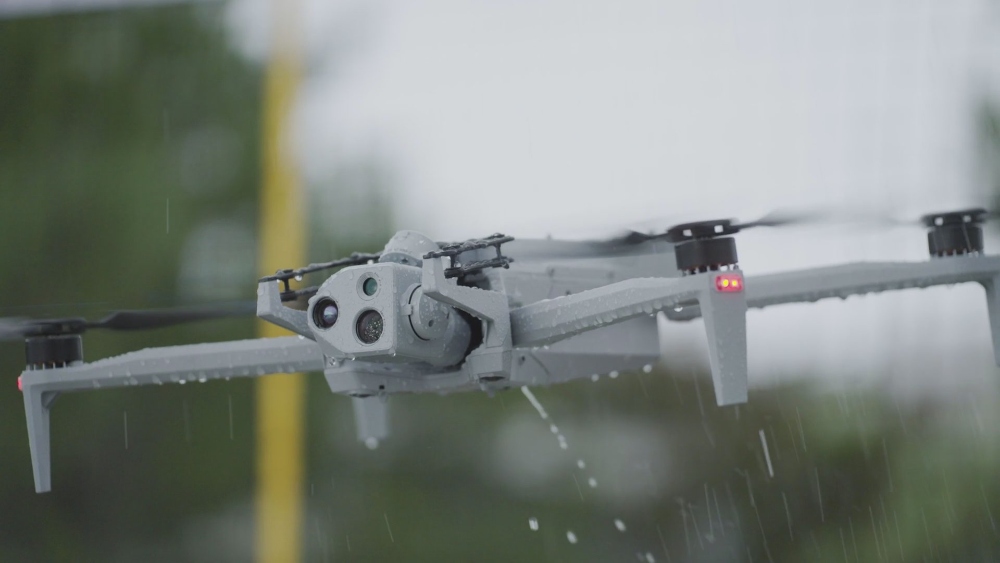
The Skydio X10 is one of the most widely deployed U.S.-based enterprise drones for inspection and public safety operations.

Its autonomy capabilities make it particularly useful for infrastructure inspections where repeatability, obstacle avoidance, and operational consistency are priorities.

Best fit for:

  • Utility inspections
  • Infrastructure inspections
  • Public safety operations

LEARN MORE

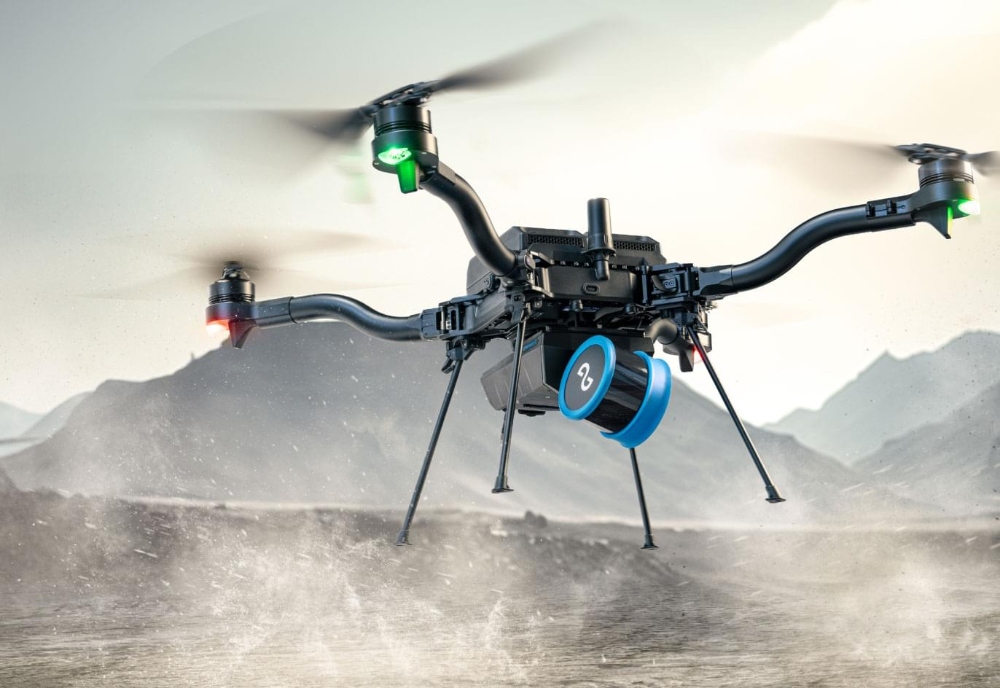
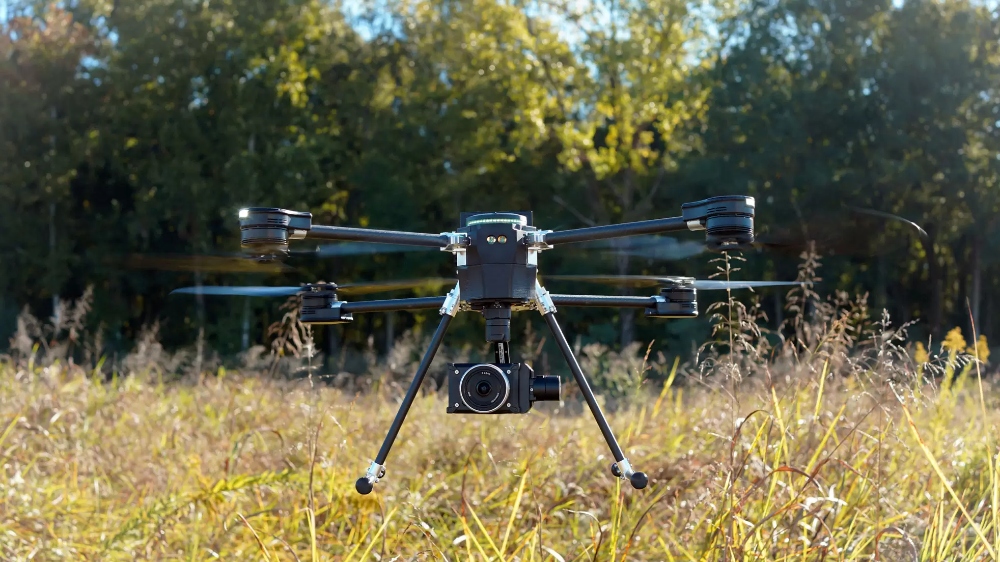
2. Freefly Astro

american-made-freefly-astro

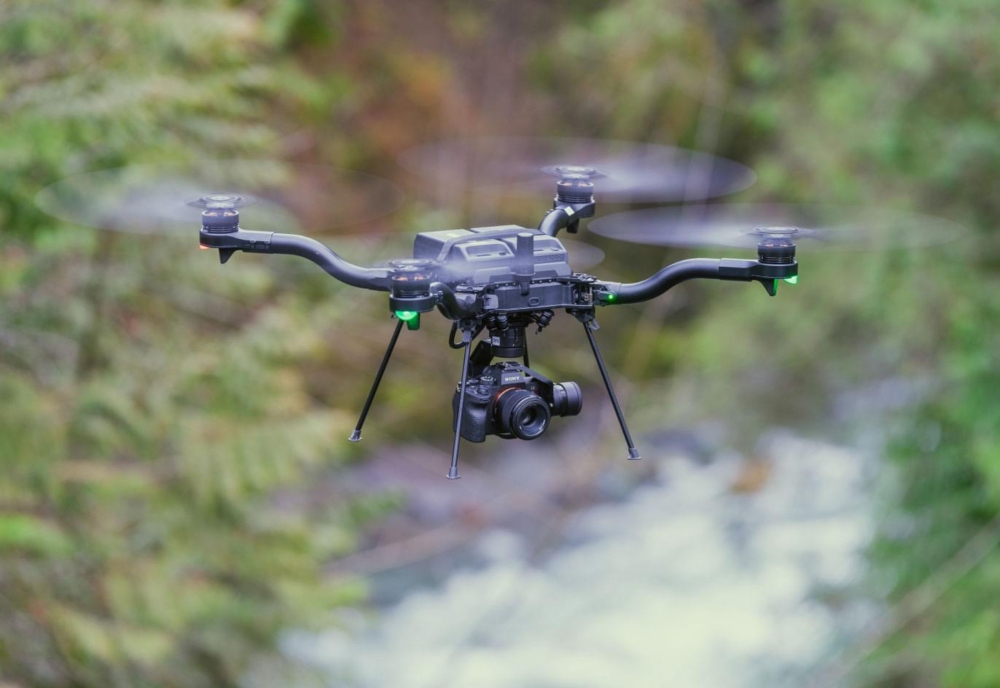
The Freefly Astro is a compact enterprise drone designed for organizations that need portability without sacrificing professional inspection capabilities.

Its modular architecture and field-friendly design make it a strong fit for inspection teams that deploy frequently across multiple sites.

Best fit for:

  • General infrastructure inspections
  • Visual inspection workflows
  • Programs prioritizing portability

LEARN MORE

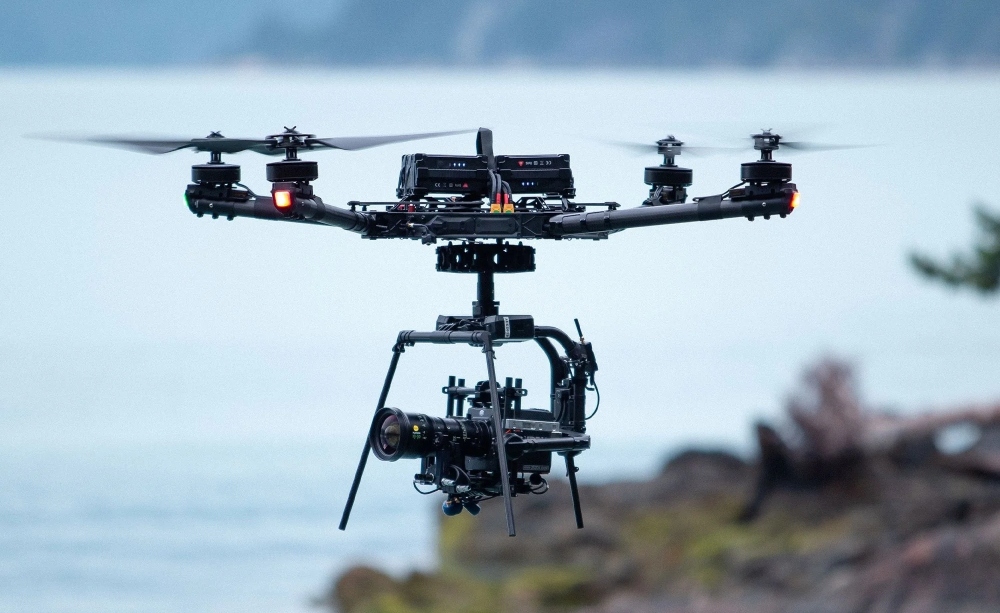
3. Freefly Alta X

american-made-freefly-alta-x

The Freefly Alta X is best suited for inspection programs that need to carry larger payloads such as LiDAR systems, multi-sensor packages, or specialized imaging equipment.

Its heavy-lift capability makes it one of the most versatile American-made platforms for advanced inspection workflows.

Best fit for:

  • Heavy-lift inspection missions
  • LiDAR mapping
  • Custom sensor integrations

LEARN MORE

4. Inspired Flight IF800 Tomcat

american-made-if800-tomcat

The IF800 Tomcat is commonly used for inspection, mapping, and public safety missions that require flexibility across multiple payload types.

It strikes a balance between payload capability and field deployability.

Best fit for:

  • Utility inspections
  • Energy inspections
  • LiDAR and photogrammetry missions

LEARN MORE

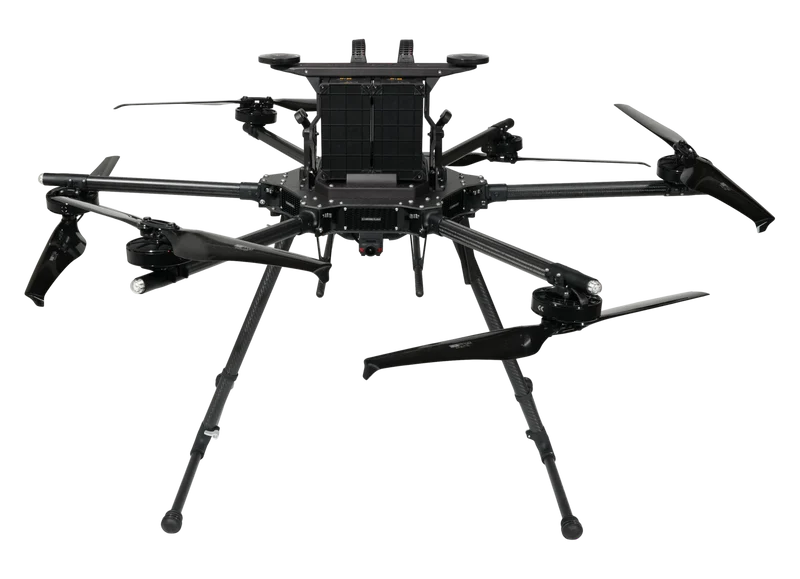
5. Inspired Flight IF1200A

american-made-if1200a

The IF1200A is designed for larger payloads and more demanding data-collection missions.

Its lifting capacity makes it particularly relevant for advanced mapping, LiDAR, and specialized inspection workflows.

Best fit for:

  • Large LiDAR payloads
  • Advanced inspection sensors
  • Large infrastructure projects

LEARN MORE

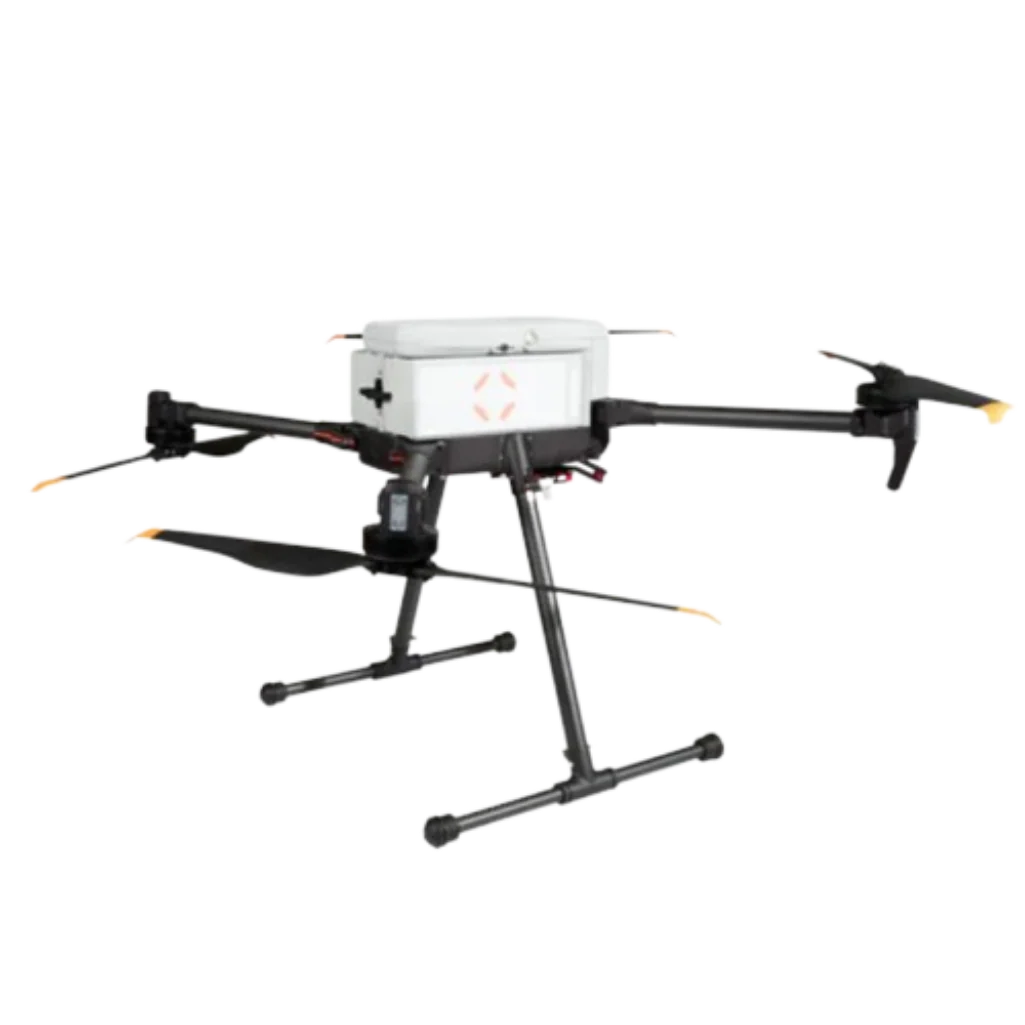
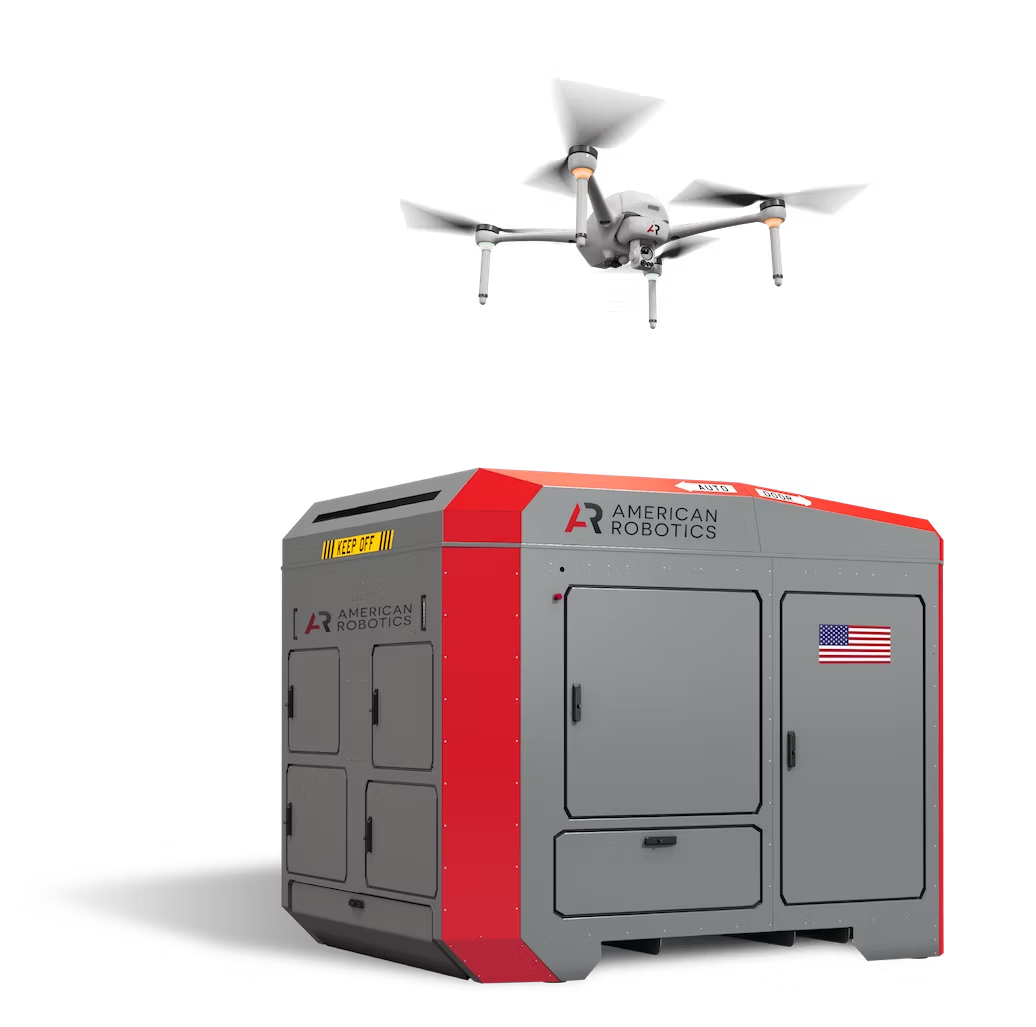
6. American Robotics Optimus 1-EX

american-made-american-robotics-optimus-1-ex

The Optimus 1-EX is differentiated by its autonomous operating model and drone-in-a-box architecture.

It is particularly relevant for recurring inspections, automated monitoring programs, and geographically distributed assets.

Best fit for:

  • Automated inspections
  • Recurring monitoring programs
  • Remote asset management

LEARN MORE

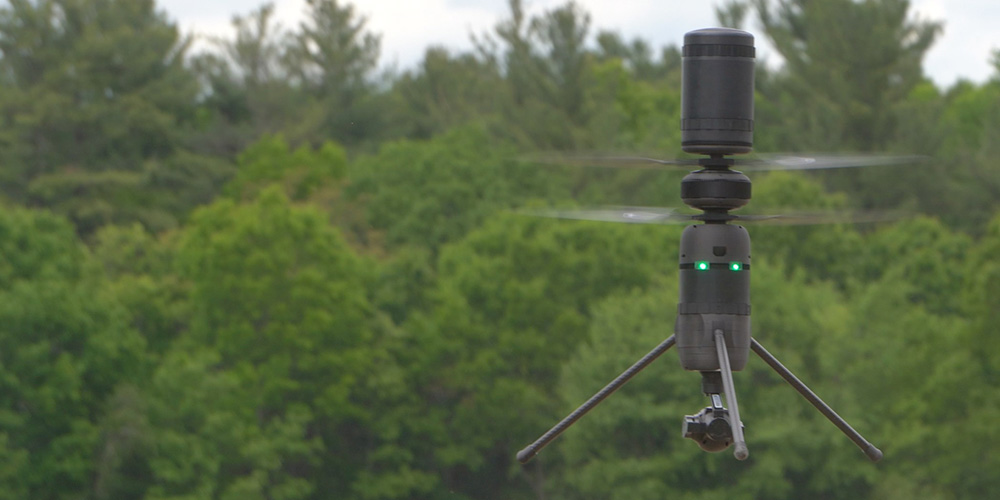
7. Ascent Aerosystems Spirit

american-made-ascent-aerosystems-spirit

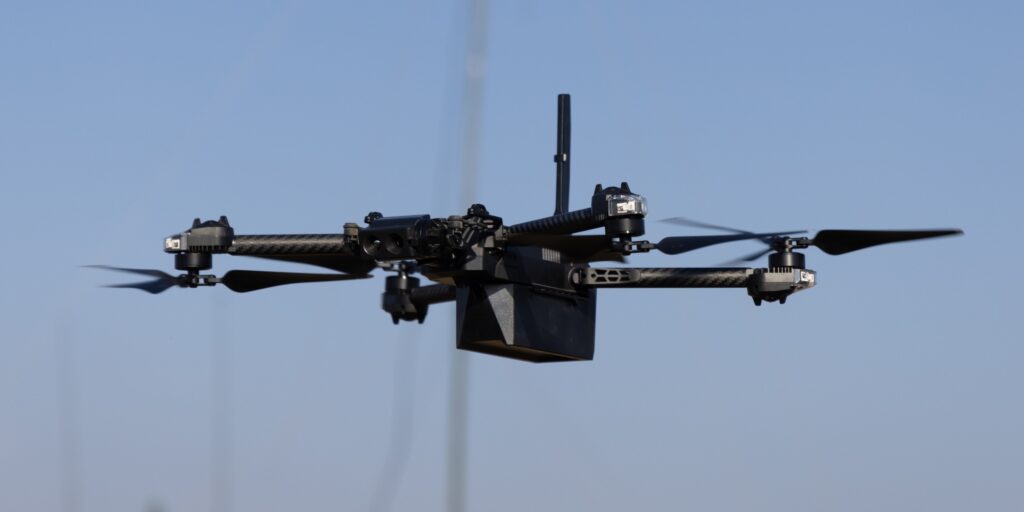
The Ascent Aerosystems Spirit is a rugged UAV designed for challenging operating environments where durability and portability matter.

Its unique cylindrical design differentiates it from traditional multirotor aircraft.

Best fit for:

  • Harsh environments
  • Remote field operations
  • General infrastructure inspections

LEARN MORE

8. WISPR SkyScout 2+

american-made-wispr-skyscout-2-plus

The WISPR SkyScout 2+ combines fixed-wing efficiency with vertical takeoff and landing capability.

This makes it particularly useful for corridor inspections, utility mapping, and large-area infrastructure assessments.

Best fit for:

  • Pipeline inspections
  • Transmission and corridor inspections
  • Large-area mapping missions

LEARN MORE

A Note on Navigating This List

Most inspection teams evaluating American-made drones are not choosing between all of these platforms.

In practice, the decision usually comes down to workflow requirements.

Organizations focused on autonomy may gravitate toward platforms like the Skydio X10 or Optimus 1-EX. Teams running LiDAR or specialized drone payloads often focus on aircraft like the Alta X, IF800, or IF1200A. Meanwhile, large-area mapping programs may find VTOL platforms like the SkyScout 2+ particularly attractive.

Understanding the inspection workflow is typically more important than selecting a drone based solely on its country of origin.
What Is an American-Made Drone?

An American-made drone is generally understood to be a drone made by a U.S.-based manufacturer, assembled in the United States, or built with a trusted domestic or U.S.-aligned supply chain.

But the phrase doesn’t have one universally accepted meaning in the drone industry.

In a strict advertising sense, an unqualified “Made in USA” claim is a high bar. The FTC says a product should be “all or virtually all” made in the United States to qualify for that kind of claim.

For drones, that can be almost impossible because many important components—like cameras, batteries, processors, radios, sensors, and other electronics—may come from global suppliers.

In practice, many buyers use “American-made” more broadly.

They may be looking for a U.S.-headquartered company, domestic final assembly, a non-Chinese supply chain, NDAA alignment, Blue UAS status, Green UAS status, or a platform that fits internal cybersecurity and procurement policies.

That’s why it’s important to be clear on what you’re actually looking for an the requirements you need to meet when you start your research.

Here’s some help to get you started:

U.S.-Made vs. U.S.-Based

A U.S.-made drone and a U.S.-based drone company aren’t the same thing.

A U.S.-based drone company may design, engineer, support, or assemble aircraft in the U.S. while still relying on some international components.

That doesn’t automatically make the drone unsuitable for commercial or industrial work.

But it does mean buyers should avoid assuming that a U.S. company automatically equals a fully domestic product.

For inspection programs, this distinction matters when a project has a specific procurement requirement.

If the requirement is simply to avoid certain foreign-made platforms, a U.S.-based or NDAA-aligned drone may be enough.

If the requirement is a strict domestic-origin standard, the buyer may need deeper documentation from the manufacturer.

Final Assembly vs. Full Supply Chain

Final assembly is only one part of the question.

A drone may be assembled in the U.S. but still use components from other countries.

And for many commercial buyers, that might be just fine.

But for government, defense, utility, or critical infrastructure buyers, the full supply chain will probably matter more.

The chain includes where components are manufactured, where software is developed, where data is stored, and whether the platform has been evaluated through a formal program such as Blue UAS or Green UAS.

All of this means that, in practice, saying a drone is “American-made” isn’t that useful.

The better approach is to ask:

  • Where is the drone assembled?
  • Where are the major components sourced?
  • Who owns and controls the manufacturer?
  • Has the platform been vetted for cybersecurity or supply-chain risk?
  • Does it meet the buyer’s procurement requirement?

Why the Definition Matters

The definition matters because different teams are trying to solve different problems.

A public safety agency may need a drone that aligns with federal or state procurement policies.

A utility may need a platform that satisfies internal cybersecurity requirements.

An industrial inspection team may need a drone that can carry a specific payload, fly near complex assets, or integrate with an existing workflow.

Those are related concerns, but they are not the same concern.

The best drone isn’t always the one with the strongest country-of-origin claim. It’s the one that satisfies the procurement requirement while still performing the mission safely and reliably in the field.


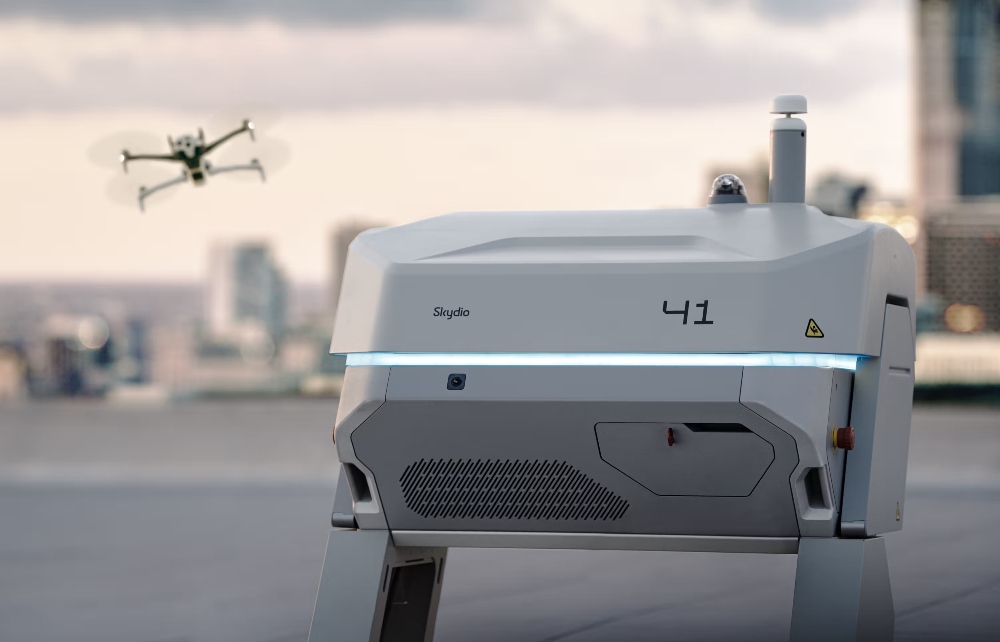
The Skydio X10 and the Skydio Dock | Credit: Skydio

American-Made vs. NDAA-Compliant vs. Blue UAS vs. Green UAS

American-made, NDAA-compliant, Blue UAS, and Green UAS are related terms, but they aren’t interchangeable.

This is one of the most common sources of confusion in drone procurement right now.

A drone can be American-made without being Blue UAS.

And a drone can be NDAA-compliant without being fully made in the United States.

For buyers, the practical question isn’t just “Where is this drone made?”

The better question is: “What requirement are we trying to satisfy?”

TermWhat it usually meansWhat to verify
American-madeA drone made, assembled, or developed by a U.S.-based companyManufacturing location, assembly location, component sourcing, and claim language
NDAA-compliantA platform that avoids restricted manufacturers or components under applicable NDAA rulesWhich NDAA section applies and whether the manufacturer can document compliance
Blue UASA drone vetted through the Blue UAS process for government and defense useWhether the exact platform appears on the current Blue UAS cleared list
Green UASA drone, component, or software product evaluated through AUVSI’s cybersecurity and supply-chain programWhether the platform has Green UAS Cleared or Green UAS Certified status

American-Made Drones

American-made drones are typically discussed in terms of country of origin, domestic manufacturing, or U.S.-based company ownership.

This framing is useful when a buyer wants to support domestic manufacturers, avoid certain foreign supply chains, or narrow the search to U.S.-aligned platforms.

But by itself, “American-made” doesn’t prove that a drone meets a specific procurement requirement.

For industrial buyers, that claim should be treated as a starting point—not the final compliance answer.

NDAA-Compliant Drones

NDAA-compliant drones are evaluated against specific restrictions tied to federal procurement and restricted supply chains.

This is often more important than the general “American-made” label for public-sector buyers, government contractors, and organizations working around critical infrastructure.

A drone may be described as American-made and still require additional review before it can be used on a project with NDAA requirements.

For a deeper explanation, see our NDAA-compliant drones guide.

Blue UAS Drones

Blue UAS drones are platforms that have gone through a formal vetting process for cybersecurity, supply-chain trustworthiness, and government use.

This makes Blue UAS more specific than “American-made.”

Instead of relying on a general origin claim, buyers can refer to a cleared platform list.

That makes Blue UAS especially relevant for defense, federal, public safety, and other security-sensitive programs.

For the full list and explanation, see our Blue UAS guide.

Green UAS Drones

Green UAS is a cybersecurity and supply-chain certification program managed by AUVSI.

It’s closely aligned with Blue UAS but was developed for a broader set of commercial, state, local, public safety, and critical infrastructure users.

For buyers who do not need a defense-focused Blue UAS platform but still want a trusted drone standard, Green UAS can be an important middle ground.

For the current list and certification details, see our Green UAS guide.

3 Main Drivers Behind People Seeking American-Made Drones

Interest in American-made drones has grown significantly over the last several years.

For some organizations, the motivation is straightforward: they want to support domestic manufacturers or reduce reliance on overseas supply chains.

For others, the issue is driven by procurement requirements, cybersecurity concerns, or uncertainty surrounding the future availability of certain foreign-made platforms.

In practice, most organizations aren’t searching for American-made drones because of a single factor.

They’re responding to a combination of policy, risk management, operational, and procurement considerations.

Here are the three main drivers behind people seeking American-made platforms:

1. Data Security and Supply Chain Concerns

One of the biggest drivers behind interest in American-made drones is supply-chain trust.

Many organizations want greater visibility into where hardware is manufactured, where software is developed, and how data is stored and transmitted.

This concern is particularly common among:

  • Critical infrastructure operators
  • Utilities
  • Energy companies
  • Public safety agencies
  • Government contractors

In these environments, procurement teams increasingly evaluate cybersecurity and supply-chain risk alongside traditional performance metrics.

As a result, buyers often look first at U.S.-based manufacturers, NDAA-compliant platforms, Green UAS-certified systems, or Blue UAS-vetted aircraft before evaluating specific technical capabilities.

2. Government and Public-Sector Procurement

Many federal, state, and local organizations operate under procurement rules that influence which drones can be purchased or deployed.

These requirements may come from:

  • Federal regulations
  • State laws
  • Agency procurement policies
  • Grant funding requirements
  • Contractual obligations

In these cases, “American-made” is often used as shorthand for a broader compliance objective.

The actual requirement may be NDAA compliance, Blue UAS approval, Green UAS certification, or another procurement standard.

That is why buyers should always identify the specific requirement before narrowing their platform options.

3. DJI Alternatives and Long-Term Fleet Planning

Another major driver is long-term fleet planning.

Many organizations currently operate DJI fleets and are evaluating what future procurement options may look like if regulatory restrictions continue to expand.

In these situations, buyers are often less concerned with where a drone is made and more concerned with questions such as:

  • Will this platform remain available?
  • Will it continue receiving support and updates?
  • Can it satisfy future procurement requirements?
  • Can it perform the same mission effectively?

This has led many organizations to evaluate American-made drones alongside other trusted alternatives as part of a broader risk-management strategy.

For a detailed look at current restrictions and procurement concerns, see our DJI ban guide

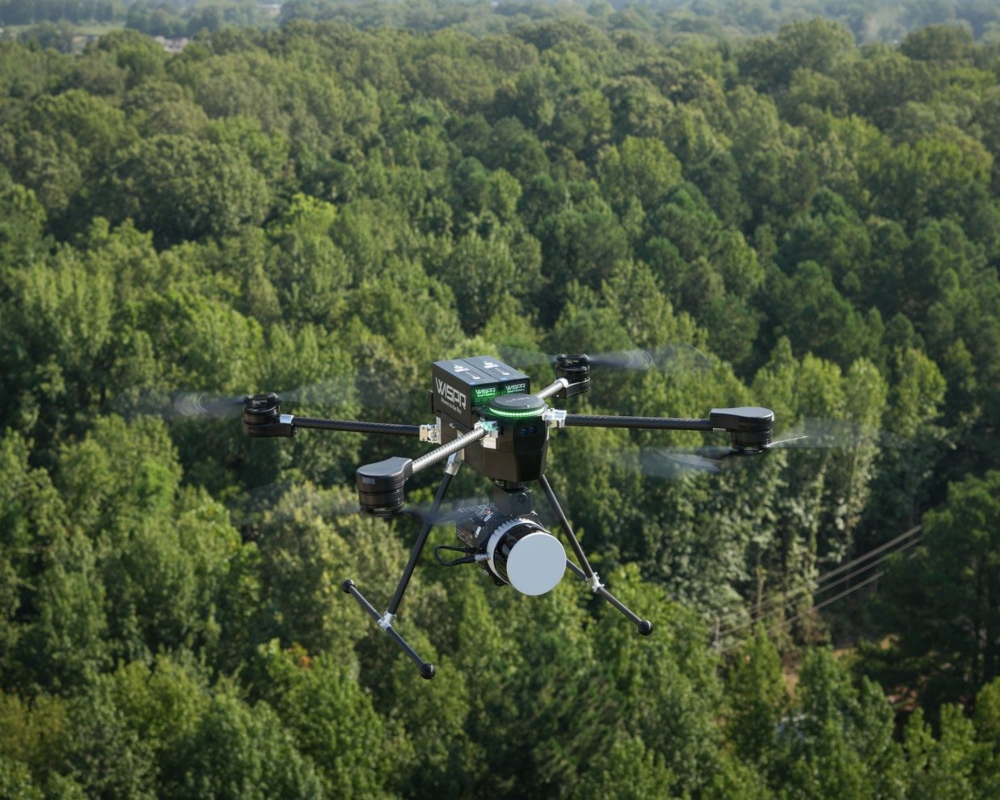
The WISPR Scout 2

How to Choose an American-Made Drone

Choosing an American-made drone starts with understanding the mission.

Too often, organizations begin by focusing on country of origin and only later discover that the selected platform doesn’t fit the workflow.

A better approach is to start with operational requirements and then narrow the field based on procurement constraints.

This helps you make sure that the drone you choose satisfies both compliance requirements and mission needs.

Start with the Inspection Mission

Different inspection workflows require very different drone capabilities.

A drone that excels at transmission-line inspections may not be the best choice for confined spaces, recurring autonomous inspections, or LiDAR mapping.

Before evaluating manufacturers, define:

  • The assets being inspected
  • The sensors required
  • The level of autonomy needed
  • The size of the operational area
  • The expected flight frequency

This immediately narrows the list of viable platforms.

For example, a heavy-lift LiDAR mission may point toward platforms like the Alta X or IF1200A, while recurring automated inspections may be better suited to systems such as the Optimus 1-EX.

Confirm the Compliance Requirement

Once the mission is clear, identify any procurement or compliance constraints.

This is often where organizations discover that “American-made” is not actually the requirement.

The real requirement may be:

  • NDAA compliance
  • Blue UAS eligibility
  • Green UAS certification
  • State procurement compliance
  • Internal cybersecurity policy alignment

Understanding the actual requirement helps avoid eliminating viable platforms—or selecting a drone that ultimately fails procurement review.

Evaluate Payloads, Support, and Workflow Fit

Once the mission and compliance requirements are defined, the final evaluation typically comes down to operational fit.

This includes:

  • Payload compatibility
  • Software ecosystem
  • Training requirements
  • Maintenance support
  • Availability of replacement parts
  • Vendor responsiveness


Are American-Made Drones Better Than DJI or Other Foreign Platforms?

Not necessarily.

The better question is whether an American-made drone is a better fit for your organization’s requirements.

Consideration American-Made Drones DJI and Other Foreign Platforms
Procurement Alignment Often stronger May face restrictions depending on the organization
NDAA / Blue UAS Eligibility Often available Generally unavailable
Hardware Ecosystem Smaller but growing Generally broader
Inspection-Specific Workflows Strong on select platforms Broad selection depending on mission
Purchase Price Often higher Often lower

Why Some Organizations Prefer American-Made Drones

For many organizations, the decision is driven by procurement requirements rather than flight performance alone.

Public-sector agencies, utilities, critical infrastructure operators, and government contractors often need platforms that align with NDAA requirements, cybersecurity policies, or internal supply-chain standards.

In these situations, an American-made drone may be easier to approve, easier to procure, or a better fit for long-term fleet planning.

Organizations commonly choose American-made platforms because they want:

  • Greater supply-chain visibility
  • Alignment with procurement requirements
  • Access to NDAA, Green UAS, or Blue UAS pathways
  • Reduced uncertainty around future restrictions

Why DJI and Other Foreign Platforms Remain Popular

DJI became the dominant drone manufacturer because its platforms combined strong performance, mature software tools, and relatively accessible pricing.

That success created a high bar for competing manufacturers.

For organizations without procurement restrictions, the decision may come down to practical considerations such as payload capability, software integration, training requirements, support, and total cost of ownership.

As a result, many organizations ultimately adopt a hybrid strategy, using different platforms for different workflows rather than relying on a single drone ecosystem.

The most successful drone programs typically start by defining operational requirements first and then identifying the platforms that satisfy both mission and procurement constraints.

The Freefly Astro

American-Made Drones FAQ

Here are answers to some of the most commonly asked questions about American-made drones.

Are any drones fully made in the USA?

Very few drones can accurately claim that all or virtually all components are manufactured in the United States.

Most drone manufacturers rely on global supply chains for components such as batteries, cameras, sensors, processors, and electronics.

As a result, many platforms marketed as American-made are better described as U.S.-designed, U.S.-assembled, or manufactured by U.S.-based companies.

Are American-made drones the same as NDAA-compliant drones?

No.

American-made and NDAA-compliant refer to different concepts.

American-made generally relates to company origin, manufacturing, or assembly location.

NDAA compliance refers to specific procurement and supply-chain requirements tied to federal restrictions.

A drone may be American-made without being NDAA-compliant, and a drone may be NDAA-compliant without being fully manufactured in the United States.

Are all Blue UAS drones American-made?

No.

Many Blue UAS platforms come from U.S.-based manufacturers, but Blue UAS is a vetting program, not a country-of-origin designation.

The purpose of Blue UAS is to evaluate cybersecurity, supply-chain trustworthiness, and suitability for government use.

Are all Green UAS drones American-made?

No.

Green UAS is a certification program focused on cybersecurity and supply-chain trustworthiness.

Some Green UAS platforms are manufactured by U.S.-based companies, while others come from manufacturers headquartered outside the United States.

What is the best American-made drone for industrial inspections?

There is no single best platform for every inspection program.

For general infrastructure inspections, many organizations evaluate platforms such as the Skydio X10.

For LiDAR and specialized payloads, aircraft like the Freefly Alta X, IF800 Tomcat, and IF1200A are often considered.

For recurring autonomous inspections, systems such as the Optimus 1-EX may be a better fit.

The right choice depends on the mission, payload requirements, operational environment, and procurement constraints.

Should I choose an American-made drone over DJI?

Not necessarily.

The decision should be driven by mission requirements, procurement policies, cybersecurity considerations, and long-term fleet planning.

Some organizations are required to use American-made or NDAA-compliant platforms, while others have more flexibility.

The best approach is to evaluate the platform against both operational needs and procurement requirements rather than focusing solely on country of origin.

Table of Contents