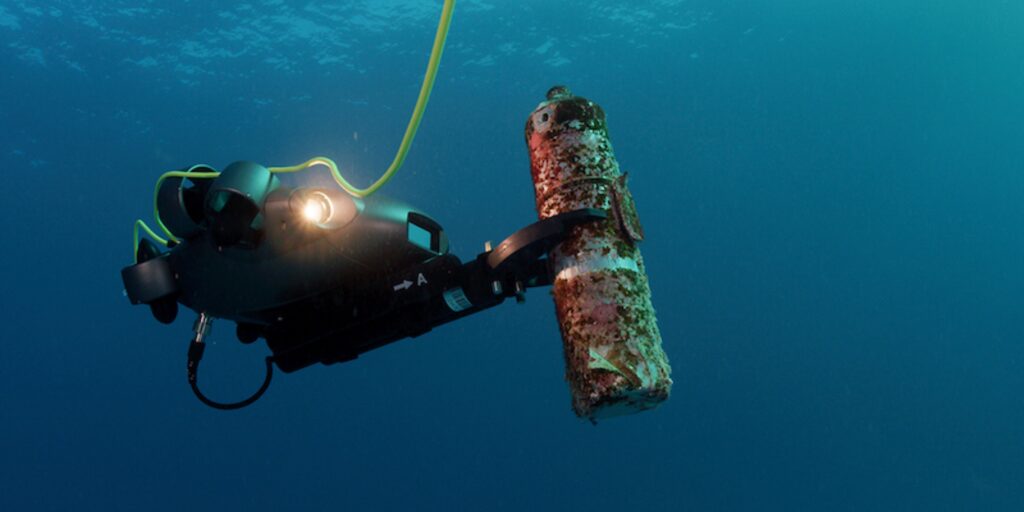
Originally developed for military and scientific research, these sophisticated devices now serve a wide range of purposes, from environmental monitoring to recreational exploration.
The versatility of drone underwater technology continues to grow, driven by advancements in robotics, sensor technology, and artificial intelligence. From the icy depths of the Arctic to the secluded corners of private aquariums, underwater drones are expanding the frontiers of exploration and opening up new possibilities for discovery and adventure in the aquatic world.
Here’s everything we cover in this in-depth guide to underwater drones:
Best Underwater Drones for Rent & Sale [New for 2026]
Want to buy or rent an underwater drone? Here are the top options on the market.
Remarque : All of the ROVs on this list are high-end professional drones that MFE sells and/or rents for industrial use cases.
Here’s the list:
1. Deep Trekker PHOTON
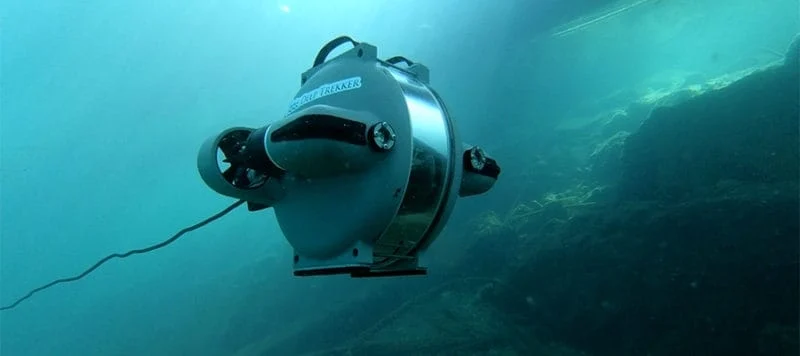
The Deep Trekker PHOTON is a professional-grade underwater drone designed for rigorous inspection tasks. With its robust build and advanced features, it’s ideal for industries requiring deep and detailed underwater inspections.
Specs & Key Features for the Deep Trekker PHOTON
Depth capability. Operates at depths of up to 3,280 feet (1,000 meters), making it suitable for deep-sea explorations and inspections.
Appareil photo. Equipped with a 4K camera featuring a 30x optical zoom, providing clear and detailed imaging even in low-light underwater conditions.
Eclairage. Integrated LED lighting with up to 10,800 lumens ensures excellent visibility in dark environments.
Manœuvrabilité. Advanced vectored thruster system allows for precise movements and stable operation in challenging underwater conditions.
Caractéristiques supplémentaires. Includes a sonar integration option for enhanced navigation and obstacle avoidance, as well as interchangeable battery options for extended operational time.
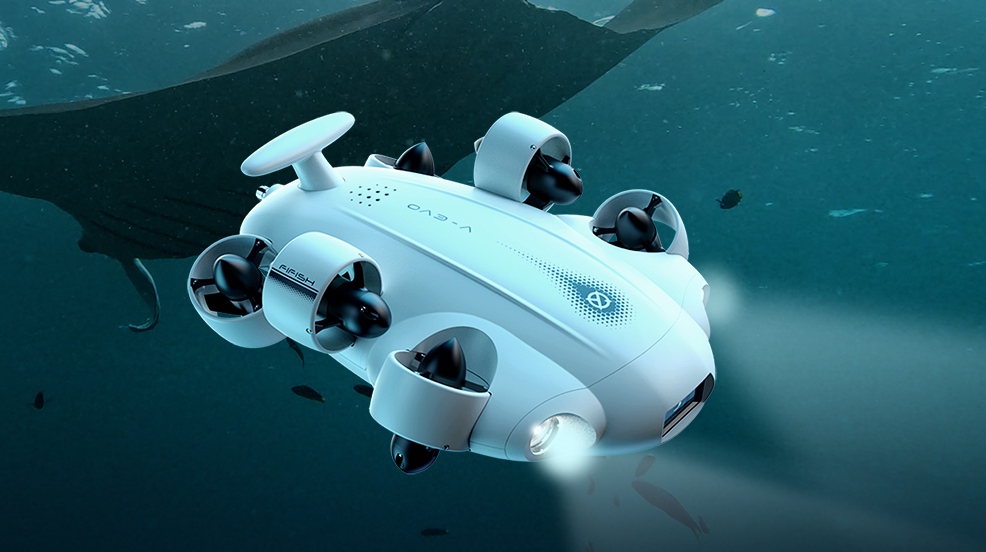
The FIFISH V-EVO is a versatile underwater drone designed for high-quality visual inspections and cinematic applications. Its compact size and advanced features make it an excellent choice for professionals looking for precise and immersive underwater imaging.
Specs & Key Features for the FIFISH V-EVO
Depth capability. Operates at depths of up to 328 feet(100 meters), suitable for various underwater exploration and inspection tasks.
Appareil photo. Features a 4K UHD camera with a 166° ultra-wide-angle lens, providing crisp and wide coverage of underwater environments.
Eclairage. Equipped with 5000-lumen LED lights, ensuring bright and clear visuals even in low-light conditions.
Manœuvrabilité. Includes six thrusters for omnidirectional movement, allowing for smooth and stable navigation in complex underwater environments.
Caractéristiques supplémentaires. Real-time 1080p image transmission and app-based control provide an intuitive and user-friendly experience.
The Deep Trekker DT640 Utility Crawler is a robust and versatile underwater drone designed for challenging inspection tasks in both submerged and dry environments. Equipped with advanced features, it is an ideal choice for inspecting culverts, pipelines, and tanks.
Specs & Key Features for the Deep Trekker DT640
Depth capability. Operates at depths of up to 164 feet (50 meters), making it suitable for various underwater and confined space inspections.
Appareil photo. Features a high-definition 4K camera with adjustable lighting, providing clear visuals even in dark or murky conditions.
Durabilité. Constructed with a rugged, waterproof design capable of handling harsh environments, including corrosive and debris-filled water.
Manœuvrabilité. Equipped with powerful magnetic wheels and dual treads, allowing it to navigate over metal surfaces and challenging terrains with ease.
Caractéristiques supplémentaires. Includes an integrated sonar system and laser scaler for precise measurements and enhanced inspection capabilities.
The FIFISH PRO W6 is a professional-grade underwater drone designed for complex and demanding inspection and exploration tasks. Its advanced features and modular design make it a versatile tool for marine research, underwater engineering, and industrial inspections.
Specs & Key Features for the FIFISH PRO W6
Depth capability. Capable of diving to depths of up to 1,148 feet (350 meters), suitable for deep-sea exploration and industrial applications.
Appareil photo. Equipped with a 4K UHD camera and 12-megapixel resolution, providing high-quality visuals and real-time video streaming. Integrated lighting system with 6,000 lumens ensures clear footage in low-light conditions.
Manœuvrabilité. Features six degrees of freedom with its vectored thruster design, offering precise control and stability even in challenging underwater environments.
Modular Design. Compatible with a range of tools and sensors, including a robotic arm and sonar system, to support various inspection and intervention tasks.
Autonomie de la batterie. Provides up to 8 hours of operational time on a single charge, depending on usage and attached modules.
The FIFISH PRO W6 is a professional-grade underwater drone designed for complex and demanding inspection and exploration tasks. Its advanced features and modular design make it a versatile tool for marine research, underwater engineering, and industrial inspections.
Specs & Key Features for the FIFISH PRO W6
Depth capability. Capable of diving to depths of up to 1,148 feet (350 meters), suitable for deep-sea exploration and industrial applications.
Appareil photo. Equipped with a 4K UHD camera and 12-megapixel resolution, providing high-quality visuals and real-time video streaming. Integrated lighting system with 6,000 lumens ensures clear footage in low-light conditions.
Manœuvrabilité. Features six degrees of freedom with its vectored thruster design, offering precise control and stability even in challenging underwater environments.
Modular Design. Compatible with a range of tools and sensors, including a robotic arm and sonar system, to support various inspection and intervention tasks.
Autonomie de la batterie. Provides up to 8 hours of operational time on a single charge, depending on usage and attached modules.
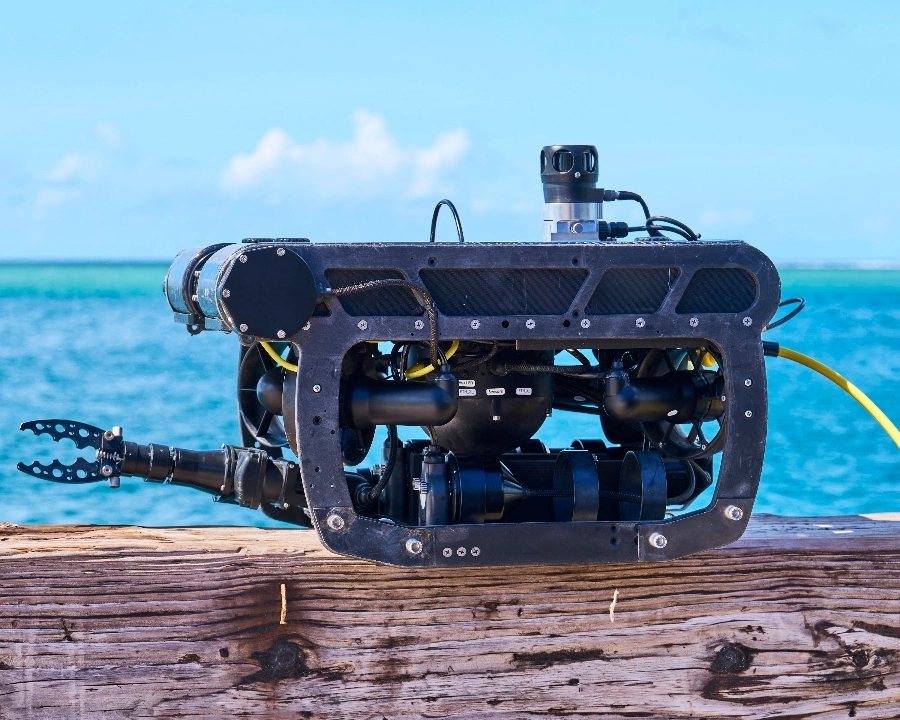
The Deep Trekker PIVOT is a robust underwater ROV, engineered for advanced inspections, surveying, and underwater missions. With its pivoting camera and rugged design, it excels in both commercial and industrial environments, offering users superior control and high-quality data collection.
Specs & Key Features for the Deep Trekker PIVOT
Depth capability. The PIVOT can dive up to 1,000 feet (305 meters), allowing for deep underwater inspections in a variety of settings.
Appareil photo. Features a full 4K camera with 30x optical zoom, providing detailed visuals for precise underwater inspections.
Manœuvrabilité. Equipped with a unique pivoting camera system and six thrusters, the PIVOT offers 220-degree field-of-view flexibility and excellent stability during operations.
Autonomie de la batterie. Up to 6 hours of continuous use, ensuring extensive inspection sessions without the need for frequent recharges.
Durabilité. Built with a rugged, professional-grade design to withstand harsh underwater conditions while delivering reliable performance.
The FIFISH V6 is a compact and powerful underwater ROV known for its agility and versatile applications, ranging from marine inspections to underwater photography and research. Its compact design and advanced technology make it a popular choice for professional and recreational use.
Specs & Key Features for the FIFISH V6
Depth capability. The V6 can dive up to 328 feet (100 meters), allowing for deep underwater exploration and inspections.
Appareil photo. Equipped with a 4K UHD camera that captures high-quality images and videos, perfect for underwater inspections and videography.
Manœuvrabilité. Features 360-degree omnidirectional movement, offering excellent flexibility in navigating tight or complex underwater environments.
Autonomie de la batterie. Provides up to 4 hours of continuous operation, ensuring long inspection sessions or exploration missions.
Stability and Control. Comes with intelligent stabilization systems for smooth footage and precise control, even in challenging conditions.
The Deep Trekker REVOLUTION is an advanced ROV designed for professional-grade underwater inspections. Its rotating head and exceptional mobility make it ideal for detailed and dynamic underwater operations across various industries.
Specs & Key Features for the Deep Trekker REVOLUTION
Depth capability. The Revolution can dive up to 1,000 feet (305 meters), providing extensive range for deep-sea exploration and inspections.
Appareil photo. Features a 4K Ultra HD camera with 6x optical zoom, allowing for clear, high-resolution visuals in any underwater setting.
Manœuvrabilité. Equipped with a 260-degree rotating head and 6 thrusters for unmatched agility and stability in challenging environments.
Autonomie de la batterie. Offers up to 8 hours of operation on a single charge, ensuring long missions without interruptions.
Durabilité. Built for rugged environments with corrosion-resistant materials, the Revolution is engineered to withstand the toughest underwater conditions.
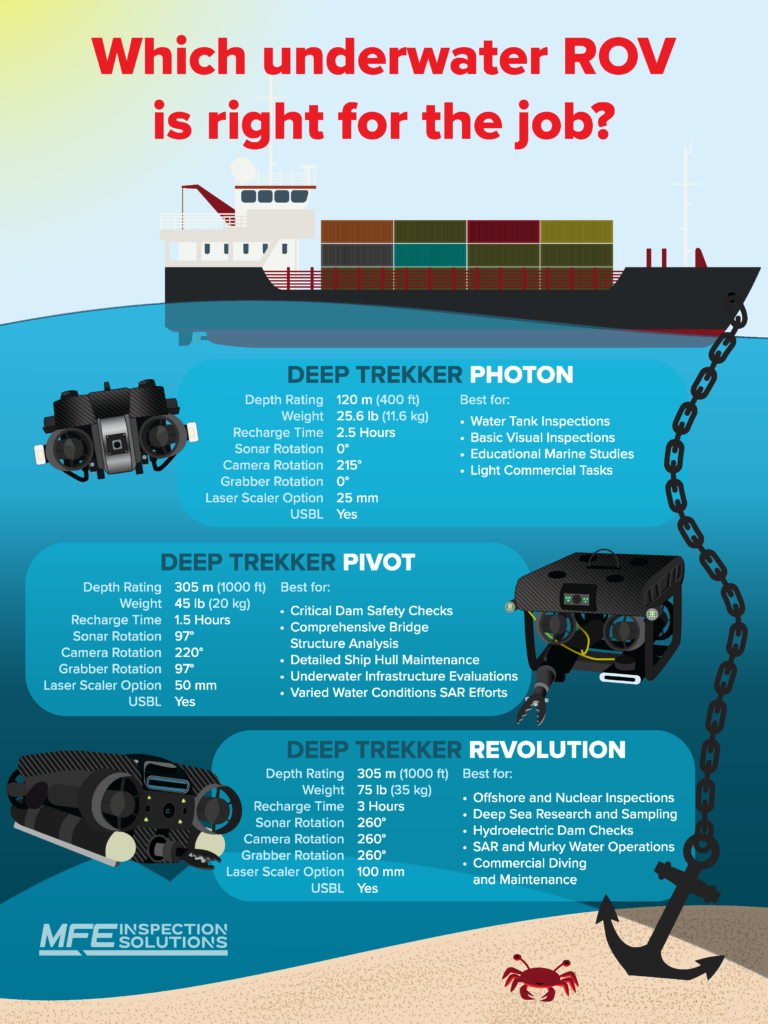
Here’s a quick guide to understanding the differences between Deep Trekker’s underwater drones listed above.
What Is an Underwater Drone?
An underwater drone is any remotely operated or autonomous submersible vehicle equipped with cameras and sensors used for exploring, inspecting, and capturing data in underwater environments.
Underwater drones are also called:
ROVs or ROV drone (ROV = Remotely Operated Vehicles)
Submersible drones
Submarine drones
Water drones
The history of underwater drones dates back to the mid-20th century, with developments initially focused on deep-sea exploration and military applications. Over the decades, advancements in technology have transformed these tools from cumbersome and expensive equipment to more accessible, versatile devices.
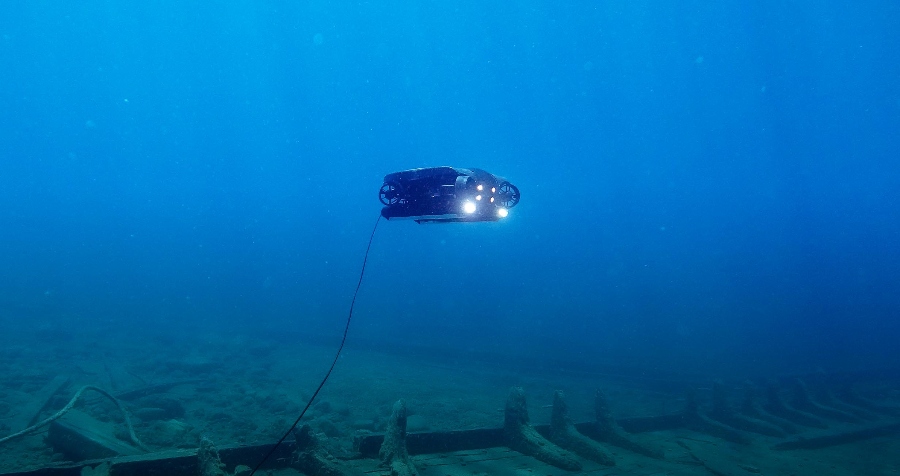
Today, underwater drones are used in a multitude of industries, showcasing their adaptability across different environments. Whether it’s a submarine drone navigating the eerie depths of an ancient shipwreck or capturing the vibrant ecosystems of coral reefs, these drones are enhancing our understanding of the underwater realm.
Underwater Drone Inspections
ROVs have transformed the way inspections are conducted in aquatic environments.
These versatile tools are used in a wide range of inspection applications, including pipeline inspections, dam safety checks, and ship hull examinations. Compared to traditional methods, underwater drones make these inspections safer and less expensive, while also ensuring more comprehensive data collection.
Here are the three most common types of underwater drone inspections.
1. Pipeline Inspections
Underwater drones are extensively used for inspecting subsea pipelines, which are crucial for transporting oil, gas, and other resources.
Equipped with high-resolution cameras and sonar systems, these drones can identify corrosion, leaks, and structural damage along pipelines that run beneath the sea. The use of ROV underwater drones reduces the need for divers, thereby minimizing safety risks and operational costs.
Main Benefits of Underwater Drones in Pipeline Inspections
Cost efficiency. Reduced need for manual inspections and faster data acquisition lower overall inspection costs.
Safety improvements. Eliminates the need for divers in hazardous conditions, reducing the risk of accidents.
Thorough data collection. High-definition cameras and sonar provide comprehensive imagery and data for detailed analysis.
2. Dam Inspections
Dams are critical infrastructures that require regular inspections to ensure structural integrity and operational safety.
Underwater drones are deployed to inspect underwater structures, foundations, and gates for signs of wear, cracks, or sediment buildup. These inspections are crucial for preventing catastrophic failures and ensuring the long-term safety of the dam.
Main Benefits of Underwater Drones in Dam Inspections
Cost efficiency. Reduces the need for draining reservoirs or deploying divers for underwater inspections.
Safety improvements. Minimizes human involvement in potentially dangerous environments.
Thorough data collection. Capable of accessing confined or difficult-to-reach areas for detailed visual and sonar inspections.
3. Ship Hull Checks
Underwater drones are invaluable for inspecting the hulls of ships, both during dry dock maintenance and while afloat.
They can detect issues such as hull fouling, corrosion, and damage from impact or grounding. This proactive approach helps maintain the vessel’s performance and safety, avoiding costly repairs and downtime.
Main Benefits of Underwater Drones in Ship Hull Checks
Cost efficiency. Enables quick, on-site inspections without the need for dry docking the vessel.
Safety improvements. Reduces the risk of accidents associated with manual hull inspections.
Thorough data collection. Provides real-time, high-resolution images and videos for detailed assessments.
Overall, the use of underwater drones in inspections offers significant benefits, including enhanced safety, reduced costs, and the ability to conduct more thorough and detailed evaluations. These advanced tools are now essential for maintaining the integrity and safety of underwater infrastructure across various industries.
Types of Underwater Drones
The world of underwater exploration has expanded significantly with the development of various types of drones, each designed to meet specific needs and challenges associated with aquatic environments.
This section provides an overview of the three main types of underwater drones: ROVs, AUVs, and submersible drones.
1. Remotely Operated Vehicles (ROVs)
ROVs are tethered underwater drones commonly used for deep-sea missions, including oceanographic research, underwater infrastructure inspection, and recovery operations. They are controlled remotely from a surface vessel or shore.
Caractéristiques. Equipped with powerful cameras, lighting, and sometimes manipulative tools to perform precise tasks underwater.
Capabilities. High maneuverability and the ability to transmit real-time data make ROVs ideal for detailed inspections and complex manipulative operations.
Deep Trekker’s PIVOT ROV
2. Autonomous Underwater Vehicles (AUVs)
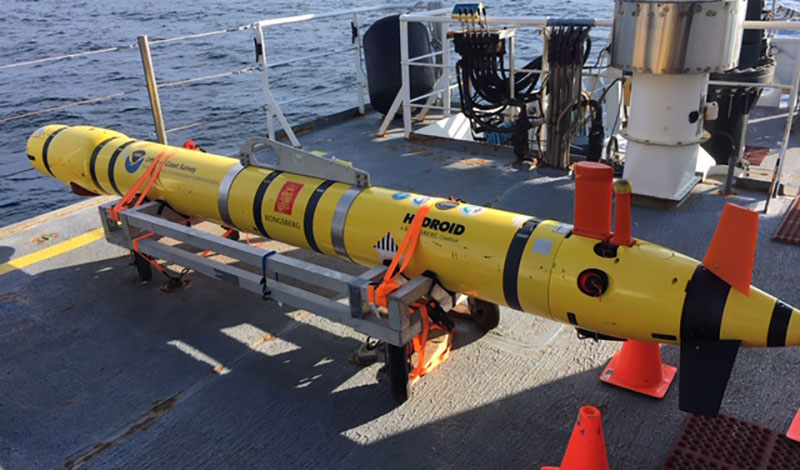
AUVs operate independently without the need for a physical tether, allowing them to cover larger areas. They are typically used for mapping, sampling, and scientific research.
Caractéristiques. Incorporate advanced navigation systems and sensors to gather data and make autonomous decisions about the path and actions to take.
Capabilities. Can reach deeper and more remote areas compared to ROVs, ideal for extensive survey missions and environmental monitoring.
An AUV on the deck of a ship | Credit: NOAA
3. Submersible Drones
Often more compact and agile, submersible drones are designed for both recreational and research purposes, accessible to professionals and hobbyists alike.
Caractéristiques. These drones are typically equipped with HD cameras and are highly portable, making them perfect for capturing underwater footage in lakes, rivers, and coastal waters.
Capabilities. While not as deep-diving as ROVs or AUVs, they provide an accessible option for underwater photography and video, marine biology research, and educational uses.
The FIFISH V-EVO Submersible Drone
Applications of Underwater Drones
Underwater drones extend human capabilities, allowing for deeper, safer, and more efficient underwater operations.
These sophisticated tools are revolutionizing tasks across a range of sectors, from marine research to industrial inspections. Here are the top applications for ROVs.
1. Underwater Infrastructure Inspection and Maintenance
In sectors such as oil and gas, underwater drones are essential for the inspection and maintenance of subsea infrastructure. These drones can perform tasks in hazardous environments, reducing the risk to human divers and significantly cutting down operation times and costs.
Underwater Infrastructure Inspection Applications
Inspection des pipelines
Dam assessments
Checking underwater structures for damage or corrosion
2. Environmental Monitoring
The Deep Trekker REVOLUTION ROV
Environmental conservation efforts benefit greatly from the use of drones, which monitor pollution levels, conduct water quality assessments, and observe the effects of climate change on underwater habitats.
Environmental Monitoring Applications
Tracking pollution sources
Coral reef monitoring
Collecting water samples in sensitive environments
3. Marine Research
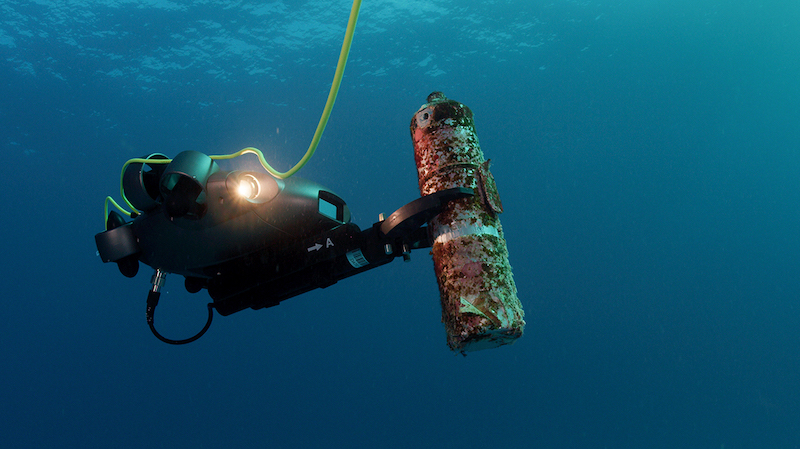
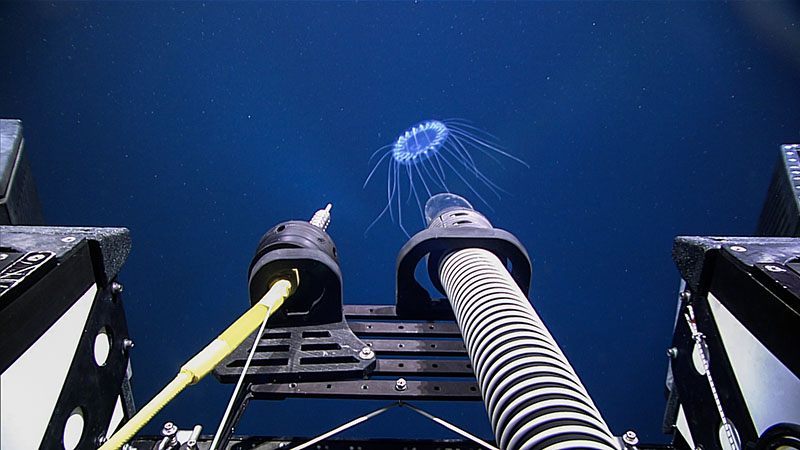
An ROV collects a jellyfish for research | Credit: NOAA
Underwater drones play a pivotal role in oceanography and marine biology, enabling scientists to explore previously inaccessible parts of the ocean. With features like high-definition caméras d'inspection and environmental sensors, these drones capture detailed images and gather data crucial for studying marine ecosystems, underwater geology, and wildlife.
Marine Research Applications
Habitat mapping
Species inventory
Deep-sea exploration
4. Recreational Uses
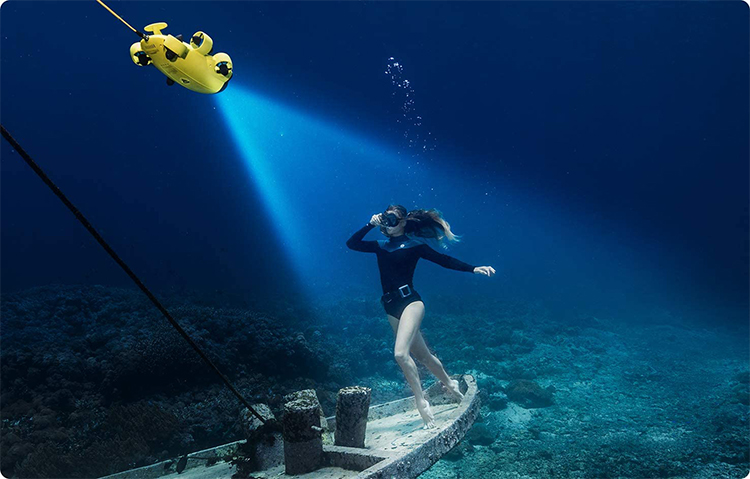
For enthusiasts and amateur explorers, underwater drones open up the world of underwater photography and videography, allowing for stunning visuals of aquatic life and submerged landscapes.
Recreational Applications
Shipwreck discovery
Treasure hunting
Recreational diving support
Key Features to Consider When Choosing an Underwater Drone
When selecting an underwater drone, various features determine its suitability for specific tasks.
Here’s a guide to the most critical specifications you should consider to ensure you select the right drone for your underwater exploration or work needs.
1. Depth Capability
The maximum depth an underwater drone can reach is crucial, especially for tasks in deep waters. Ensure the drone’s depth rating matches or exceeds the depths you intend to explore or work in.
2. Battery Life
Long battery life is essential for extended missions to minimize interruptions and maximize operational efficiency. Look for drones that offer a good balance of power and endurance.
3. Camera Quality
High-quality cameras are vital for clear, detailed underwater imaging. Look for drones equipped with high-resolution cameras that can capture fine details, even in low light conditions.
4. Maneuverability
Maneuverability is key, especially in challenging or confined underwater environments. Drones with advanced propulsion and steering capabilities offer better control and navigation.
5. Sensor Integration
The ability to integrate various sensors can significantly enhance the drone’s utility by providing capabilities such as temperature readings, chemical analysis, or biological sampling.
Considering these features will help you choose an underwater drone that not only meets your specific needs but also enhances your ability to conduct thorough and efficient underwater investigations or explorations.
Maintenance and Care for Underwater Drones
Proper maintenance is key to extending the life and performance of your underwater drone.
Whether you’re using an ROV for industrial inspections or for recreational purposes, following these maintenance tips will help keep your drone in optimal condition.
1. Storage
Dry environment. After every use, ensure your drone sous-marin is thoroughly dried before storing it to prevent corrosion, especially if it’s been in saltwater.
Contrôle de la température. Store your submersible drone in a cool, dry place. Avoid exposing it to extreme temperatures, which could affect the battery and other components.
Protective case. Invest in a sturdy, waterproof storage case to protect your underwater camera drone from physical damage during transportation and storage.
2. Cleaning
Rinse after use. Always rinse your drone underwater with fresh water after using it in saltwater to remove salt residues, which can cause corrosion over time.
Wipe down. Use a soft, lint-free cloth to gently wipe down the underwater drone camera, ensuring there’s no remaining debris or water.
Lens care. Clean the camera lens with a microfiber cloth to maintain clear visuals and avoid scratches that can affect image quality.
3. Routine Checks
Entretien des batteries. Charge your submarine drone battery regularly and avoid storing it with a low charge. This helps to extend the battery’s lifespan.
Inspect seals. Regularly check the drone’s O-rings and seals to ensure they are intact and prevent water ingress.
Propeller and motor check. Inspect the propellers and motors for any wear or debris, and clean or replace them as needed to ensure smooth operation.
By adhering to these maintenance practices, you can ensure your water drone continues to perform efficiently for years to come.
Underwater Drone FAQ
How deep can an underwater drone go?
Depth capabilities of underwater drones vary significantly based on their design and intended use. Some recreational drones can dive up to 100 meters, while specialized industrial ROV underwater drones can reach depths of up to 6,000 meters or more.
What are the main types of underwater drones?
There are primarily two types of underwater drones: ROVs (Remotely Operated Vehicles) and AUVs (Autonomous Underwater Vehicles). ROVs are controlled by a pilot in real-time, while AUVs operate independently based on pre-programmed instructions.
What are underwater drones used for?
Underwater drones are used for a variety of applications, including marine research, underwater infrastructure inspection, environmental monitoring, search and rescue operations, and even recreational exploration.
Can underwater drones capture video footage?
Yes, many underwater drones are equipped with high-definition cameras, allowing them to capture video footage and still images of underwater environments. Advanced models also offer features like real-time video streaming and thermal imaging.
What should I look for in an underwater drone?
Key features to consider include depth capability, battery life, camera quality, maneuverability, and sensor integration. The choice of drone will depend on your specific needs, such as scientific research, industrial inspections, or recreational use.
How are underwater drones powered?
Most underwater drones are powered by rechargeable batteries. The battery life varies depending on the model and can range from a few hours to over 24 hours for high-end industrial drones.
What industries use underwater drones?
Underwater drones are widely used in industries such as oil and gas, utilities, environmental monitoring, marine research, and aquaculture. Their ability to reach and monitor underwater environments makes them invaluable tools for these sectors.
How do underwater drones navigate underwater?
Underwater drones typically use a combination of GPS (for surface navigation), inertial navigation systems, and sonar technology to navigate and maintain their position underwater. Advanced models may also use visual-based navigation systems.
Can I use an underwater drone for fishing?
Yes, some underwater drones are designed specifically for fishing, allowing users to locate schools of fish, inspect underwater habitats, and even drop bait with precision. These drones often come equipped with high-resolution cameras and fish-finding technology.
Table des matières
Zacc Dukowitz
Underwater Drones: The Best ROVs for Rent & Sale [New for 2026]
Looking for a professional underwater drone? This in-depth guide covers the best ROVs on the market, as well as top use cases and more.
Ressources
Guide
Underwater Drones: The Best ROVs for Rent & Sale [New for 2026]