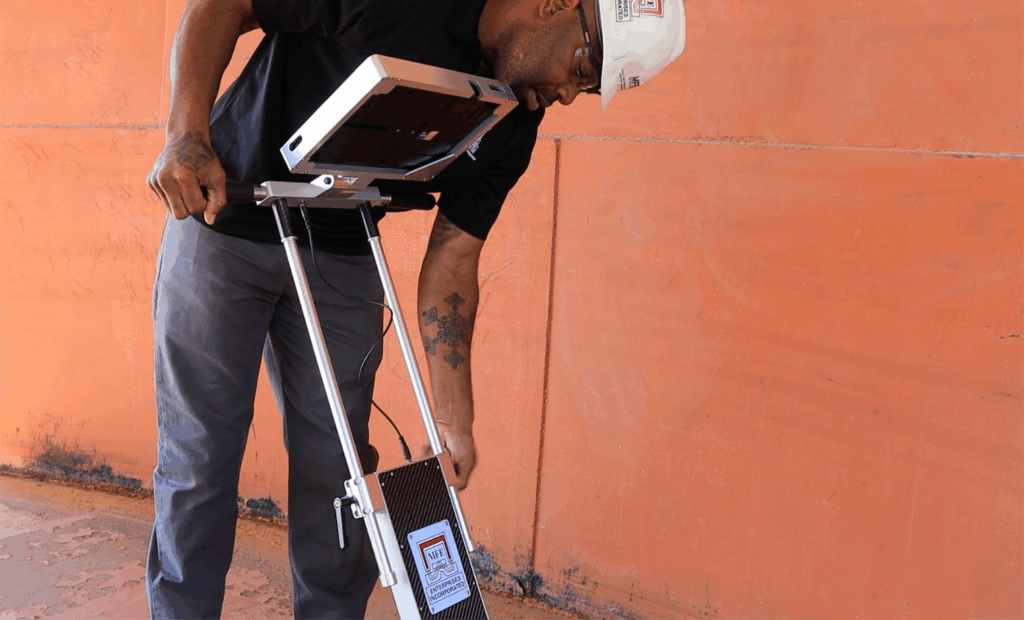
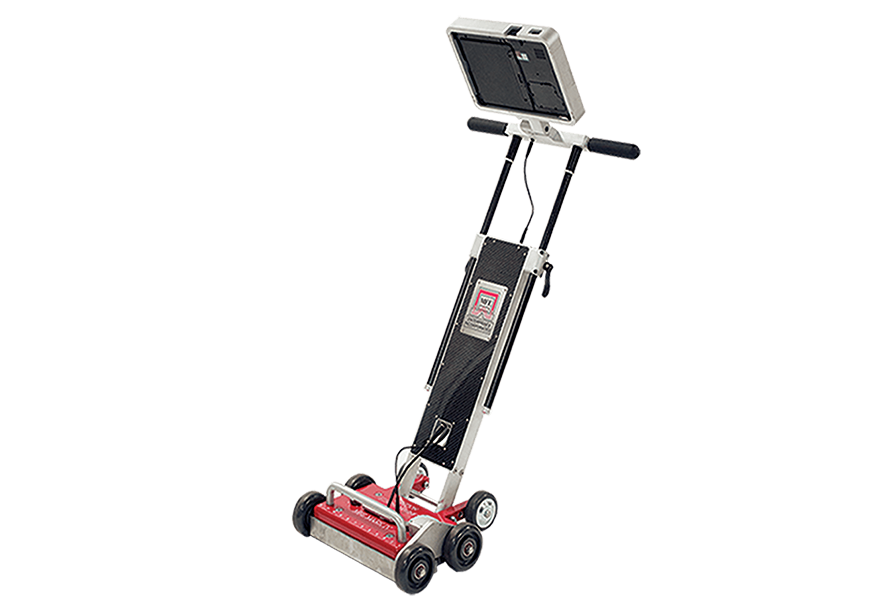
Le MFE Edge Tank Floor Scanner est un scanner de pointe qui utilise la technologie des fuites de flux magnétiques (MFL) pour détecter la corrosion le long des bords des fonds de cuve.
Built for edge-zone performance, the MFE Edge can operate extremely close to the tank shell, down to nearly 1/8 inch, allowing operators to evaluate the areas where deterioration commonly begins.
The MFE Edge delivers dependable sensitivity and accurate readings that support ongoing tank integrity programs. It is straightforward to operate and pairs smoothly with the Mark IV Tank Floor Scanner, giving inspection teams a combined approach for both tight edge areas and wider floor coverage.
Type d'équipement : Scanner de fond de cuve
Avantages
Measuring edge-zone wall thickness with precision
Identifying corrosion and metal loss with MFL
Scanning within about 1/8 inch of the shell wall
Scanning up to 1/2 inch of combined steel and coating
Scanning up to 0.75 inches with the High Flux Bridge Upgrade
Strengthening tank integrity and inspection programs
Providing clear edge-condition data for maintenance
Working seamlessly with the Mark IV Tank Floor Scanner
Réservoirs de stockage
Réservoirs de stockage de pétrole brut
Réservoirs de stockage d'eau
Réservoirs de stockage de produits chimiques
Réservoirs de GNL
Cuves de réacteurs
Pétrole et gaz
Usines chimiques
Gestion de l'eau et des déchets
Acheter ou louer
Demande de devis
MFE Edge : scanner de bord de cuve avancé avec une précision et une intégration accrues
Le MFE Edge est le tout dernier scanner de bord de réservoir de MFE Enterprises. Le MFE Edge est doté du logiciel convivial, rapide et efficace du scanner de réservoir Mark IV, et d'une poignée pivotante qui permet à ce scanner de s'adapter étroitement à l'enveloppe du réservoir de stockage dans la zone critique.
Le MFE Edge est conçu pour fonctionner en parallèle avec le MFE Mark IV en créant des rapports analytiques qui peuvent être importés dans le scanner de sol de réservoir MFE Mark IV.
Built for tough environments, the upgraded aluminum handles offer superior durability and strength. Designed to endure the demands of field operations, they deliver lasting performance and dependable reliability in every inspection.
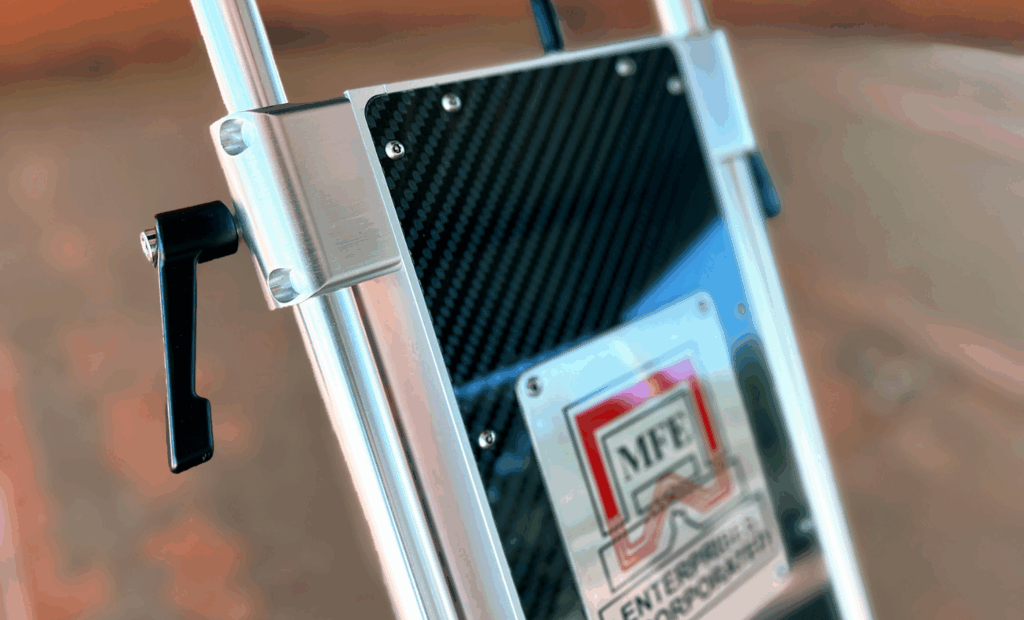
Stronger Dual Cam Levers
Now equipped with reinforced dual cam levers, the handle assembly provides a stronger, more reliable locking mechanism. This upgrade ensures a tighter, more stable lock—enhancing operator safety and control throughout scanning operations.
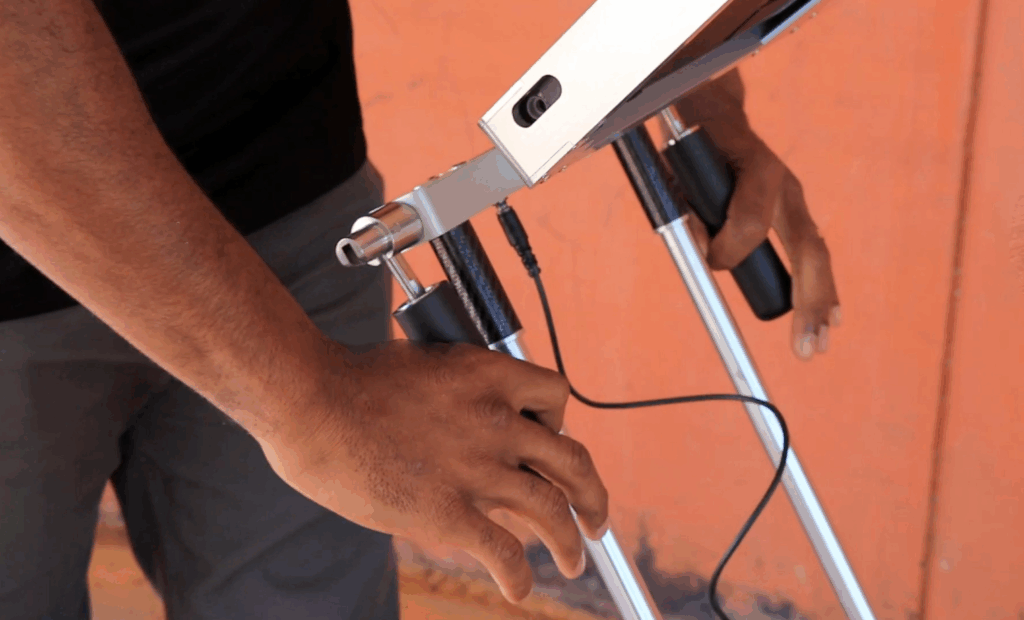
Reinforced Foldable Handles
Our newly reinforced foldable handles combine durability with convenience, making transport easier without compromising strength. Built to withstand repeated use, they enhance maneuverability and maintain stability during both pushing and pulling operations.
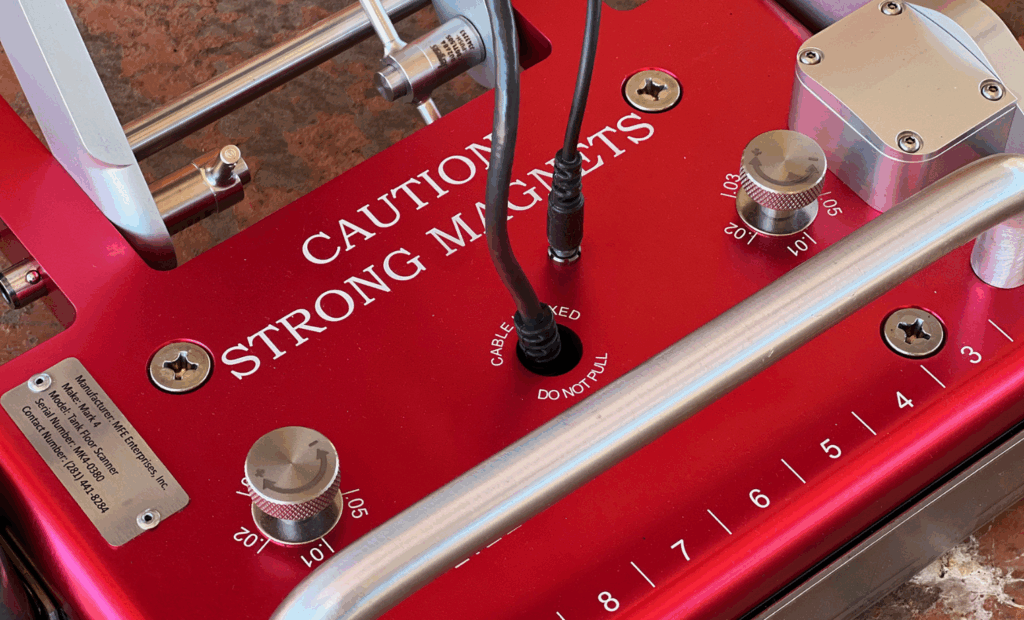
Permanently Attached Signal Cable
A permanently attached signal cable now replaces the previous detachable design, removing a common failure point. This upgrade reduces the risk of damage and cuts down on downtime, helping your inspections stay efficient and on schedule.

 English
  English (Canada)
 Français du Canada