Guide

What Are Fugitive Emissions? Detection Methods, Tools & LDAR Workflows

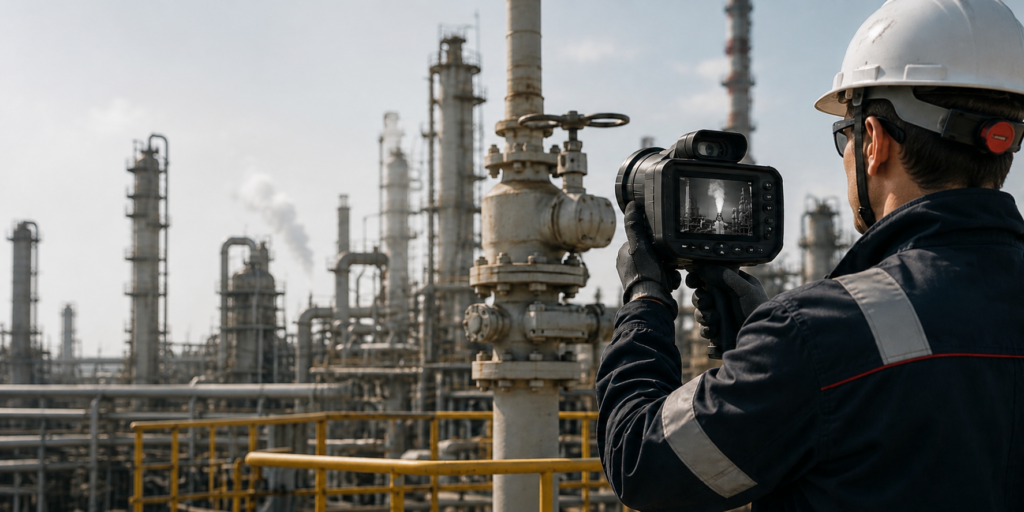
Fugitive emissions are unintended gas or vapor releases from industrial equipment and infrastructure.

Unlike emissions that move through a controlled stack or vent, fugitive emissions escape from components like valves, flanges, tanks, seals, pumps, connectors, and piping systems during normal operations.

Jump to the top fugitive emissions products and tools on the market.

In industrial environments, fugitive emissions are often associated with:

  • Le méthane
  • Volatile organic compounds (VOCs)
  • Hydrocarbures
  • Refrigerants
  • + other process gases

Detecting fugitive emissions isn’t always straightforward.

Some leaks are too small to hear or see with the naked eye. Others occur in elevated, hazardous, congested, or difficult-to-access areas where traditional inspection methods are slow, expensive, or impractical.

To meet these challenges, industrial teams often combine multiple technologies within a larger leak detection and repair (LDAR) workflow.

This guide to fugitive emissions explains what they are, where they occur, how they’re detected, and which tools are commonly used to detect them.

The Top Fugitive Emissions Products and Tools on the Market

Fugitive emissions programs rarely rely on a single inspection tool.

Most facilities use a combination of optical gas imaging (OGI) cameras, handheld gas detectors, fixed monitoring systems, and drone-based workflows.

Here are the top tools being used today for fugitive emissions.

Caméras OGI

Optical gas imaging cameras are commonly used for fugitive emissions screening because they allow inspectors to visualize hydrocarbon gas plumes remotely and across large areas. 

Here are the top OGI cameras on the market right now:

MFE Détecter MW
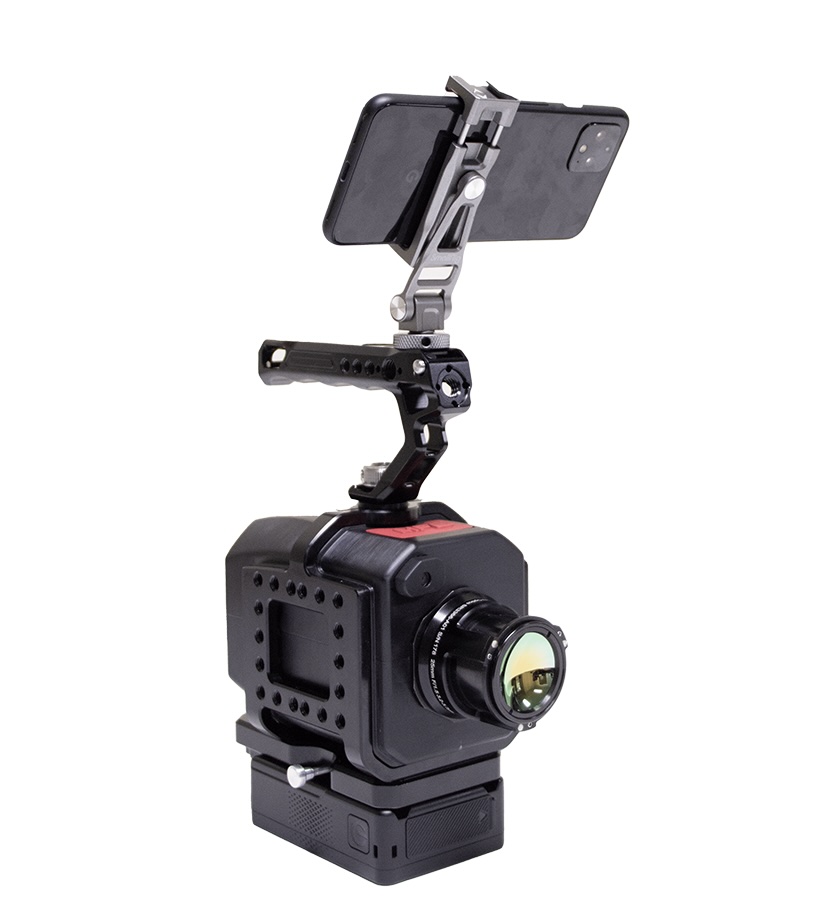
Le MFE Detect MW (MFE OGI) est une caméra optique d'imagerie gazeuse conçue pour détecter les fuites de gaz d'hydrocarbures. Ce dispositif peut être utilisé comme appareil portatif ou comme charge utile.

It uses advanced infrared technology to provide real-time imaging and precise leak detection, helping to improve safety and operational efficiency in industrial environments.

Key capabilities:

  • Supports multi-gas detection workflows
  • Provides portable atmospheric monitoring
  • Useful during maintenance and repair activities
  • Helps teams investigate and confirm hazardous conditions
  • Supports worker protection programs

Learn more about the MFE Detect MW.

FLIR GF320
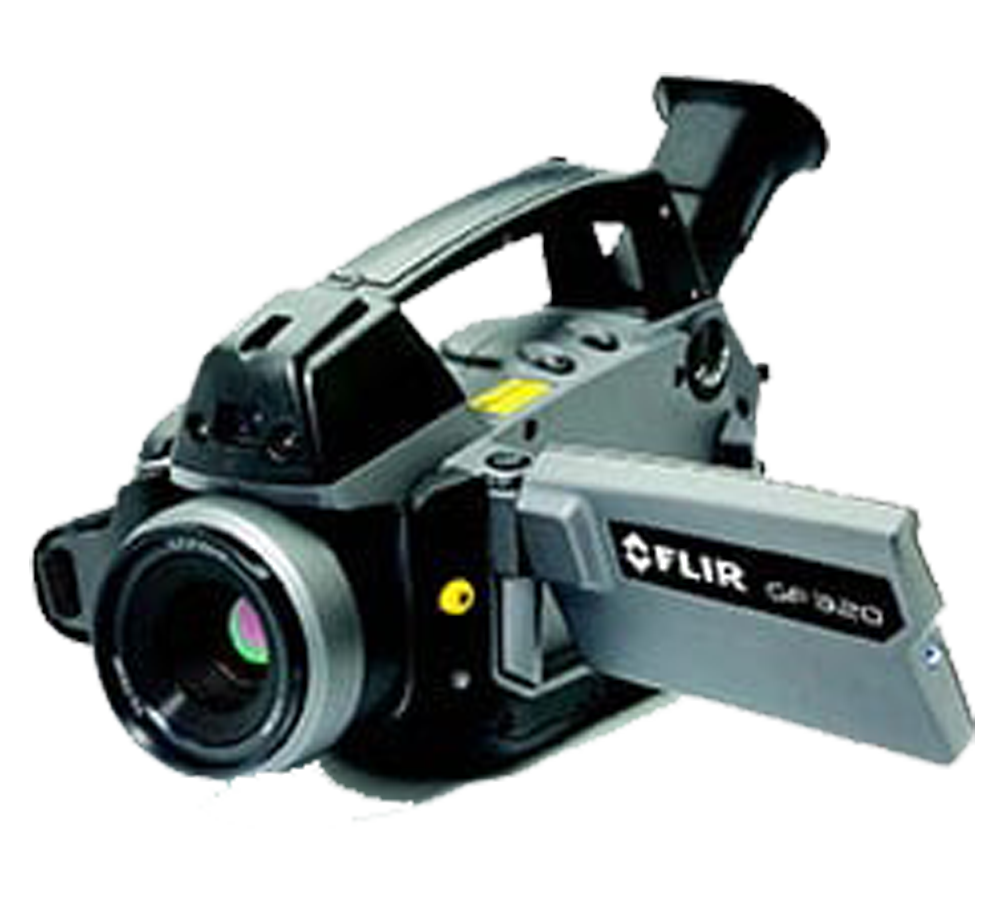
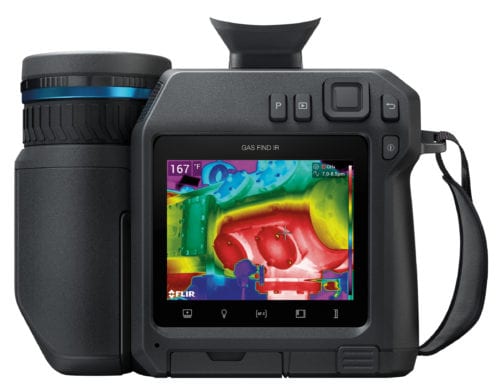
The FLIR GF320 is one of the most widely used optical gas imaging cameras for hydrocarbon and VOC leak detection in industrial LDAR programs.

It’s designed for rapid gas visualization during inspections where teams need to identify emissions sources without shutting down operations or physically accessing every component.

Key capabilities:

  • Visualizes hydrocarbon gas plumes in real time
  • Supports non-contact leak detection workflows
  • Helps teams identify leaks without interrupting operations
  • Supports faster large-area inspections compared to point-by-point manual checks

Rent the FLIR GF320.

FLIR GF77

GF77-détecteur de fuites de gaz-ogi

The FLIR GF77 is designed for methane and industrial gas visualization in environments where thermal awareness and gas screening may need to happen simultaneously.

Compared to traditional OGI systems focused primarily on hydrocarbons, the GF77 supports broader industrial gas inspection workflows.

Key capabilities:

  • Visualizes methane and industrial gas leaks
  • Combines thermal imaging and gas detection workflows
  • Supports rapid field investigations
  • Useful for broad-area industrial inspections

Buy or rent the FLIR GF77.

Portable Gas Detectors

Handheld gas detectors are often used when teams need direct gas measurement, worker safety monitoring, or localized leak confirmation.

Here are the top portable gas detectors on the market:

MultiRAE Plus

The AreaRAE Plus is designed for area monitoring workflows where teams need continuous atmospheric awareness across active industrial sites. 

Unlike handheld detectors used by individual personnel, area monitoring systems help provide broader situational awareness across the work environment.

Key capabilities:

  • Supports continuous area monitoring workflows
  • Provides broader atmospheric visibility
  • Useful for high-risk industrial environments
  • Helps teams identify changing atmospheric conditions

Rent the MultiRAE Plus.

RAE Systems QRAE 3

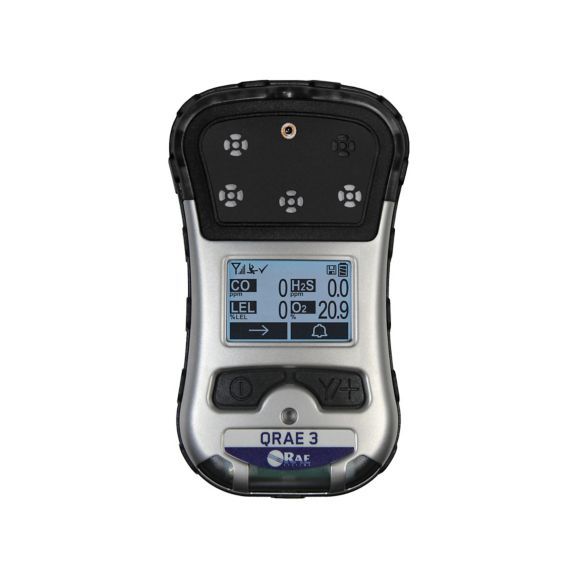
The RAE Systems QRAE 3 is a versatile, rugged four-gas monitor designed for a wide range of applications in hazardous environments.

This portable detector is capable of detecting combustibles, oxygen, carbon monoxide, and hydrogen sulfide, making it an essential tool for ensuring workplace safety.

  • Ideal for confined space entry and general safety and compliance in chemical plants, oil and gas operations, and emergency response environments
  • Easy-to-change battery pack, large graphical display, real-time gas concentration readings, and fully automated bump testing and calibration with AutoRAE 2
  • Can detect combustibles, oxygen, carbon monoxide, hydrogen sulfide.

Rent the QRAE 3.

Drone and Robotic Fugitive Emissions Tools

Drone and robotic gas detection workflows are increasingly used in environments where access is difficult, hazardous, elevated, or operationally disruptive.

These systems can help teams perform emissions screening while reducing personnel exposure and improving inspection coverage.

Détection de l'EMF LW
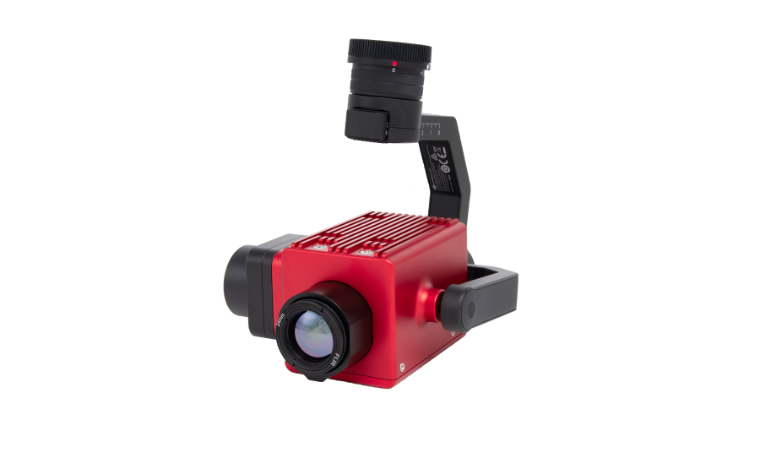
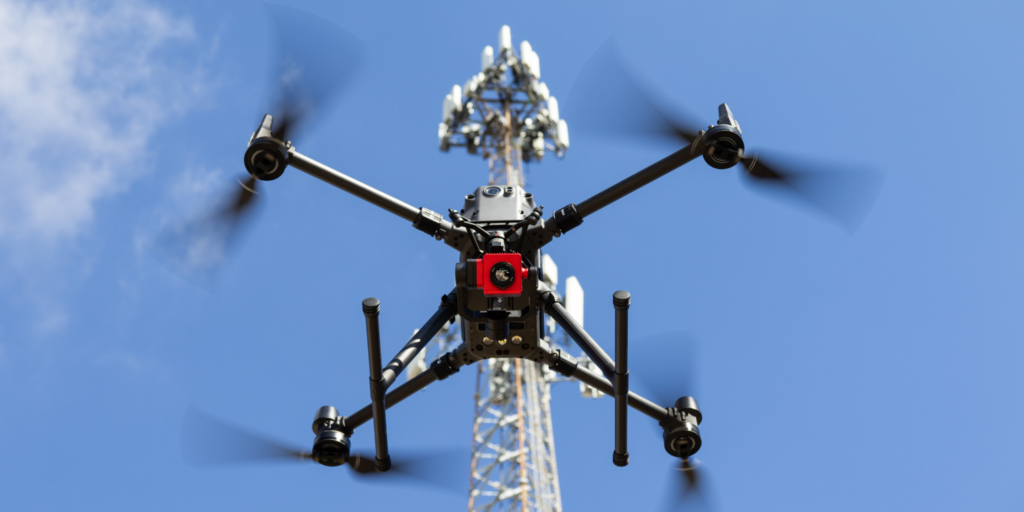
The MFE Detect LW is a lightweight drone-mounted optical gas imaging payload designed for aerial methane detection and fugitive emissions screening workflows. 

Drone-mounted OGI payloads like the Detect LW are especially useful for inspecting flare stacks, tanks, refinery units, pipelines, and large industrial facilities where broad-area screening speed and remote access are operational priorities.

Key capabilities:

  • Drone-mounted methane visualization workflow
  • Supports remote fugitive emissions screening
  • Helps reduce personnel exposure during inspections
  • Supports inspection workflows in elevated or hazardous environments

Buy or rent the MFE Detect LW.

MFE OGI-640
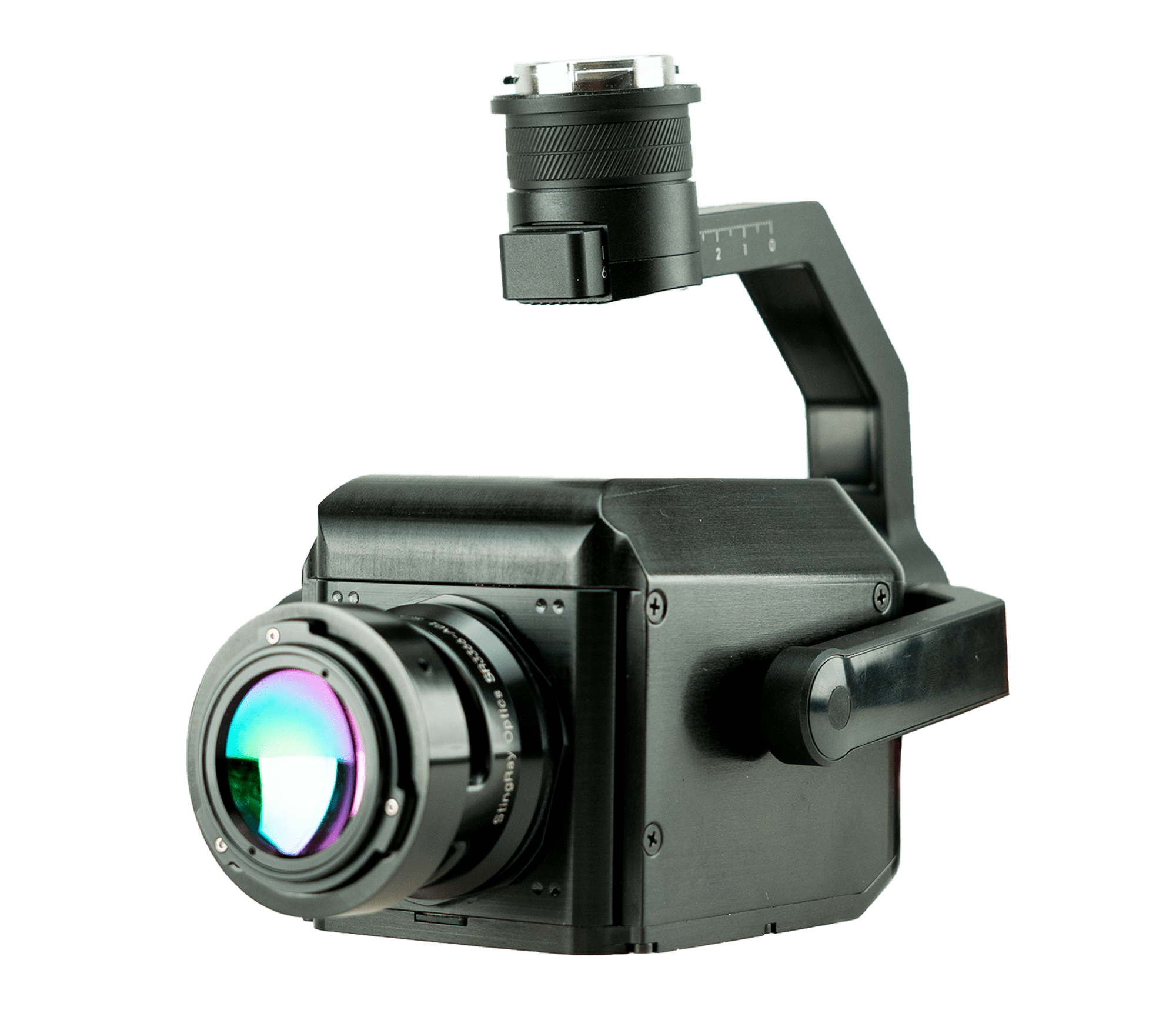
The OGI-640 is a drone payload designed for long-range gas visualization workflows where inspection teams need to monitor large industrial assets or difficult-access areas from a distance.

Key capabilities:

  • Supports long-range gas visualization
  • Helps teams inspect difficult-access assets
  • Useful for rapid facility-wide screening
  • Reduces the need for close physical access during screening
Buy the OGI-640.

What Are Fugitive Emissions?

Fugitive emissions are unintended releases of gases or vapors from industrial equipment, infrastructure, or processing systems.

Unlike emissions that move through a controlled stack, vent, or exhaust system, fugitive emissions escape during normal operations through components like valves, seals, flanges, or pumps.

Some leaks are continuous and easy to identify, while others are intermittent, extremely small, or only visible under specific operating conditions.

Because these emissions frequently occur across large industrial facilities with thousands of potential leak points, detection is usually treated as an ongoing monitoring and maintenance workflow rather than a one-time inspection activity.

Fugitive Emissions vs. Point Source Emissions

The distinction between fugitive emissions and point source emissions matters because the detection methods and compliance workflows are often different.

  • Point source emissions move through a defined release location, such as a smokestack, flare, vent, or exhaust system. These emissions are generally easier to monitor because the release path is controlled and centralized.
  • Fugitive emissions are different because they escape unpredictably from equipment throughout a facility. A methane leak from a flange, a VOC release from a valve stem, or a gas leak from a tank fitting may not have a clearly defined release point or consistent flow rate.


This distributed nature is one reason fugitive emissions programs often rely on an array of tools—as we covered in the product section above—including:

  • OGI cameras
  • Portable gas detectors
  • Drone-based / robotics-based screening
  • And LDAR workflows 

Common Gases Involved in Fugitive Emissions

The gases involved depend heavily on the industry, process, and equipment being inspected.

In oil and gas operations, fugitive emissions commonly involve methane and hydrocarbon gases.

Chemical facilities may deal with volatile organic compounds and hazardous process gases.

And utilities, refrigeration systems, and manufacturing facilities may monitor for refrigerants, ammonia, sulfur compounds, or combustible gases.

Some fugitive emissions primarily create environmental or regulatory concerns. Others create immediate safety risks related to flammability, toxicity, oxygen displacement, or worker exposure.

This distinction affects tool selection.

For example, a workflow focused on methane leak screening may prioritize OGI imaging or vehicle-mounted methane detection, while a confined-space investigation may require direct atmospheric monitoring and personal gas detection.

Why Fugitive Emissions Are Hard to Detect

Many fugitive emissions are invisible, intermittent, and highly dependent on environmental conditions.

Wind, temperature, humidity, pressure changes, equipment vibration, and gas concentration can all affect whether a leak is detectable during a survey.

Some leaks may only occur under certain operating conditions or when equipment reaches a specific pressure or temperature threshold.

Access also becomes a major challenge.

Leak points are often located on elevated piping, flare systems, tanks, or congested refinery units where traditional inspection access is slow or expensive.

Because of these realities, industrial teams rarely rely on a single detection method.

Instead, fugitive emissions programs typically combine multiple technologies to improve coverage and reduce the chance of missed leaks.

ldar-gas-leak

Where Fugitive Emissions Come From

Fugitive emissions can originate from almost any component that transports, stores, compresses, seals, or processes gas or vapor within an industrial system.

In large industrial facilities, there is a lot of complexity when it comes to fugitive emissions.

That’s because operators may be managing thousands of potential emission points spread across an array of assets and infrastructure.

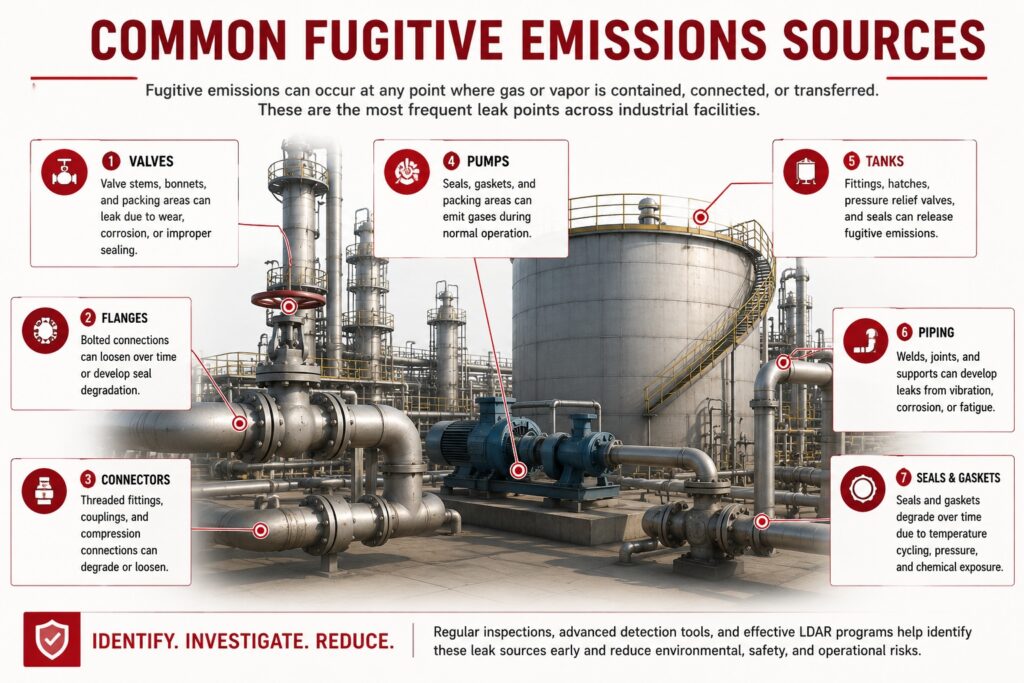
Here’s an overview of where fugitive emissions often originate:

Now let’s take a closer look at each of these sources—and how they tend to leak.

Valves, Flanges, Pumps, and Seals

Valves, flanges, connectors, seals, and pumps are among the most common fugitive emissions sources because they contain mechanical connection points that can degrade over time.

Thermal cycling, vibration, corrosion, pressure fluctuations, gasket wear—not to mention normal operational stress—can all contribute to small leaks developing at these interfaces.

Facilities with large numbers of valves and connectors often rely heavily on LDAR programs and OGI inspections because manually checking every component individually can become time-intensive and operationally disruptive.

Tanks, Pipelines, and Process Equipment

Storage tanks, process piping, compressors, pressure vessels, and transfer systems are also common fugitive emissions sources.

Leaks may occur around tank fittings, hatch seals, compressor components, loading systems, relief valves, or aging pipeline infrastructure.

Some emissions are continuous, while others only appear during filling operations, pressure events, startup conditions, or equipment transitions.

This variability is one reason many operators combine periodic inspections with continuous monitoring systems in higher-risk areas.

Oil and Gas, Chemical, Power, and Industrial Facilities

Fugitive emissions are most commonly associated with oil and gas operations, but they are not limited to that industry.

Refineries, chemical plants, natural gas distribution systems, LNG facilities, offshore platforms, power plants, wastewater infrastructure, refrigeration systems, and manufacturing operations can all experience fugitive gas releases.

The inspection workflow often changes depending on the operating environment.

A refinery may prioritize VOC visualization and LDAR compliance, while a utility operator may focus on methane localization across large pipeline networks. 

Because the operational realities differ so widely between industries and facilities, fugitive emissions programs are usually built around workflow flexibility rather than a single universal detection method.

4 Reasons Fugitive Emissions Are So Important

Fugitive emissions programs are rarely driven by a single concern.

In most industrial environments, operators are balancing safety, environmental performance, regulatory compliance, operational continuity, and product loss at the same time.

But while the specific priority may vary by industry and facility, but the underlying challenge is the same: unidentified leaks create uncertainty and risk.

1. Safety Risk

Fugitive emissions can create immediate safety hazards for personnel and facilities.

Combustible gases can increase fire and explosion risk, toxic gases may create worker exposure concerns, and oxygen displacement can create confined-space hazards.

These risks are one reason fugitive emissions workflows are often closely tied to broader gas detection and atmospheric monitoring programs. 

2. Environmental and Methane Impact

Methane and VOC emissions have become a growing operational focus across oil and gas, chemical processing, utilities, and industrial infrastructure.

Methane is particularly important because it’s both a product loss issue and a greenhouse gas concern. Even relatively small leaks distributed across large facilities or pipeline systems can contribute to significant cumulative emissions over time.

As a result, many operators are investing more heavily in fugitive emissions monitoring workflows designed to identify leaks earlier, improve repair prioritization, and increase inspection coverage across large assets and facilities.

3. Regulatory and LDAR Requirements

Fugitive emissions are also closely connected to leak detection and repair (LDAR) requirements.

Depending on the region and industry, operators may be required to:

  • Perform scheduled monitoring
  • Document identified leaks
  • Complete repairs within specific timeframes
  • Maintain records demonstrating compliance activities

Because compliance workflows vary widely between industries and jurisdictions, many facilities build flexible programs that combine multiple detection technologies rather than relying on a single inspection method.

4. Product Loss and Operational Cost

Fugitive emissions aren’t just an environmental or compliance issue.

In many cases, leaked gas is lost product—which means lost revenue.

Small leaks that persist over long periods can contribute to measurable operational losses, especially in large processing or distribution systems.

In addition, unplanned repairs, emergency shutdowns, access costs, and production interruptions can significantly increase the overall cost of unmanaged leaks.

And this is one reason many facilities are shifting toward more proactive monitoring workflows.

Earlier detection can help operators prioritize maintenance more effectively, reduce unnecessary downtime, and prevent minor leaks from becoming larger operational problems.

How Fugitive Emissions Are Detected

As we’ve covered, detecting fugitive usually requires multiple tools.

That’s because different technologies solve different problems related to emissions.

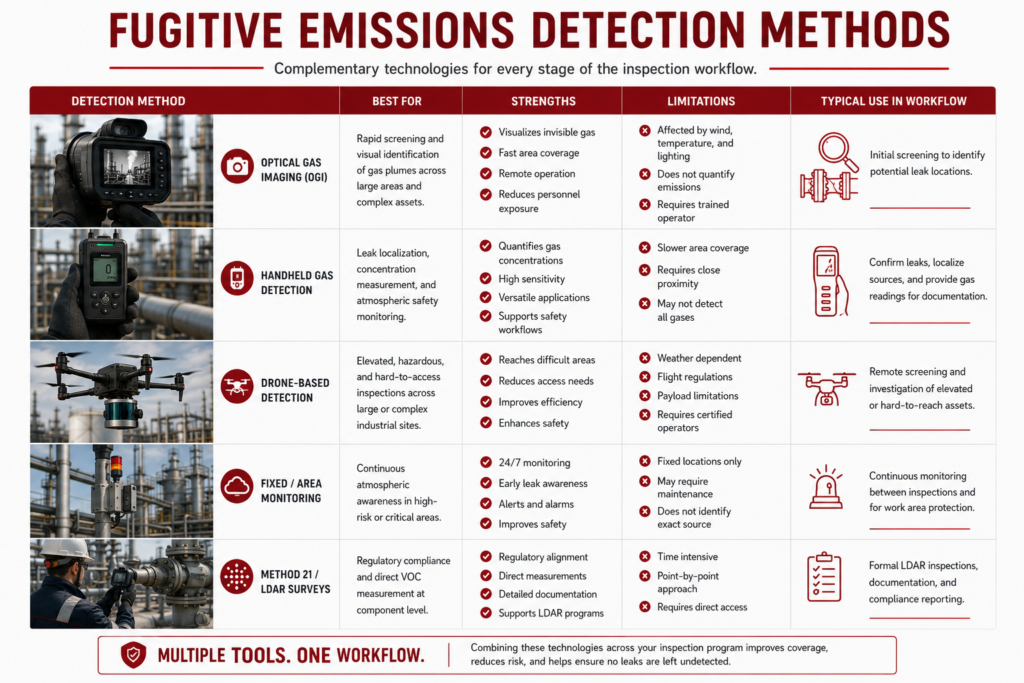
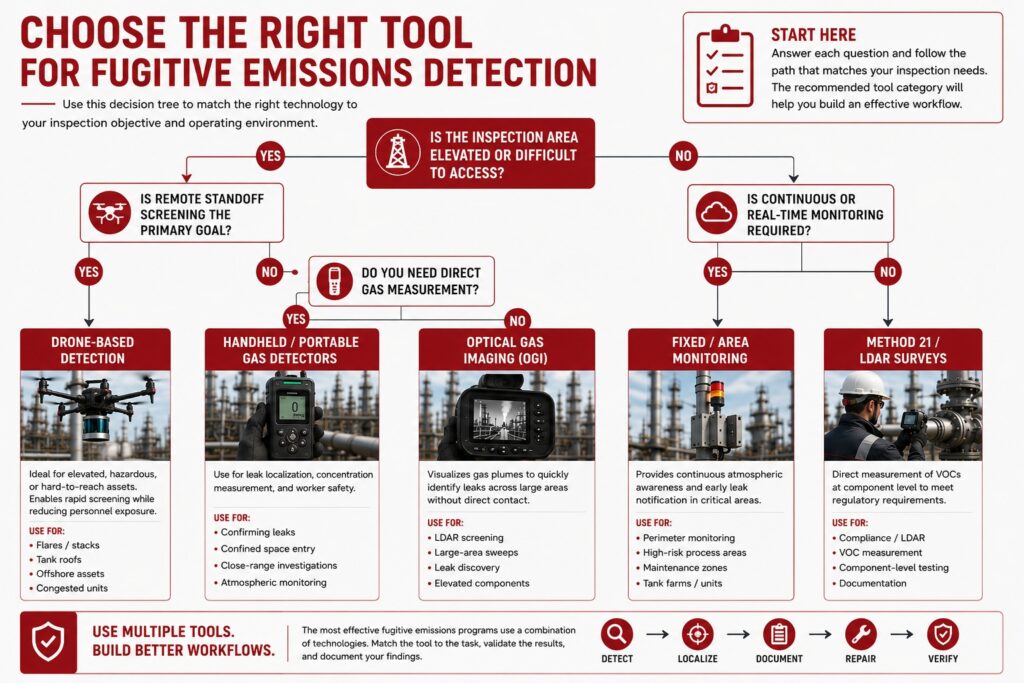
Here’s an overview:

Let’s look closer at each of these methods, and how they are commonly used in fugitive emissions workflows.

OGI

OGI cameras are widely used for fugitive emissions screening and LDAR inspections because they allow inspectors to visualize otherwise invisible gas plumes remotely and across large industrial areas.

Common applications:

  • LDAR inspections
  • Methane and VOC leak screening
  • Refinery and chemical plant inspections
  • Elevated and difficult-access infrastructure
  • Large-area industrial surveys

Operational advantages:

  • Rapid screening across large process areas
  • Remote visualization of gas plumes
  • Reduced need for direct physical access
  • Useful around tanks, piping, valves, and compressors
  • Can help reduce personnel exposure in hazardous environments

Important limitations:

  • Does not directly replace gas quantification workflows
  • Detection performance depends on environmental conditions
  • Imaging distance and operator technique affect results
  • Often paired with handheld detectors for confirmation

Learn more about OGI cameras and optical gas imaging workflows.

Handheld Gas Detection

Handheld gas detectors are commonly used for localized leak investigation, atmospheric monitoring, and direct gas measurement during fugitive emissions inspections.

Common applications:

  • Leak localization
  • Confined space preparation
  • Walking surveys
  • Repair verification
  • Worker safety monitoring

Operational advantages:

  • Provides direct gas concentration readings
  • Useful for close-range investigations
  • Supports atmospheric awareness workflows
  • Can confirm suspected leaks identified during OGI screening
  • Portable and easy to deploy during maintenance activities

Important limitations:

  • Slower than large-area screening methods
  • Requires closer physical access to equipment
  • Less efficient for elevated or difficult-access assets
  • Typically used alongside—not instead of—OGI workflows

Drone-Based Gas Detection

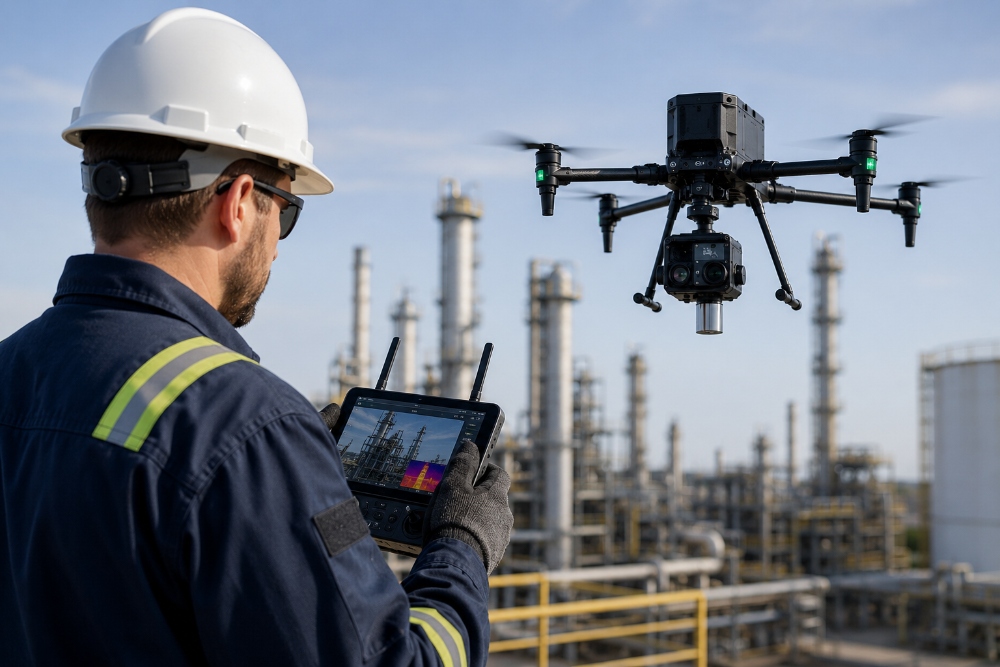
Drone-based gas detection workflows are increasingly used when fugitive emissions surveys involve elevated, hazardous, offshore, congested, or difficult-to-access infrastructure.

Common applications:

  • Flare stack inspections
  • Tank farm screening
  • Pipeline and midstream inspections
  • Offshore infrastructure surveys
  • Elevated refinery and process assets

Operational advantages:

  • Improves access to elevated infrastructure
  • Reduces reliance on scaffolding and rope access
  • Supports rapid screening across large facilities
  • Can help reduce personnel exposure during inspections
  • Useful for remote atmospheric awareness workflows

Important limitations:

  • Environmental conditions can affect inspection quality
  • Wind and flight stability influence detection performance
  • Requires pilot competency and operational planning
  • Often used for screening rather than direct gas quantification


The Detect LW is an OGI drone payload from MFE

Drone workflows are especially useful for rapid screening and remote investigation, but they still require thoughtful operational planning. Wind conditions, flight stability, sensor limitations, regulatory constraints, and data interpretation all affect inspection quality.

Learn more about gas detection drones.

Fixed and Area Monitoring

Fixed and area monitoring systems are commonly used when facilities need continuous atmospheric visibility rather than periodic inspections alone.

These systems can help operators monitor higher-risk zones, maintenance areas, tank farms, process units, or temporary work environments where gas accumulation or intermittent releases are a concern.

Continuous monitoring does not replace dedicated fugitive emissions inspections. But it can improve awareness between scheduled surveys and support faster response when abnormal conditions occur.

Method 21 and LDAR Surveys

Many fugitive emissions programs incorporate formal LDAR workflows that define how leaks are identified, documented, repaired, and verified.

Method 21 surveys typically use portable instruments to measure VOC concentrations directly at potential leak points. OGI surveys may also be used within certain regulatory frameworks depending on the applicable requirements and operating environment.

How to Choose the Right Fugitive Emissions Detection Method

Choosing the right fugitive emissions detection method depends less on finding the “best” technology and more on matching the workflow to the operating environment and inspection objective.

Some technologies are optimized for rapid large-area screening. Others are better suited for direct gas measurement, difficult-access inspections, continuous monitoring, or personnel safety.

In most industrial environments, effective fugitive emissions programs combine multiple methods rather than relying on a single inspection technology.

When to Use OGI

Optical gas imaging is often the best fit when teams need to rapidly screen large areas for methane, VOCs, or hydrocarbon leaks without direct contact. OGI workflows are especially useful in large process environments where inspectors may need to evaluate hundreds or thousands of potential leak points efficiently.

What to know:

  • Best for rapid large-area emissions screening
  • Useful around tanks, piping, flare systems, and compressors
  • Helps reduce the need for direct physical access
  • Performance depends on environmental conditions and operator technique
  • Often paired with handheld detectors for confirmation workflows

When to Use Handheld or Portable Gas Detectors

Handheld gas detectors are commonly used when teams need direct gas readings, close-range leak localization, or atmospheric monitoring around personnel.

These systems are frequently deployed during walking surveys, confined-space preparation, maintenance investigations, and repair verification workflows.

Compared to OGI systems, handheld detectors typically cover smaller areas more slowly, but they provide direct concentration measurements that support confirmation, documentation, and worker safety workflows.

What to know:

  • Best for direct gas measurement and close-range investigations
  • Useful during confined-space and maintenance activities
  • Supports worker safety and atmospheric awareness
  • Helps confirm suspected leaks identified during OGI screening
  • Less efficient for elevated or difficult-access infrastructure

When to Use Drone-Based Detection

Drone-based gas detection workflows are often most valuable when access is the primary challenge.

Elevated flare systems, offshore structures, refinery units, storage tanks, and congested process infrastructure can all make traditional inspection access slow, hazardous, or operationally disruptive.

What to know:

  • Best for elevated or difficult-access infrastructure
  • Useful for flare stacks, offshore assets, and tank farms
  • Supports rapid screening across large facilities
  • Can help reduce personnel exposure during inspections
  • Typically used for screening rather than direct gas quantification

When to Use Fixed or Area Monitoring

Fixed and area monitoring systems are typically used when facilities need continuous atmospheric visibility rather than periodic inspections alone.

These systems are often deployed around process units, maintenance zones, temporary work areas, and environments where intermittent releases or gas accumulation are concerns.

What to know:

  • Best for continuous atmospheric monitoring workflows
  • Useful around process units and high-risk work areas
  • Supports faster awareness between scheduled inspections
  • Helps monitor intermittent or changing atmospheric conditions
  • Typically used alongside—not instead of—inspection surveys

When Multiple Methods Are Needed Together

Most mature fugitive emissions programs use layered workflows rather than relying on a single detection method.

Different technologies solve different operational problems, especially across large or complex industrial facilities.

For example, a facility may use drone-mounted OGI for rapid elevated screening, handheld detectors for close-range confirmation, fixed monitoring systems for continuous awareness, and formal LDAR surveys for documentation and compliance tracking.

What to know:

  • Combines screening, confirmation, and monitoring workflows
  • Improves inspection coverage across large facilities
  • Helps balance safety, access, and operational efficiency
  • Allows teams to match tools to specific inspection conditions
  • Typically provides stronger results than relying on one method alone

What a Fugitive Emissions Monitoring Workflow Looks Like

Fugitive emissions programs are typically built around repeatable workflows rather than isolated inspections.

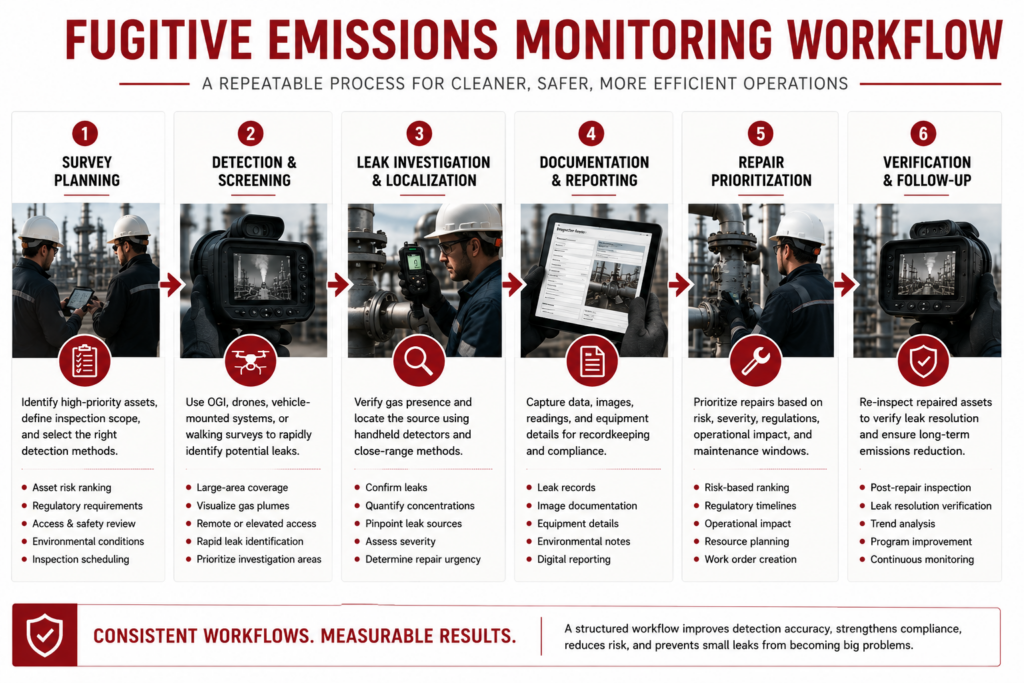
The exact process varies by industry, regulatory environment, and facility type, but most programs follow a similar progression:

  • Identify potential leak areas
  • Perform screening,
  • Investigate suspected emissions
  • Document findings,
  • Prioritize repairs,
  • And verify that corrective actions were successful

Understanding how these workflows operate helps explain why multiple technologies are often used together within the same fugitive emissions program.

Here’s the step-by-step workflow:

1. Survey Planning

Most fugitive emissions workflows begin with planning and prioritization.

Facilities may organize surveys around higher-risk assets, known problem areas, regulatory schedules, maintenance windows, or operational constraints.

Inspection teams often consider factors like gas type, environmental conditions, facility layout, access limitations, and shutdown availability before selecting the detection method.

In large facilities, planning becomes especially important because operators may be managing thousands of potential leak points across extensive infrastructure.

2. Detection and Screening

The initial survey phase is often focused on rapid screening.

OGI cameras, drone-mounted sensors, vehicle-mounted methane detectors, or walking surveys may be used to identify areas where fugitive emissions are likely occurring.

The goal during this phase is usually broad coverage and efficient identification of potential leaks rather than immediate detailed analysis of every emission source.

This screening-first approach helps facilities prioritize resources more efficiently and reduce the amount of time spent performing unnecessary close-range inspections.

3. Leak Investigation and Localization

Once a potential emission source is identified, teams often move into a more focused investigation workflow.

Handheld gas detectors, close-range inspections, follow-up OGI imaging, or additional atmospheric monitoring may be used to localize the leak source more precisely and evaluate the severity of the release.

At this stage, operators are often balancing multiple priorities simultaneously, including worker safety, operational continuity, repair urgency, and access logistics.

4. Documentation and Reporting

Documentation is a major part of most fugitive emissions programs, especially when regulatory compliance or formal LDAR workflows are involved.

Facilities may document leak location, equipment type, gas readings, imagery, repair status, inspection dates, environmental conditions, and follow-up actions depending on the applicable requirements and internal procedures.

Modern workflows increasingly incorporate digital reporting systems, image documentation, and cloud-based inspection records to simplify long-term tracking and audit readiness.

5. Repair Prioritization

Not every detected emission requires a rapid response.

Facilities prioritize repairs based on factors like:

  • Leak severity
  • Gas type
  • Safety implications
  • Regulatory obligations
  • Operational impact
  • Equipment criticality.

This prioritization process is one reason screening and documentation workflows are so important.

Operators need enough information to make practical maintenance decisions without unnecessarily disrupting operations.

6. Verification and Follow-Up

Most fugitive emissions programs include some form of post-repair verification.

After maintenance is completed, facilities may perform follow-up OGI surveys, handheld gas measurements, or additional monitoring to confirm that the leak has been resolved successfully.

Because fugitive emissions management is an ongoing process rather than a one-time event, facilities typically repeat surveys on a recurring basis as part of broader LDAR, reliability, maintenance, or environmental monitoring programs.

Fugitive Emissions FAQ

Here are answers to some of the most commonly asked questions about fugitive emissions.

What is an example of a fugitive emission?

A common example of a fugitive emission is methane leaking from a valve, flange, compressor seal, or pipeline connection during normal industrial operations.

Other examples include VOC releases from refinery equipment, refrigerant leaks from cooling systems, or hydrocarbon emissions from storage tanks and transfer systems.

Are fugitive emissions the same as gas leaks?

Fugitive emissions are a type of gas leak, but the term is usually used in industrial and regulatory contexts to describe unintended releases from equipment and infrastructure.

In practice, fugitive emissions workflows often focus on recurring leaks across large facilities rather than isolated one-time release events.

What is fugitive emissions monitoring?

Fugitive emissions monitoring refers to the process of detecting, documenting, tracking, and managing unintended gas releases across industrial systems.

This may involve OGI surveys, handheld gas detection, LDAR inspections, drone-based monitoring, fixed sensors, or continuous atmospheric monitoring depending on the facility and operating environment.

What tools are used to detect fugitive emissions?

Common fugitive emissions detection tools include optical gas imaging cameras, handheld gas detectors, area monitoring systems, methane detection equipment, and drone-mounted gas detection payloads.

Different technologies are used for different purposes, including rapid screening, direct gas measurement, difficult-access inspections, continuous monitoring, and repair verification.

Are fugitive emissions regulated?

Many industries and regions have regulations or internal compliance programs related to fugitive emissions management, particularly for methane and VOC emissions.

Requirements vary depending on the industry, operating environment, and jurisdiction, which is why facilities often build flexible LDAR and monitoring workflows that can support changing operational and compliance needs over time.

Table des matières