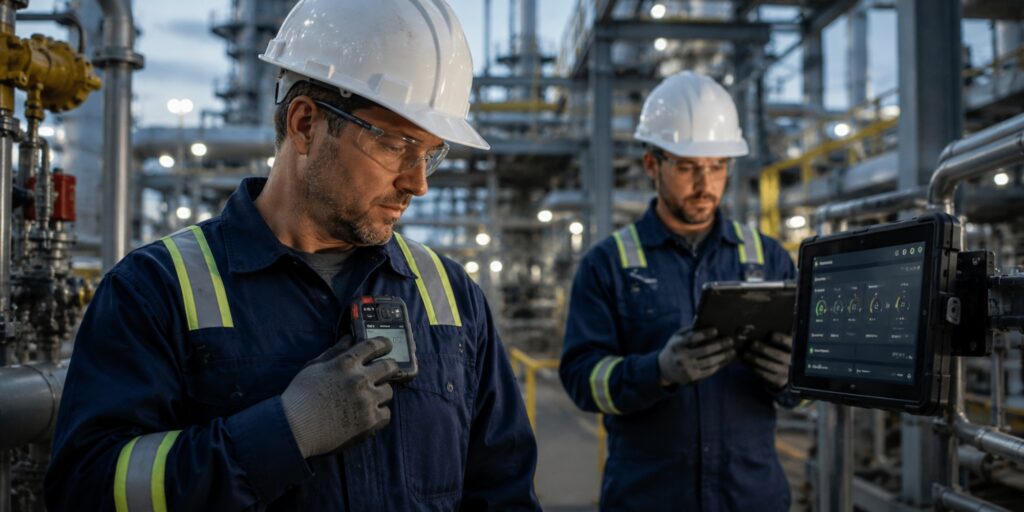
Ressources / Guide / Gas Monitoring: Systems, Devices & Workflows for Industrial Safety
Guide
Gas Monitoring: Systems, Devices & Workflows for Industrial Safety
Gas monitoring gives industrial teams visibility into atmospheric conditions before, during, and after work in hazardous environments.
→ Jump to the best gas monitoring systems of 2026
It’s a crucial part of work in many heavy industries, helping teams identify changing gas conditions, protect workers, and make safer decisions.
Here are some terms you see come up a lot in gas monitoring:
- Multi-gas monitor
- Area gas monitor
- Personal gas monitor
- Remote gas monitoring system
- Connected gas detection
These terms are related, but they’re not always interchangeable.
Some refer to the device itself, while others refer to the broader safety workflow built around gas readings, alarms, location data, and response procedures.
In industrial safety, gas monitoring plays a critical role in understanding whether an area is safe for people to enter or continue working in.
Gas leak detection is primarily about finding, locating, and characterizing leaks. Gas monitoring is primarily about safety—maintaining visibility into atmospheric conditions so teams can respond when gas levels change.
Keep reading to see the top gas monitoring systems on the market, how gas monitoring works, and what the difference is between gas monitoring and gas leak detection.
Gas Monitoring Products from MFE
Need to buy or rent gas monitoring equipment? Keep reading to see the top options on the market.
Note: Gas monitoring isn’t a single-device decision. The right solution depends on the hazard, the work environment, the coverage area, and whether workers can safely enter the space being monitored.
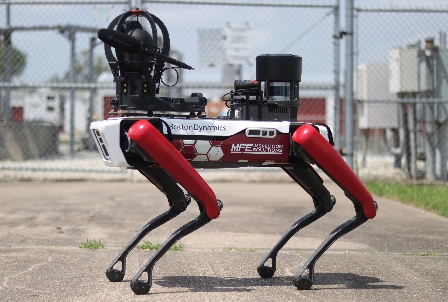
MFE supports gas monitoring workflows with personal gas monitors, area monitors, portable four-gas monitors, and robotic gas monitoring solutions for remote atmospheric visibility.
1. RAE Systems QRAE 3 Four-Gas Monitor

The RAE Systems QRAE 3 is a compact four-gas monitor used to detect oxygen, combustible gases, and toxic gases such as hydrogen sulfide and carbon monoxide. It’s a practical option for confined space entry, industrial hygiene, emergency response, and other field safety tasks where teams need portable gas detection.
Because it can be used for spot checks and entry testing, the QRAE 3 fits teams that need a flexible monitor rather than a permanent or fixed system.
Key uses for the QRAE 3 include:
- Confined space entry. Supports atmospheric testing before personnel enter tanks, vessels, pits, manholes, and other confined areas.
- Portable four-gas monitoring. Monitors common industrial hazards such as O₂, LEL, H₂S, and CO.
- Emergency response and industrial safety. Gives teams a portable tool for fast gas checks in changing or uncertain environments.
2. Blackline Safety EXO 8 Area Gas and Radiation Monitor
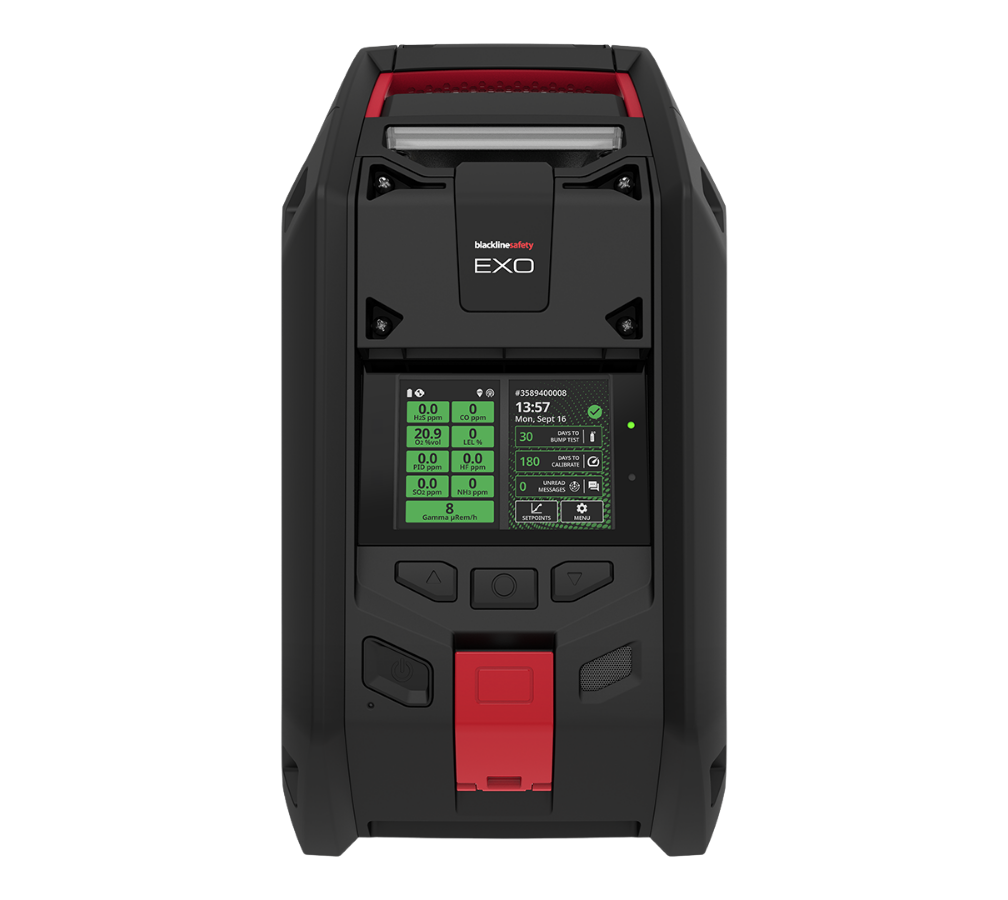
The Blackline Safety EXO 8 is a cloud-connected area monitor built for real-time hazard monitoring across industrial worksites.
It’s designed for situations where teams need visibility across a zone, perimeter, temporary work area, or confined space entry point instead of monitoring only at the individual worker level.
Key uses for the Blackline Safety EXO 8 include:
- Area gas monitoring. Supports monitoring around defined work zones, facility perimeters, processing units, storage tanks, pipelines, and other high-risk areas.
- Cloud-connected visibility. Streams gas readings, alerts, and location data so safety teams can monitor conditions remotely.
- Multi-hazard monitoring. Can be configured for multiple gases and optional gamma radiation monitoring, depending on the site hazard profile.
Buy or rent the Blackline Safety EXO 8.
3. Blackline Safety G8 Personal Gas Monitor
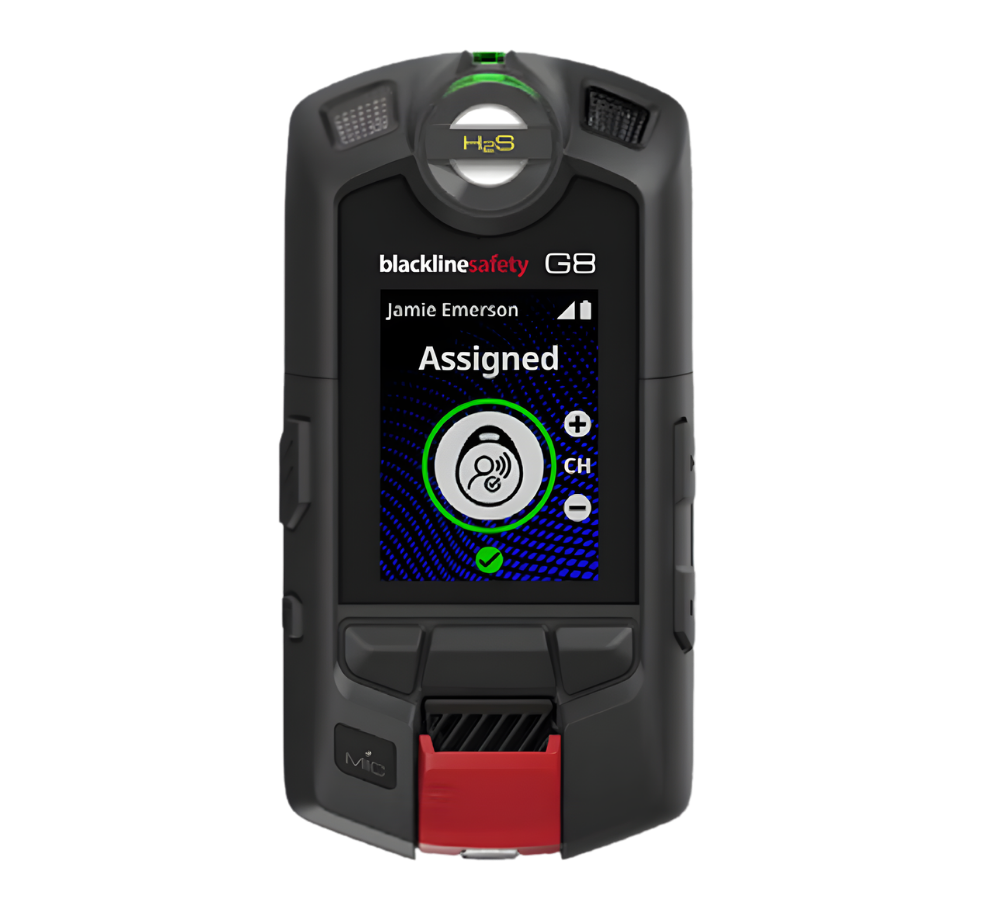
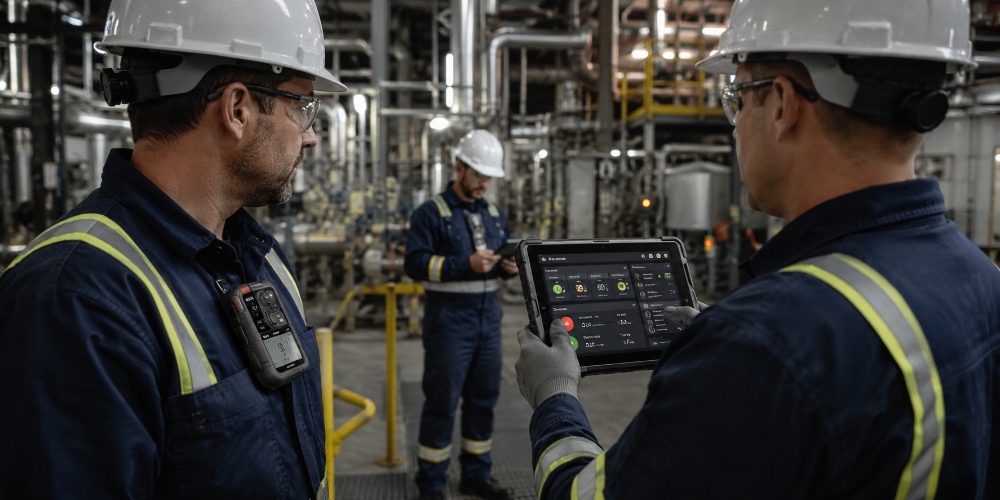
The Blackline Safety G8 is a connected personal gas monitor built for frontline and lone workers in hazardous environments. It combines gas detection, worker monitoring, communication, and live data in a single wearable device.
Personal monitoring matters because atmospheric conditions can change while work is underway. A space may test safe before entry but become unsafe later because of poor ventilation, changing process conditions, disturbed material, or a developing release.
Key uses for the Blackline Safety G8 include:
- Personal gas monitoring. Helps protect individual workers from gas exposure during inspections, maintenance, confined space work, and field operations.
- Connected worker safety. Combines gas alerts, location awareness, communication, fall detection, and emergency notifications.
- Confined space and lone worker support. Gives safety teams visibility into worker status and environmental conditions when personnel are isolated or working in higher-risk areas.
What Is Gas Monitoring?
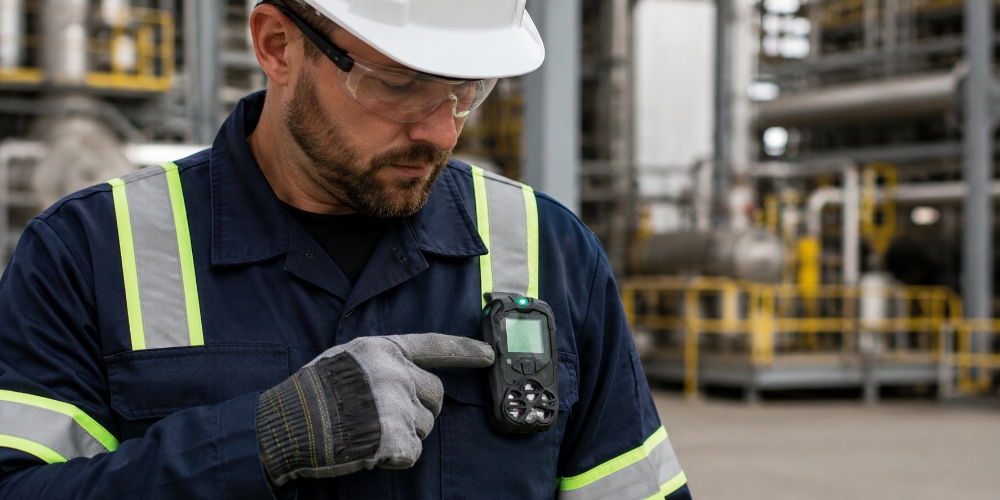
Gas monitoring is the process of measuring gas levels in an environment so teams can understand whether atmospheric conditions are safe, changing, or outside defined limits.
In industrial environments, gas monitoring is usually tied to worker safety.
Teams use gas monitors to identify combustible gases, oxygen deficiency, oxygen enrichment, toxic gases, and other atmospheric hazards before those hazards create unsafe working conditions.
This matters because gas hazards are often invisible.
A worker may not be able to see, smell, or feel a dangerous atmosphere before exposure occurs.
Monitoring gives teams a way to detect those conditions early and respond based on readings instead of assumptions.
Gas Monitoring Is About Atmospheric Visibility
At a high level, gas monitoring is about maintaining visibility into the air around workers, assets, and work zones.
That visibility may come from a personal monitor worn by a worker, an area monitor placed near a jobsite, a fixed system installed in a facility, or a connected device carried by a robot into a hard-to-access area.
The goal isn’t always to find the exact source of a gas release. In many cases, the first goal is simpler and more urgent: understand whether the atmosphere is safe enough for people to enter, remain, or continue working.
Gas Monitoring vs. Gas Leak Detection
Gas monitoring and détection des fuites de gaz are closely related, but they usually serve different operational goals.
- Gas monitoring is primarily focused on safety and atmospheric awareness. Teams use it to understand whether an area is safe for workers, equipment, or ongoing operations.
- Gas leak detection is more inspection-focused. The goal is to find, confirm, locate, or characterize the source of a gas release.
Here’s a quick overview:
| Category | Gas Monitoring | Détection des fuites de gaz |
|---|---|---|
| Primary goal | Track atmospheric conditions for safety | Find and characterize gas releases |
| Main focus | Worker safety and area awareness | Inspection and emissions investigation |
| Typical use cases | Confined spaces, turnarounds, operating units, area monitoring | Methane inspections, LDAR, emissions surveys, suspected leaks |
| Common tools | Personal monitors, area monitors, connected safety systems | OGI cameras, gas detection drones, handheld leak detectors |
| Typical workflow | Continuous or ongoing monitoring | Locate, confirm, document, and assess leaks |
The distinction between the two terms impacts both the workflow and the tools involved.
In many facilities, the two approaches work together: monitoring systems help teams understand changing atmospheric conditions, while leak detection workflows help identify where the gas is coming from.
For example, a facility may use area gas monitoring around a confined space entry point while also using optical gas imaging or drone-based gas detection to investigate the source of a suspected release.
The 6 Types of Gas Monitoring Systems and Devices
Different gas monitoring systems are built for different kinds of coverage.
Some monitors protect individual workers. Others watch a defined area, a fixed facility zone, a confined space, or a remote environment where people should not enter first.
The right choice depends on the hazard, the work being performed, the size of the area, and how quickly teams need to see and respond to changing conditions.
Here are the six types of gas monitoring systems:
1. Personal Gas Monitoring
Personal gas monitoring uses wearable devices to protect individual workers.
These monitors are typically worn in the breathing zone and alert the worker when gas levels cross defined thresholds.
- Best fit: Worker-level protection during confined space entry, maintenance, lone worker tasks, and field operations.
- Common tools: Wearable single-gas or multi-gas monitors, including connected personal monitors.
- Primary value: Helps answer the question, “Is this worker safe where they are right now?”
- Limitation: Personal monitors do not provide full visibility across a broader work zone unless they are connected into a larger monitoring system.
2. Area Gas Monitoring
Area gas monitoring uses portable or semi-portable monitors to watch conditions around a defined location.
Instead of only alerting one worker, an area monitor can provide visibility into a shared environment.
- Best fit: Temporary work zones, confined space entry points, turnaround areas, emergency response perimeters, and storage areas.
- Common tools: Portable area monitors, connected area monitors, and multi-gas area monitoring systems.
- Primary value: Helps teams see changing atmospheric conditions before workers are directly exposed.
- Limitation: Area monitors need to be placed thoughtfully based on the hazard, airflow, work location, and likely gas movement.
3. Fixed Gas Monitoring Systems
Fixed gas monitoring systems are installed in specific facility locations where continuous detection is required.
A fixed system is usually selected when the hazard is recurring enough, serious enough, or location-specific enough to justify permanent monitoring.
- Best fit: Processing areas, compressor stations, laboratories, manufacturing environments, storage facilities, and other known hazard zones.
- Common tools: Fixed gas detectors, controllers, transmitters, alarms, and facility-integrated monitoring systems.
- Primary value: Provides ongoing visibility in areas where gas hazards are expected or could create significant risk.
- Limitation: Fixed systems do not cover temporary work locations or areas outside the installed sensor layout.
4. Continuous Gas Monitoring
Continuous gas monitoring means gas levels are monitored over time rather than checked once.
This matters because a single reading only describes conditions at one moment, and industrial environments can change as work progresses.
- Best fit: Confined space work, shutdowns, turnarounds, high-risk maintenance, and operations where gas conditions may change during exposure.
- Common tools: Personal monitors, area monitors, fixed systems, and connected monitoring platforms.
- Primary value: Helps teams identify changing conditions while workers are still present or work is still underway.
- Limitation: Continuous monitoring still depends on correct sensor selection, placement, calibration, alarm thresholds, and response planning.
5. Remote and Connected Gas Monitoring
Remote and connected gas monitoring allows gas data to be viewed away from the device itself.
This can include cloud-connected personal monitors, area monitors, fixed systems, or robotic systems that transmit readings, alerts, location data, and event history to a monitoring platform.
- Best fit: Sites where safety teams need visibility across multiple workers, devices, work zones, or remote areas.
- Common tools: Connected personal monitors, connected area monitors, cloud dashboards, live alerting systems, and remote monitoring platforms.
- Primary value: Shares gas readings with the people responsible for response, not just the person standing near the device.
- Limitation: Connectivity, platform setup, alert routing, and response responsibilities need to be planned before the system is relied on in the field.
6. Robotic and Drone-Based Gas Monitoring
Robotic and drone-based gas monitoring uses a mobile platform to carry gas detection equipment into an area so teams can collect atmospheric data remotely.
This approach is useful when sending a person first would introduce unnecessary risk.
- Best fit: Confined spaces, post-incident checks, hazardous process areas, elevated assets, remote patrol routes, and areas with limited or unsafe access.
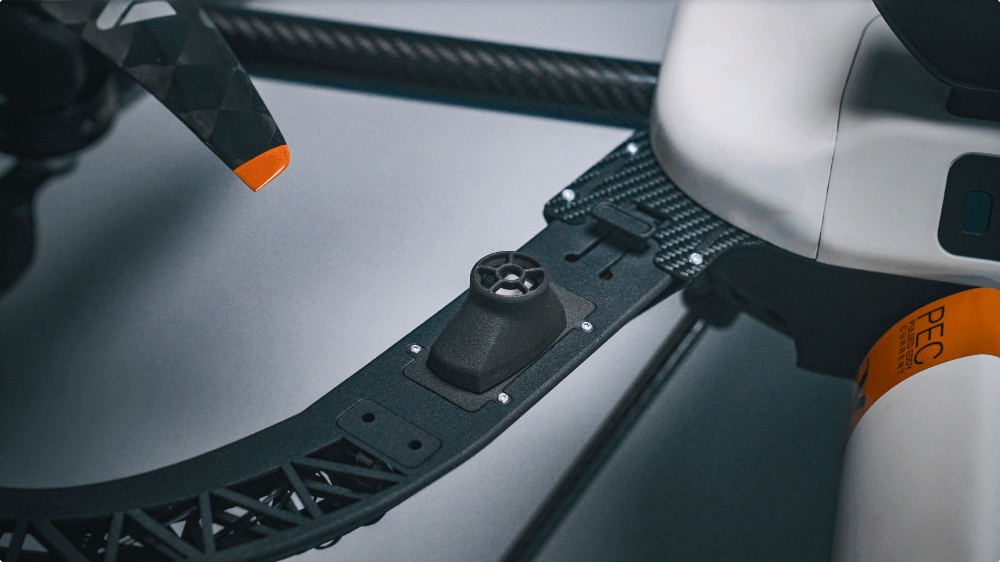
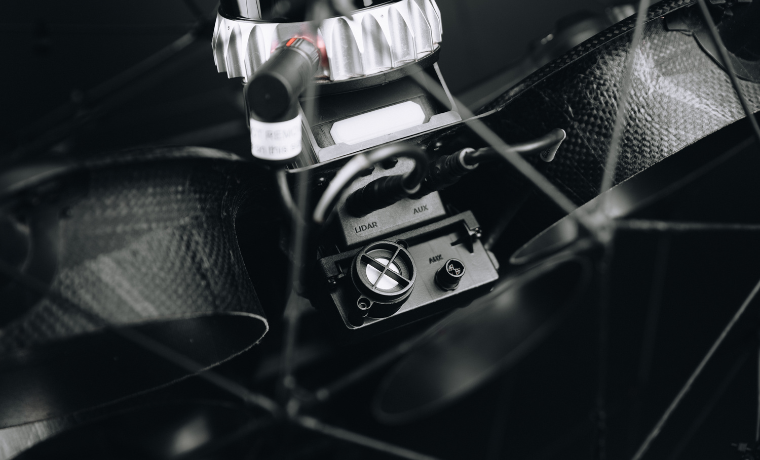
- Common tools: The MFE Spot G7c Gas Detection Solution, the Capteur de gaz inflammable Flyability Elios 3, and the Voliro T with flammable gas sensor integration.
- Primary value: Helps teams collect gas readings before entry, during remote inspection, or as part of a broader connected safety workflow.
- Limitation: Robotic and drone-based monitoring should be matched carefully to the environment. Spot is useful for ground-based robotic access, the Elios 3 is built for confined indoor spaces, and the Voliro T is better suited to aerial work around industrial assets.
How Gas Monitoring Works in the Field
Gas monitoring is most useful when it’s connected to a clear field workflow.
A reading by itself is only part of the picture.
Teams also need to know where the reading came from, what threshold was reached, who was exposed or nearby, and what action should happen next.
In practice, gas monitoring usually supports four kinds of decisions:
- Whether people can enter
- Whether work can continue
- Whether a temporary work zone is changing
- Whether a response action is needed
Let’s take a closer look at each one.
1. Pre-Entry Atmospheric Testing
Pre-entry atmospheric testing is used before personnel enter a confined space, enclosed area, or potentially hazardous environment.
The goal is to understand whether the atmosphere is acceptable before a worker is exposed. Teams commonly check for oxygen levels, combustible gas, and toxic gases such as hydrogen sulfide or carbon monoxide.
This step is especially important in tanks, vessels, pits, manholes, vaults, and other spaces where gas can accumulate or oxygen can be displaced. If the initial readings are outside site limits, teams may need to ventilate, delay entry, reassess the work plan, or use a remote monitoring method before sending personnel in.
2. Continuous Monitoring During Work
A space that tests safe before entry may not stay safe.
Atmospheric conditions can change because of work activity, poor ventilation, nearby process changes, disturbed residue, equipment operation, or a developing release. Continuous monitoring helps teams identify those changes while work is still underway.
This is where personal monitors, area monitors, and connected systems become especially important.
They allow teams to respond when conditions change instead of relying on the assumption that the first reading still applies.
3. Temporary Monitoring for Shutdowns, Turnarounds, and Emergency Response
Temporary gas monitoring is common when hazards are tied to a specific job, event, or operating condition.
Shutdowns and turnarounds often involve opened equipment, changing process states, simultaneous work crews, and temporary access points.
Emergency response may involve unknown conditions, limited visibility, or changing gas concentrations as teams isolate, ventilate, or investigate an area.
In these situations, portable and area monitors can help create a temporary safety perimeter.
Teams can place monitors where conditions are most likely to change and use readings to guide evacuation, re-entry, ventilation, or follow-up testing.
4. Real-Time Alerts, Location Data, and Response Workflows
Gas monitoring becomes more useful when readings are connected to alerting and response.
A local alarm tells the person nearby that conditions have changed. A connected alert can also notify supervisors, safety teams, or remote monitoring personnel, giving them visibility into the event, location, worker status, and device data.
This matters most when seconds count or when workers are isolated.
If a monitor alarms during lone work, confined space activity, or a remote inspection, connected monitoring can help teams understand where the event happened and coordinate a response faster.
Common Gases Monitored in Industrial Environments
The right gas monitoring setup starts with the hazard.
A monitor is only useful if it’s configured for the gases that may actually be present. That depends on the facility, process, materials, work activity, and emergency scenarios the team is planning for.
For most industrial safety programs, gas monitoring focuses on combustible gas risk, oxygen conditions, toxic exposure, and specialty gases tied to specific processes.
Combustible Gases and LEL
Combustible gas monitoring helps teams identify conditions where flammable gases or vapors may create a fire or explosion risk.
LEL stands for lower explosive limit. In practical terms, LEL monitoring helps teams understand whether combustible gas levels are approaching a range where ignition risk becomes a concern.
This matters in oil and gas facilities, chemical plants, refineries, tank farms, compressor stations, and other environments where methane or other combustible gases may be present.
If LEL readings rise, teams may need to stop work, evacuate, ventilate, isolate equipment, or investigate the source.
Oxygen Deficiency and Oxygen Enrichment
Oxygen monitoring helps teams identify atmospheres that do not have safe oxygen levels.
Oxygen deficiency can occur when oxygen is displaced by another gas or consumed by a process such as corrosion, combustion, or biological activity. Oxygen enrichment can also create risk by increasing the chance that materials ignite or burn more intensely.
This is especially important in confined spaces, tanks, vessels, pits, and enclosed areas.
A space can look normal while still having an unsafe oxygen level, which is why oxygen monitoring is a standard part of many atmospheric testing workflows.
Hydrogen Sulfide, Carbon Monoxide, and Toxic Gases
Toxic gas monitoring helps teams identify exposure risks that may not be visible or obvious.
Hydrogen sulfide and carbon monoxide are two common industrial hazards. H₂S is a concern in oil and gas, wastewater, confined spaces, and other environments where sour gas or decomposing organic material may be present.
CO is a concern around combustion sources, engines, heaters, and poorly ventilated spaces.
Toxic gas monitoring matters because exposure risk can develop quickly.
Depending on the gas and concentration, teams may need to evacuate, use respiratory protection, improve ventilation, or investigate the source before work continues.
VOCs, Ammonia, Chlorine, and Specialty Gas Risks
Some sites need monitoring for gases beyond standard four-gas configurations.
VOCs, ammonia, chlorine, sulfur dioxide, and other specialty gases may be relevant in chemical processing, semiconductor manufacturing, refrigeration, water treatment, manufacturing, and other process-specific environments.
This is where gas selection becomes especially important. A standard monitor may not cover every gas that matters for a site. Teams should choose sensors and cartridges based on the actual hazard profile, not just the most common monitor configuration.
Connected Safety: The Future of Gas Monitoring
Gas monitoring is shifting from isolated device readings toward connected safety systems that provide shared visibility across workers, work zones, and industrial sites.
In the past, many gas monitors functioned primarily as standalone devices. A worker wearing a monitor could hear or see an alarm, but visibility into the event often depended on radio communication, manual reporting, or someone nearby recognizing the problem.
Connected safety changes that workflow by allowing gas readings, alerts, worker status, and location data to be shared in real time across a broader safety system.
From Individual Gas Readings to Sitewide Visibility
Modern connected gas monitoring systems can combine data from personal monitors, area monitors, fixed systems, and remote monitoring platforms into a single operational view.
That matters because atmospheric hazards rarely affect only one person.
A rising LEL reading near a confined space entry point, for example, may affect nearby crews, ventilation plans, evacuation decisions, and the broader work schedule.
Instead of relying only on the worker nearest the monitor to recognize and communicate the problem, connected systems allow supervisors, safety teams, and remote personnel to see changing conditions as they happen.
This is one reason connected area monitors and connected personal monitors have become more common in shutdowns, turnarounds, emergency response, oil and gas operations, and other high-risk industrial environments.
How Connected Gas Monitoring Improves Response
Connected monitoring improves more than visibility.
And it can also improve response coordination.
A local alarm still matters because the worker nearest the hazard needs immediate awareness. But connected systems extend that awareness to the people responsible for supporting the response.
For example, a connected monitoring platform may allow teams to:
- View gas readings remotely across multiple devices and work zones.
- Receive alerts when gas thresholds are exceeded.
- Monitor worker status and location during high-risk work.
- Review event history and atmospheric trends after an incident or alarm.
This is especially important in environments where workers may be isolated, spread across a large facility, or operating in areas where rapid communication is difficult.
Connected safety workflows can also reduce delays between detection and response. Instead of waiting for a worker to manually report a condition change, supervisors and safety teams may already be receiving alerts and situational data as the event develops.
Where Robots and Remote Systems Fit
Connected safety systems are also extending into robotic and remote gas monitoring workflows.
Instead of limiting atmospheric visibility to places where workers are physically present, connected robotic systems can help teams collect gas readings remotely before personnel enter the area.
Drone-based systems can also support remote atmospheric monitoring in certain environments.
Gas monitoring devices like the Elios 3’s flammable gas sensor and the Voliro T’s gas sensor can help teams collect gas readings around elevated, confined, or hard-to-access industrial assets without relying only on direct personnel access.
These systems don’t replace personal monitors, area monitors, or fixed monitoring infrastructure.
Their value is in extending connected atmospheric visibility into environments where access is difficult, hazardous, or operationally disruptive.
In practice, modern gas monitoring programs increasingly combine multiple monitoring approaches into a connected safety workflow: worker-worn monitors for personal protection, area monitors for zone awareness, fixed systems for continuous facility monitoring, and robotic or drone-based systems for remote atmospheric visibility.
Gas Monitoring FAQ
Here are answers to some of the questions that come up a lot about gas monitoring and gas monitoring eqiupment.
What is gas monitoring?
Gas monitoring is the process of measuring gas levels in an environment so teams can understand whether atmospheric conditions are safe, changing, or outside defined limits.
In industrial settings, gas monitoring is commonly used to detect combustible gases, oxygen deficiency or enrichment, toxic gases, and other atmospheric hazards that could affect worker safety.
What is the difference between gas monitoring and gas leak detection?
Gas monitoring helps teams understand whether atmospheric conditions are safe.
Gas leak detection helps teams find, locate, and characterize the source of a gas release. Monitoring is primarily a safety workflow, while leak detection is more often an inspection, emissions, or maintenance workflow.
What gases do industrial gas monitors detect?
Industrial gas monitors can be configured for many hazards, depending on the device and sensor setup.
Common gases include oxygen, combustible gases measured as LEL, hydrogen sulfide, carbon monoxide, ammonia, sulfur dioxide, chlorine, VOCs, and other site-specific gases.
What is a four-gas monitor?
A four-gas monitor is a portable gas detector commonly configured to monitor oxygen, combustible gases, hydrogen sulfide, and carbon monoxide.
Four-gas monitors are widely used for confined space entry, maintenance, emergency response, and general industrial safety because they cover several common atmospheric hazards in one device.
What is continuous gas monitoring?
Continuous gas monitoring means gas levels are monitored over time instead of checked once.
This matters because atmospheric conditions can change during work. A space that tests safe before entry may become unsafe later due to poor ventilation, process changes, disturbed material, or a developing release.
What is area gas monitoring?
Area gas monitoring uses a portable or semi-portable monitor to watch conditions around a defined location.
It’s commonly used around work zones, confined space entry points, shutdowns, turnarounds, emergency response areas, and other locations where teams need shared visibility into atmospheric conditions.
When should a team use robotic or remote gas monitoring?
Robotic or remote gas monitoring is useful when teams need gas readings from an area where sending a person first may introduce unnecessary risk.
Examples include confined spaces, hazardous process areas, post-incident checks, emergency response, or routine robotic patrols where gas data can help teams decide whether personnel should enter or how the work should proceed.