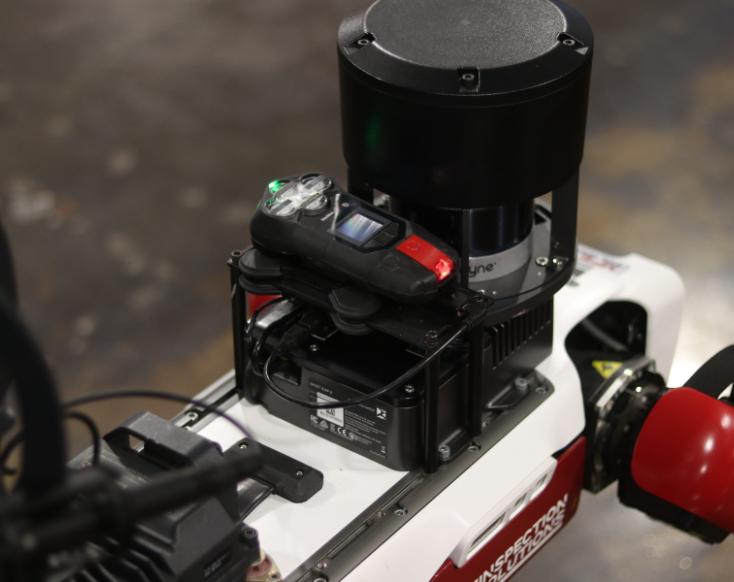
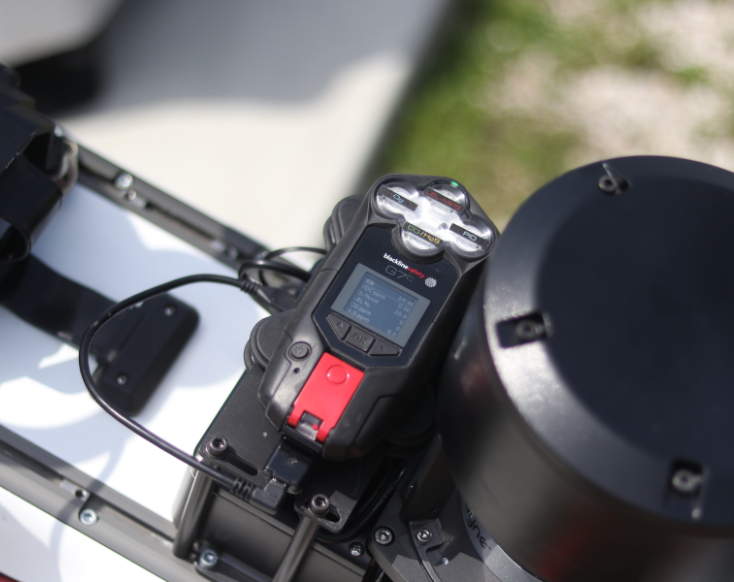
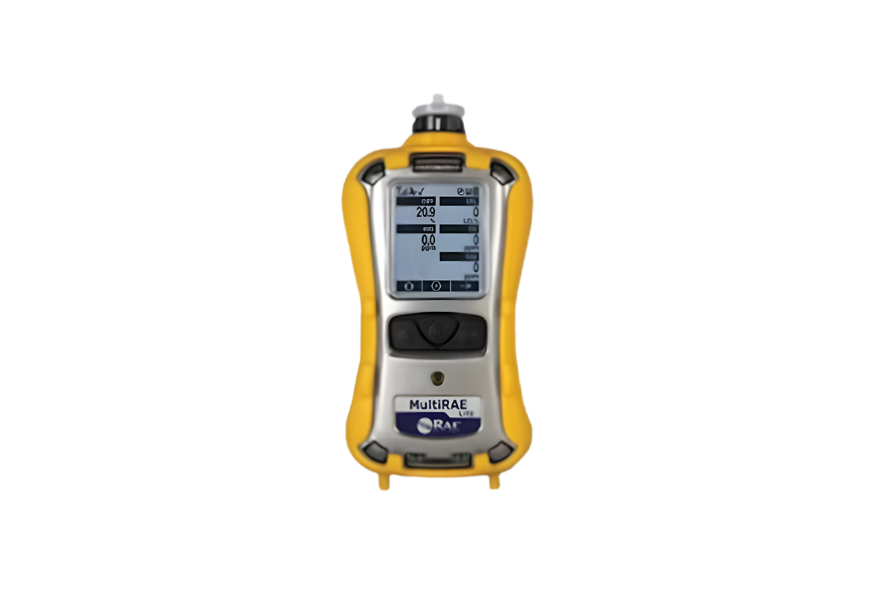
The MFE Spot Connected Gas Detection Solution integrates Blackline Safety’s multi-gas detector with Boston Dynamics’ Spot® robot. The integration allows teams to collect gas readings remotely while performing inspection, monitoring, or response work in hazardous or hard-to-access environments.
By bringing connected gas detection into robotic workflows, the solution gives operators real-time visibility into atmospheric conditions and allows gas data to inform mission decisions when defined thresholds—such as LEL—are reached.
Equipment Type: Toxic Air Monitoring
Benefits of the MFE Spot Connected Gas Detection Solution
Gas leak detection and investigation
Confined space pre-entry assessment
Continuous gas monitoring in hazardous or hard-to-access areas
Emergency response and re-entry assessment
Routine robotic patrols with gas monitoring
Threshold-based response to move Spot out of hazardous conditions
Process units and production facilities
Compressor stations and pipeline infrastructure
Tank farms and storage terminals
Confined spaces and enclosed environments
Chemical processing and storage areas
Power generation facilities
Oil and gas
Petrochemical and chemical processing
Semiconductor manufacturing
Power generation and utilities
Emergency response and hazmat teams
Industrial manufacturing
For Sale
Request a Quote
MFE Spot Connected Gas Detection Solution for Remote Gas Monitoring
Industrial teams often need to understand atmospheric conditions before sending personnel into an area. But traditional gas detection depends on workers physically entering those environments.
In hazardous, confined, or difficult-to-access spaces, that approach introduces risk and limits visibility until someone is already exposed. By combining Spot’s mobility with the Blackline Safety’s connected gas detection, operators can assess conditions in real time, monitor changing environments, and use that information to guide decisions about inspection, access, and response.
Connected Gas Detection and Spot Tablet Visibility
The MFE Spot Connected Gas Detection Solution helps teams collect gas readings remotely while Spot performs inspection, monitoring, or response work in areas where sending a person first may not be the safest option.
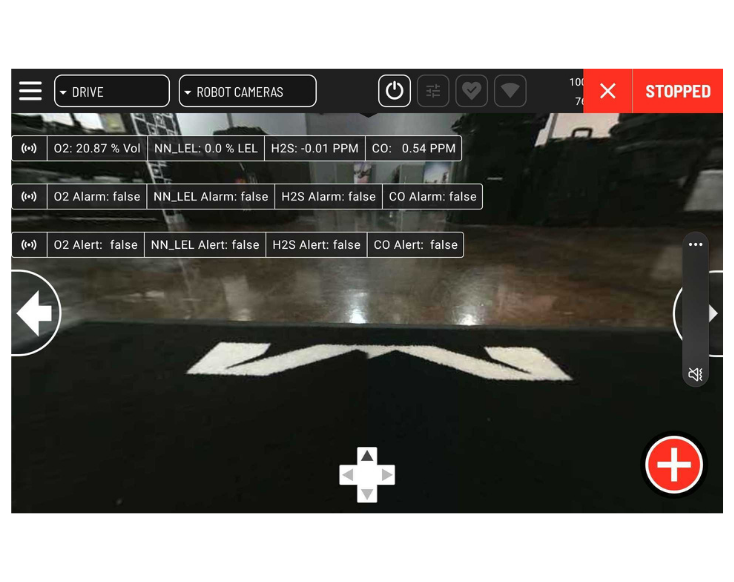
Gas readings and alerts can be viewed directly on the Spot tablet during operation, giving operators real-time awareness while the robot is in the field.
Threshold-Based Mission Response and Spot Protection
When defined gas thresholds are reached, such as rising LEL conditions, the system can trigger mission actions, including pausing the mission, sending Spot to a rally point, or shutting Spot down.
These capabilities are important because Spot is not rated as intrinsically safe for hazardous environments. If gas conditions move toward a potentially explosive environment, threshold-based response can support site safety while also helping protect the Spot platform.
The Blackline Saftey gas detector can continue operating independently if Spot powers down, allowing gas data collection to continue as part of the response workflow.
Direct-to-Cloud Data Streaming and Blackline Live Visibility
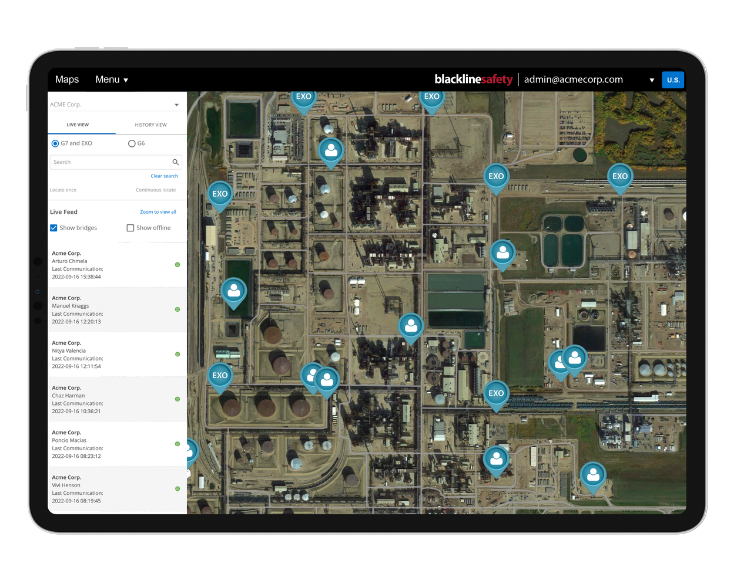
The Blackline Safety’s gas detector automatically streams data to the cloud, supporting real-time visibility so teams can see gas events, alerts, and changing conditions.
For industrial teams, this data streaming supports a broader connected safety workflow. Gas readings collected by Spot can contribute to a more complete view of atmospheric conditions across the site, alongside data from personal monitors, area monitors, and other connected systems.
Configurable Multi-Gas Monitoring and Hot-Swappable Cartridges
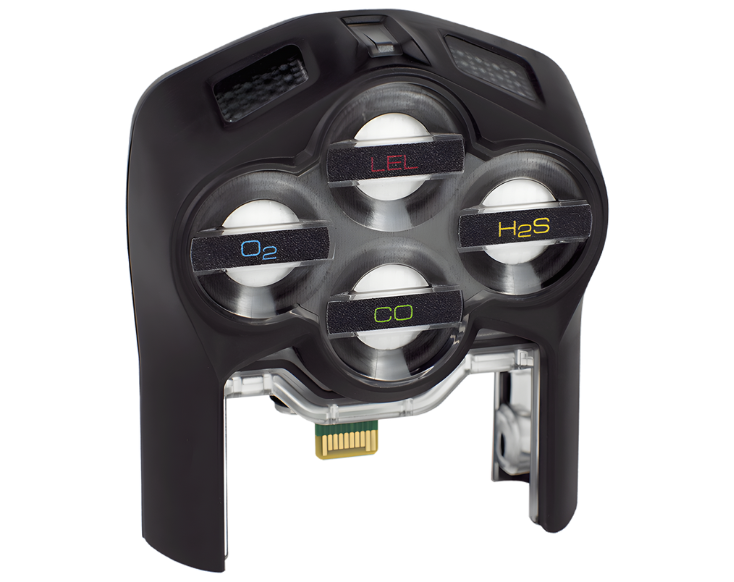
The Blackline Safety’s gas detectors use a modular, cartridge-based design that allows teams to configure gas detection based on site-specific hazards. It supports Standard, Single-gas, Multi-gas diffusion, and Multi-gas pump cartridges.
This flexibility allows operators to deploy the solution for a range of uses, allowing configuration changes as conditions evolve.
Broad Detection Coverage Across Industrial Gas Hazards
Blackline Safety’s gas detector supports monitoring for up to five gases at once. It supports detection of over 20 gases, including LEL, hydrogen sulfide (H₂S), carbon monoxide (CO), oxygen (O₂), ammonia, sulfur dioxide, and VOCs through PID.
This range allows the MFE Spot Connected Gas Detection Solution to support different applications across industries—from monitoring combustible gas conditions in oil and gas facilities to detecting process gases in semiconductor or chemical environments.
Connected Safety Across the Worksite
The MFE Spot Connected Gas Detection Solution extends Blackline Safety’s connected safety model into robotic workflows.
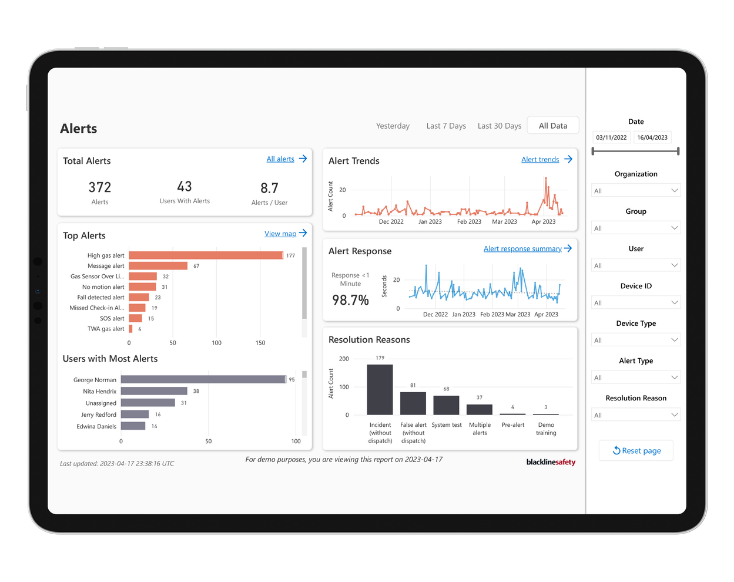
Personal monitors, area monitors, and robotic systems can all contribute gas data to a broader view of atmospheric conditions across the worksite. That data is streamed to Blackline Live, where teams can monitor gas readings, alerts, and events across devices in one place, with reporting supported through Blackline Analytics.

 English
  English (Canada)
 Français du Canada