
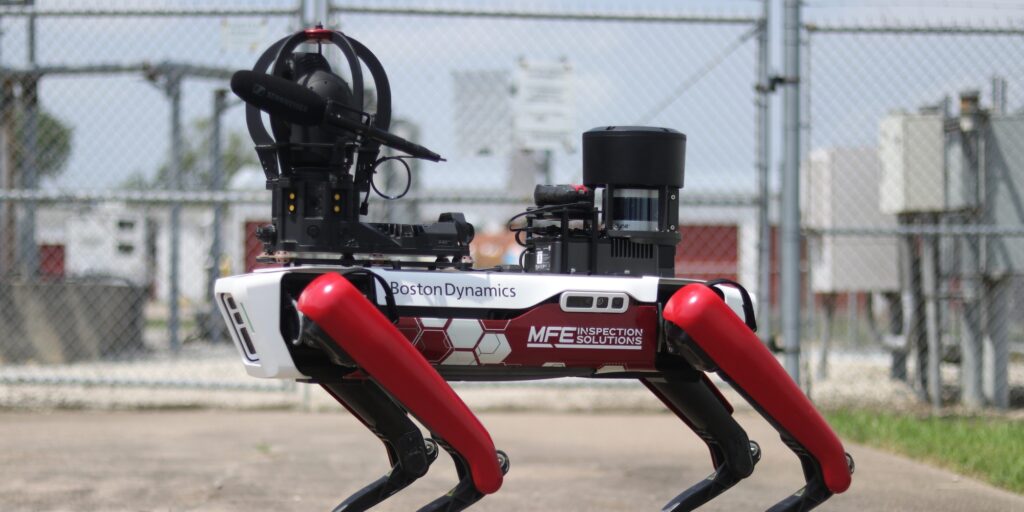
Ressources / Article / Why MFE Integrated Blackline Safety Connected Gas Detection with Boston Dynamics’ Spot
Article
Why MFE Integrated Blackline Safety Connected Gas Detection with Boston Dynamics’ Spot
Learn why MFE integrated Blackline Safety’s cloud-connected portable gas detector with Boston Dynamics’ Spot®—and how the new solution extends gas detection beyond the worker and across the worksite.
Gas detection has traditionally been built around the individual.
A worker enters a unit wearing a personal gas monitor, and that monitor tells them whether the air is safe. If conditions change, the alarm sounds, and the worker responds.
It’s a simple, trustworthy model. And for decades, it’s been the foundation of industrial safety.
But this model is starting to change.
Today, industrial teams are increasingly working with connected systems that provide real-time visibility into conditions across an entire site. Instead of relying on a single device attached to a single person, safety teams can now use cloud-connected gas detection to understand atmospheric conditions across a site—before, during, and after work is performed.
Because the data is streamed to Blackline Safety’s Blackline Live software, teams can move beyond isolated gas readings and gain live visibility into changing conditions across the worksite, before personnel enter potentially hazardous areas.
This is the idea behind connected safety: connecting workers, worksites, devices, and data to give safety and operations leaders instant visibility into risk as conditions change.
Connected safety gas data comes from several sources:
- Personal monitors
- Area monitors
- Drones and ground-based robots, like the Boston Dynamics’ Spot
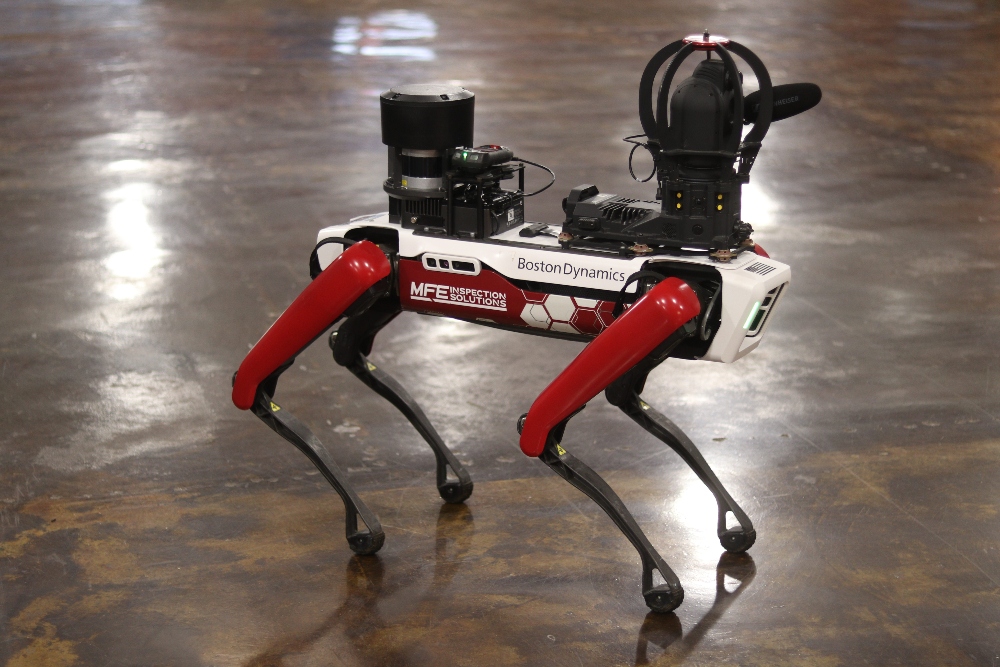
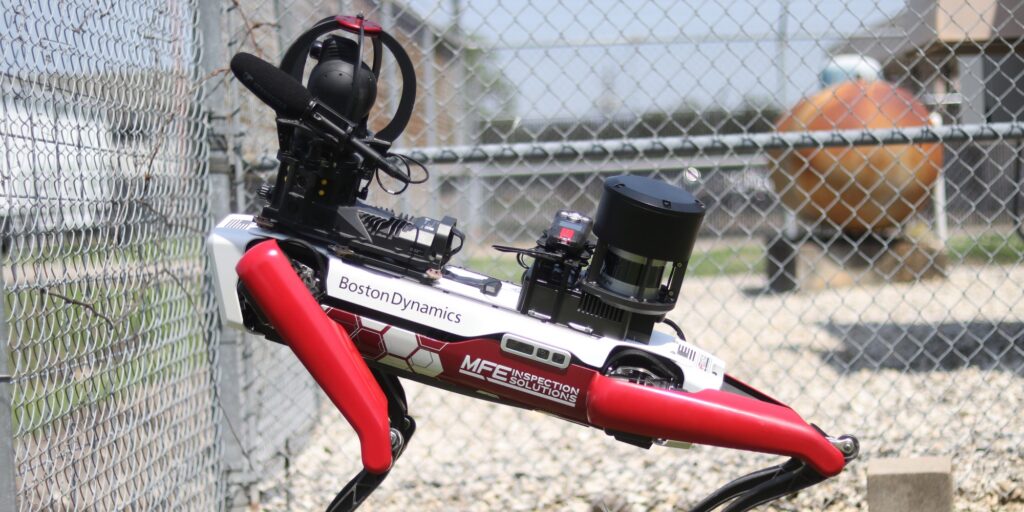
The last one is where the integration of the new MFE Spot Connected Gas Detection Solution comes in—extending connected gas detection into robotic workflows to instantly deliver gas readings, alerts, and location data to remote monitoring teams.
Why We Integrated Spot with Blackline Safety Connected Gas Detection
In the field, customers often need more than individual tools.
They need those tools to work together in a way that supports the job they’re actually trying to do.
For the MFE Spot Connected Gas Detection Solution, the need was clear: customers were already using gas detection systems, and they were already using Boston Dynamics’ Spot®.
But they weren’t able to collect gas data remotely with Spot—or use that data to help guide what Spot should do when conditions changed. That was the gap we saw.
Bringing the two systems together makes both technologies more useful, because it allows teams to collect gas data remotely and use that data to inform robotic mission behavior when conditions change. Now teams can remotely stream live gas data from robotic inspections before workers are exposed.
Personal monitors help protect individual workers, and area monitors provide visibility in fixed or temporary zones.
But Spot carrying a portable gas detector adds another layer: remote atmospheric data from areas that may be too dangerous for people to enter.
Industries and Use Cases
The MFE Spot Connected Gas Detection Solution can help in:
- Oil and gas facilities. Monitoring for combustible gas conditions like LEL and identifying changes that may indicate a developing leak.
- Semiconductor manufacturing. Detecting process-specific gases like ammonia in sensitive environments.
- Traitement chimique. Monitoring for toxic gases like hydrogen sulfide, carbon monoxide, or sulfur dioxide.
- Confined or hazardous area assessment. Collecting atmospheric data before deciding whether personnel should enter.
- Emergency response or re-entry planning. Sending Spot into an area first to better understand conditions before people approach.
- Routine robotic patrols. Adding gas readings to repeated inspection missions so teams can track trends over time.
In each case, safety is the goal.
By understanding the environment before a person enters, teams can improve their decision-making and keep people out of hazardous scenarios.
Over time, this data becomes more than a single reading. Repeated Spot missions can reveal patterns—small changes that point to developing issues and help teams prioritize further inspection.
A Tested Approach to Remote Gas Detection
Using Spot for remote gas data collection isn’t a new use case. In fact, MFE has supported Spot-based gas detection for years.
In a previous mission we documented, a client’s Spot detected combustible gas during an autonomous inspection at a midstream oil and gas facility. That reading led the safety team to a pinhole leak, demonstrating how robotic gas detection can help operators move from awareness to action.
Here are three key findings from the mission:
- Remote gas detection can support real field decisions. The robot didn’t just collect data—it helped surface a condition that required follow-up.
- Gas readings can inform robotic mission behavior. When gas levels reached a defined threshold, the robot shut down as part of the safety workflow.
- Robotic gas detection can support both safety and maintenance. The reading helped the team identify a leak that may otherwise have taken longer to find.
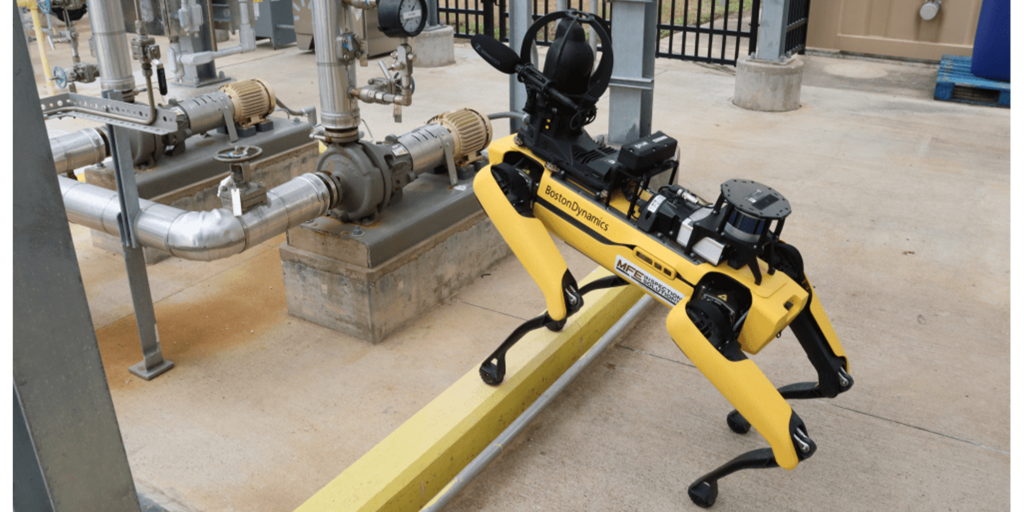
How the MFE Spot Connected Gas Detection Solution Works
There were two goals in creating this solution:
- Give Spot a way to collect gas data while it performs remote inspection, monitoring, or response work in hazardous environments.
- Allow that data to guide Spot, making it return home if the gas detector finds dangerous levels of explosive gases, helping operators avoid potentially hazardous conditions while protecting their investment in the Spot platform.
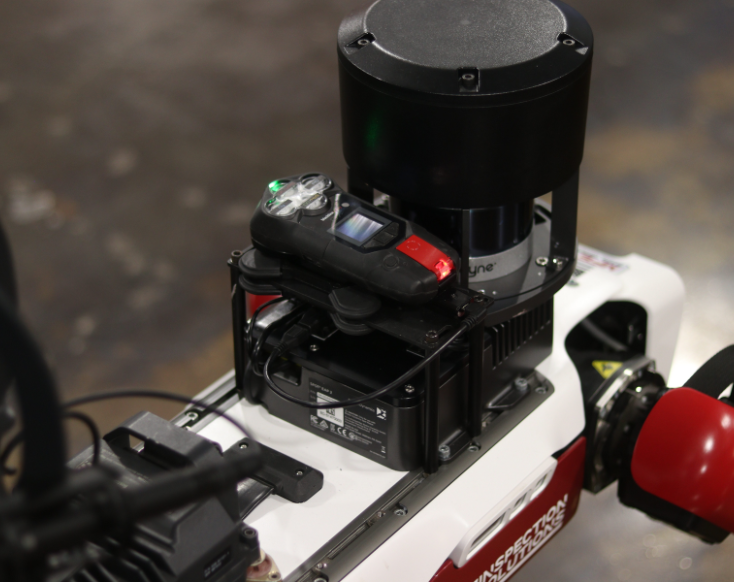
With this integration, Blackline Safety provides connected gas detection, while Spot provides mobility and remote access.
MFE built the integration layer between them—the “digital plumbing” that allows the two systems to work together in a practical field workflow.
Here’s an overview of how the solution works:
| Workflow Step | What Happens |
|---|---|
| Spot enters an area and the portable gas detector monitors gas conditions | The device collects location-based gas readings and high- and low-level alerts, which are visible directly on the Spot tablet. |
| Data is made visible | Teams can monitor conditions remotely through direct-to-cloud data streaming into the Blackline Live software platform. |
| Thresholds trigger action | If defined gas levels are reached, the team can pause the mission, send Spot to a rally point, return it to base, or investigate further. |
| Alerts and awareness are shared across the worksite | Gas readings and alerts are streamed to Blackline Live, giving remote personnel a live view of changing conditions across the site. |
Here’s what the gas detection readings look like on the Spot tablet:
Configurable Gas Detection—That Also Protects Spot
Blackline Safety’s intrinsically safe* portable device can adapt to the needs of specific industries.
*(Note: Spot is not intrinsically safe.)
It uses a configurable, cartridge-based system that supports standard, single-gas, multi-gas diffusion, and multi-gas pump cartridges. The cartridges are hot-swappable, so teams can change them as site hazards or job requirements evolve.
Depending on the configuration, the gas detector can monitor for up to five gases at once, with a portfolio of over 20 gases, including ammonia, carbon monoxide, hydrogen sulfide, oxygen, sulfur dioxide, combustible gases / LEL, and VOCs through PID.
If the gas levels cross a defined threshold—such as rising LEL conditions—the system can trigger Spot to stop its mission and return to its deployment location or another designated safe point.
This setup supports two practical functions in the field:
| Solution Function | What It Enables |
|---|---|
| Remote gas monitoring | Collecting atmospheric data in areas where teams may not want to send a person first |
| Spot protection | Triggering mission changes when gas thresholds are exceeded to move Spot out of hazardous conditions |
The Return to Home function is important because Spot isn’t intrinsically safe.
If conditions shift toward a potentially explosive environment, continuing to operate in that area introduces both safety risk and equipment risk.
By using connected gas detection to inform robot behavior, teams can move Spot out of hazardous conditions before those risks escalate—helping protect personnel while also protecting their investment in the Spot platform.
Blackline Safety’s gas detector can also continue operating independently, monitoring conditions, and streaming data even if Spot is powered down as part of the safety response.
Where Connected Safety Is Headed
The MFE Spot Connected Gas Detection Solution is one piece of a broader shift in how industrial teams understand and respond to risk.
Gas detection is no longer limited to a single device on a single worker. It’s becoming part of a connected system—one where personal monitors, area monitors, and robotic platforms all contribute data to a shared view of what’s happening across a site.
As that system evolves, the value isn’t just in collecting more data, but in making that data actionable. Access to real-time, site-wide gas data will help teams respond faster, make better decisions, and operate with a clearer understanding of changing conditions.
This is the direction connected safety is moving: from isolated readings to coordinated awareness, and from reactive response to more informed, proactive operations.
The MFE Spot integration fits into that trajectory—connecting technologies in a way that makes them more useful in real-world conditions.
How MFE Decides to Make a Product
In general, MFE works with trusted technology partners across robotics, NDT, RVI, environmental monitoring, and UAV workflows. And we’re very selective about our partnerships.
In most cases, our role is to help customers select, deploy, and support the best inspection and safety technologies already on the market.
But sometimes, customers need a solution that doesn’t exist.
That’s when MFE steps in to make a product: when we see the need to close a gap in how inspection and safety work actually happens in the field.
Here are some of our recent products:
| Customer Need | MFE Response |
|---|---|
| Collect gas detection data remotely by drone | Détection de l'EMF LW |
| Screen for CUI without shutdowns | MFE PulsePro |
| Bring connected gas detection into robotic workflows | MFE Spot Connected Gas Detection Solution |
With the MFE Detect LW, MFE helped bring optical gas imaging to drone-based workflows so teams could collect methane detection data from the air.
With the MFE PulsePro, MFE addressed a different field need: faster, more practical CUI screening without requiring shutdowns or insulation removal.
The MFE Spot Connected Gas Detection Solution follows the same logic.
Customers were already using gas detection systems, and they were already using Spot. We saw the need to connect those systems in a way that would make both more useful in real field conditions.
And that’s the point.
We don’t make products randomly. We build solutions when customers tell us they have a specific need, and we know we can help them solve it.
 English
  English (Canada)
  Français du Canada