
Ressources / Étude de cas / MFE Supports NV5 in 101 Emergency I-40 Storm Drain Inspections Following Hurricane Helene
Étude de cas
MFE Supports NV5 in 101 Emergency I-40 Storm Drain Inspections Following Hurricane Helene
Avantages
Safer Inspection of Damaged Underground Infrastructure
The A200 crawler allowed the team to inspect storm drain pipes remotely in conditions where human entry was impractical or unsafe, reducing risk while improving access to damaged underground assets.
Decision-Ready Data for Repair Planning
By combining crawler video, NASSCO (National Association of Sewer Service Companies) PAPC-coded reporting (Pipeline Assessment and Certification Program reporting), and mapped outputs, NV5 delivered inspection data NCDOT engineers could use to evaluate conditions and move repair planning forward.
Rapid Assessments for High-Urgency Recovery Effort
NV5 used the Deep Trekker A-200 crawler to do 101 pipe inspections under a tight deadline, helping NCDOT assess storm drain infrastructure along a critical section of I-40 damaged by Hurricane Helene.
Introduction
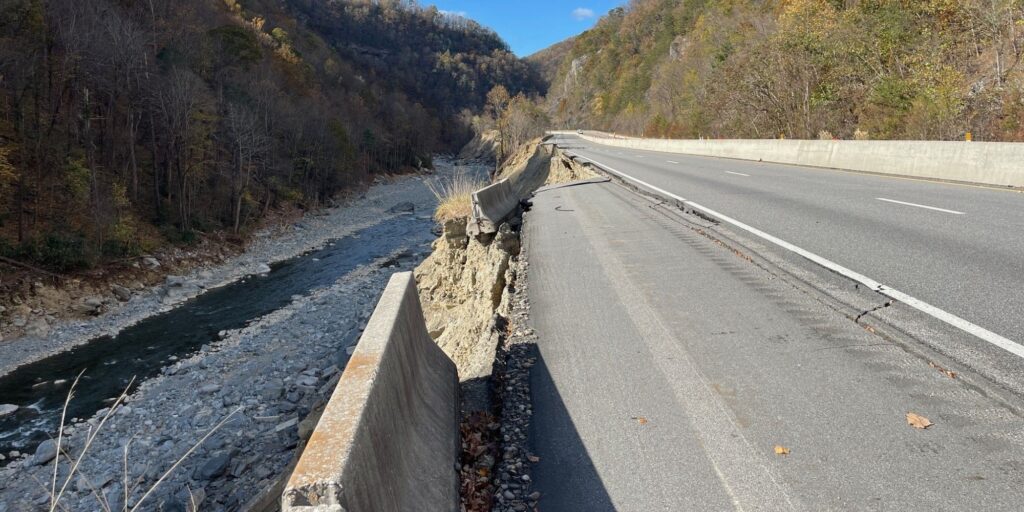
After Hurricane Helene tore through North Carolina, the state faced a transportation and infrastructure crisis. According to the NCDOT, the storm damaged nearly 9,400 sites, including 818 state-maintained bridges, and forced the closure of 1,400 state-maintained roads.
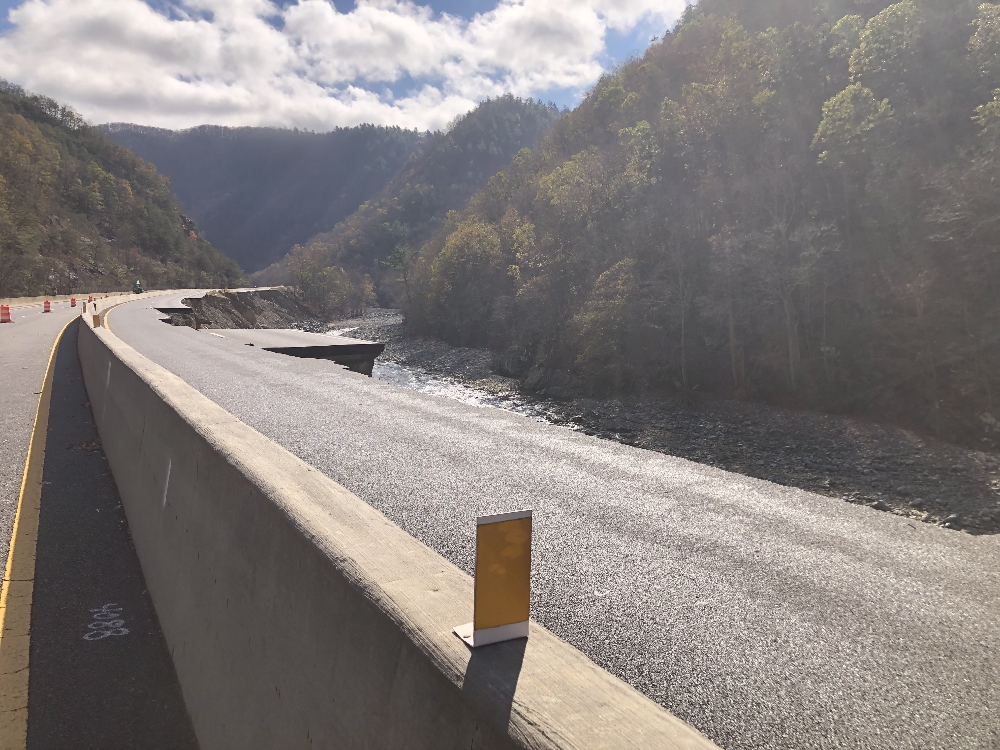
Among the hardest-hit areas was Interstate 40 in the Pigeon River Gorge, near the Tennessee border. To assess damage to storm drain infrastructure under the road, NV5 Survey and Utility Services teams were assigned multiple emergency tasks along a 5-mile section that had suffered multiple landslides and washouts.
NV5 was contacted on a Monday and mobilized immediately. The mission required surveying, mapping, assessment, video inspection, and reporting of stormwater infrastructure along this critical stretch of roadway.
Le défi
Engineers at NCDOT needed to understand the condition of the storm drain systems beneath the roadway so they could make repair decisions and keep the recovery effort moving.
The project presented three major challenges:
- Tight timeline. Inspections had to happen fast. I-40 is a major transportation corridor, and the damaged section needed to be assessed quickly to support reconstruction planning and reopening efforts.
- Hard to access. The post-storm environment added uncertainty to every access decision, making it challenging to safely and efficiently assess underground infrastructure.
- Decision-ready reporting. Finally, the outputs had to be usable immediately. This was not a mission where raw video alone would be enough. NCDOT needed standardized inspection reporting, clear asset references, and mapped outputs that engineers could match to the drainage network.
“In a situation like this, the priority is getting usable information into the engineers’ hands as quickly as possible. Getting inside the pipe is only part of it. The bigger job is giving the client information they can actually use to make decisions.”
Tom Murel, Utility Services Group Manager at NV5
La solution
To meet these demands, NV5 decided to deploy a crawler-based inspection workflow built for speed, access, and decision-ready reporting.
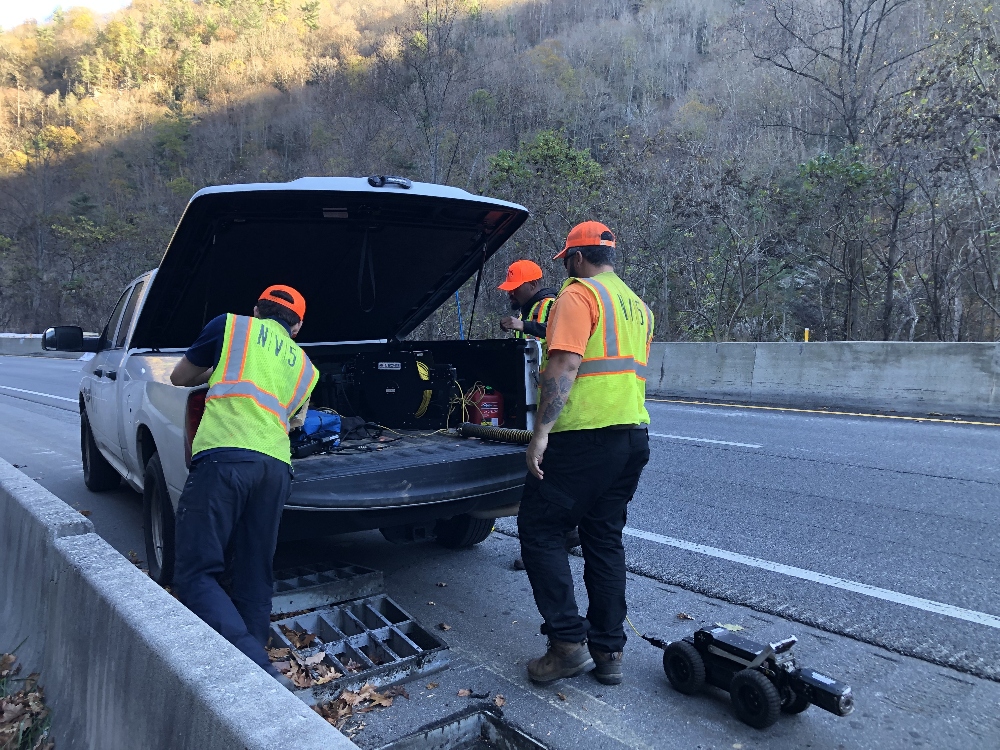
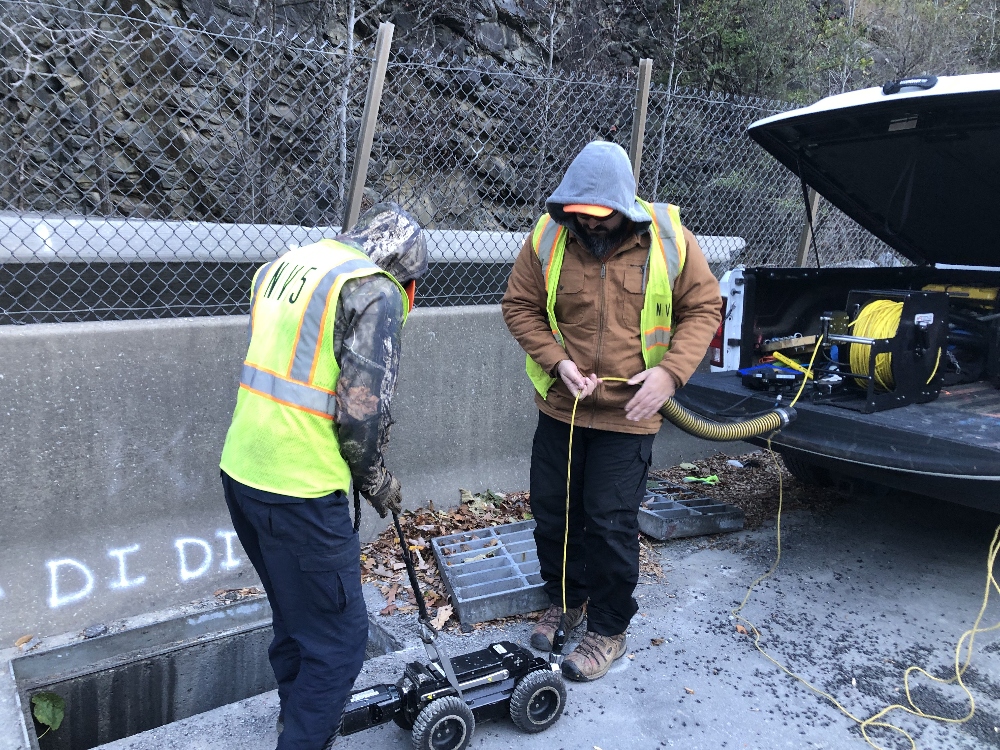
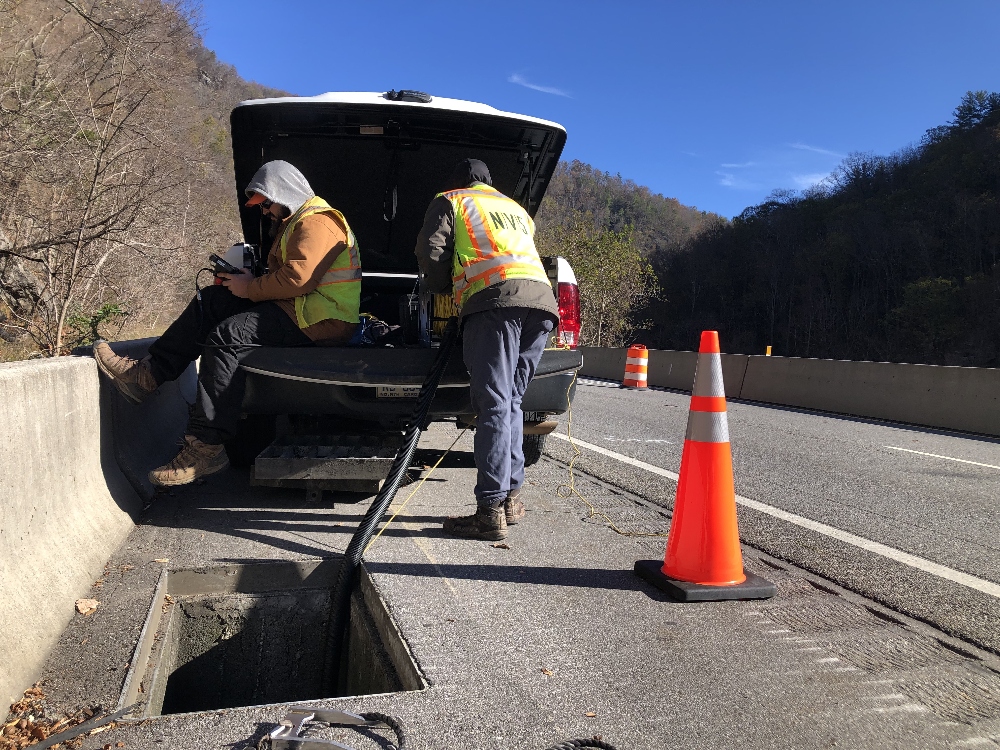
At the center of the effort was the A-200 crawler system, which the NV5 team used to perform visual inspections inside storm drain pipes and culverts. The crawler allowed inspectors to remotely navigate underground infrastructure while capturing detailed interior video, giving the team direct visibility into pipe conditions without relying on man-entry.
“The A200 gave us a practical way to get into these structures, capture the footage we needed, and keep moving. When you’re working under a deadline like this, portability and simplicity are key to moving quickly.”
Tom Murel, Utility Services Group Manager at NV5
NV5 paired crawler inspections with terrestrial LiDAR scanning. That gave the team a way to capture directional information about exposed pipe systems and connect inspection findings to specific assets and locations.
Together, the crawler and LiDAR workflow created a more complete picture of both internal condition and infrastructure layout.
For efficiency, the team worked in two teams:
- One team worked ahead to scout access points, clear debris, and assess reachability
- The second team followed with the A-200 system to capture inspection footage.
That structure helped NV5 move quickly across the corridor and keep the project on schedule.
Portability also mattered. Instead of relying on a larger vehicle-mounted crawler setup, NV5 used a two-case A-200 configuration. This made the system easier to deploy in the damaged roadside environment, where the team needed to move quickly from one pipe to the next.
Les résultats
Using this workflow, NV5 completed 101 pipe inspections along the damaged I-40 corridor and delivered the required data within NCDOT’s deadline.
“The crawler helped us get a clear look at infrastructure that would have been extremely difficult to assess any other way in that timeframe. That let us provide the reporting and documentation the client needed to keep the recovery effort moving.”
Tom Murel, Utility Services Group Manager at NV5
The final deliverables included video inspections, PACP-coded reports, and mapped outputs linking inspection findings to specific pipes and structures. The team also produced a CAD file with a naming convention that allowed NCDOT engineers to cross-reference inspection results directly against the drainage network.
Together, these outputs gave NCDOT engineers more than visual documentation. They provided structured inspection data tied directly to stormwater infrastructure assets, allowing the agency to review conditions, prioritize repairs, and support planning across the broader recovery effort.
Principaux résultats :
- Rapid inspections. NV5 completed 101 pipe inspections along the damaged I-40 corridor under a tight timeline, delivering the inspection data NCDOT engineers needed to assess stormwater infrastructure conditions and support repair planning.
- Remote inspection improved access and safety. Many of the storm drain pipes inspected during the project were too narrow or unsafe for personnel to enter following the storm. The crawler-based workflow allowed NV5 to inspect these assets remotely, capturing interior video without exposing crews to confined-space risks.
- Decision-ready inspection data for engineering analysis. The team delivered video inspections, PACP-coded reports, and structured inspection outputs that allowed engineers to quickly interpret pipe conditions and compare findings across the drainage network.
- Mapped infrastructure data tied directly to storm drain assets. Inspection results were integrated with survey and LiDAR data to create mapped outputs and CAD files linking findings to specific pipes and structures, helping engineers connect condition data directly to infrastructure locations.
- Inspection results delivered in time to support recovery planning. By completing inspections quickly and delivering standardized reporting, NV5 provided the information NCDOT engineers needed to evaluate stormwater infrastructure and move forward with repair planning along one of the region’s most important transportation corridors.
- Support for a large-scale disaster recovery effort. The inspections contributed to the broader Hurricane Helene recovery work along I-40 in the Pigeon River Gorge, where landslides and flooding damaged sections of the interstate and surrounding infrastructure.
Conclusion: Advancing Crawler-Based Inspections for Critical Infrastructure
Disaster recovery puts pressure on every part of an inspection workflow.
Teams need to mobilize quickly, access damaged assets safely, and produce data that supports immediate decisions. After Hurricane Helene, the NV5 team used the A-200 crawler to do exactly that.
With support from MFE Inspection Solutions, NV5 completed a high-urgency underground inspection project under difficult conditions and delivered the reporting, video, and mapped outputs needed to support repair planning.
The project showed how crawler-based inspection systems can help engineering teams respond faster when damaged underground infrastructure demands immediate answers.
Partager
 English
  English (Canada)
  Français du Canada