
Guide
Corrosion Under Insulation Explained: Risk Factors, Hotspots & Inspection Options
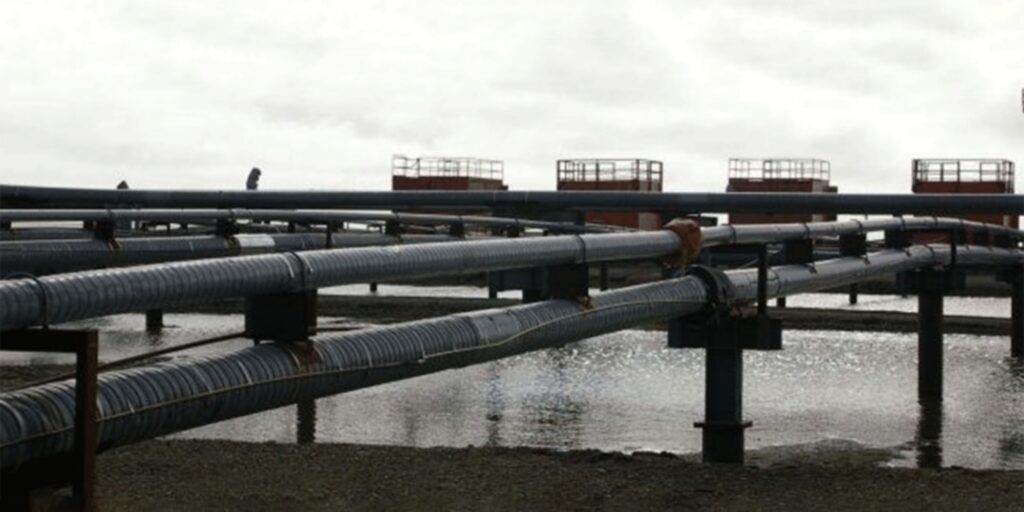
Corrosion under insulation (CUI) is corrosion that forms on the surface of metal equipment beneath insulation.
→ Jump to PEC solutions for CUI screening
Because the damage is hidden, it’s one of the most costly and frustrating corrosion problems to manage
Moisture can work its way under insulation through small breaches in jacketing and seals, then sit against the metal surface for months or years.
The result is corrosion you can’t easily see, and inspection decisions that often feel like guesswork.
This guide is designed to make CUI more predictable.
We’ll cover where it typically shows up, how teams prioritize risk, and how the most common CUI inspection methods compare.
Pulsed Eddy Current Solutions for CUI Screening
Teams most commonly deploy PEC from the ground with a handheld system.
But new drones like the Voliro T can now carry PEC sensors, allowing inspectors to do remote CUI screening for the first time ever.
Here are two PEC solutions MFE offers—one handheld and one drone-based.
MFE PulsePro
Use: Ground-based CUI screening
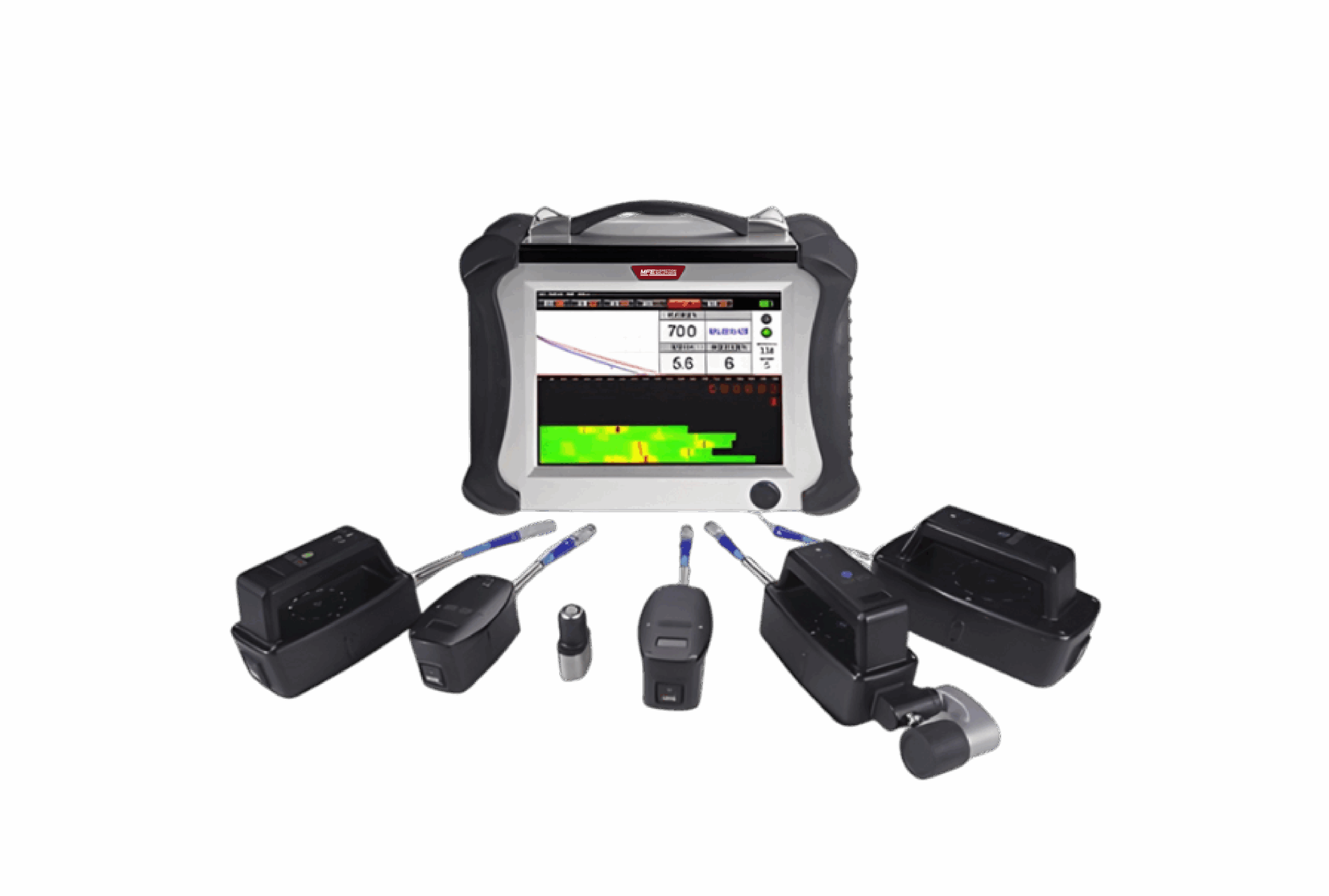
The MFE PulsePro is a field-ready pulsed eddy current system designed for non-intrusive wall-loss screening on insulated or coated steel assets.
It’s a practical fit when you need to screen a lot of locations efficiently, document results cleanly, and build a prioritized confirmation list without turning insulation removal into the main event.
Common fit:
- Pipe runs, vessels, and tank shells where insulation removal would create significant downtime or access costs
- Programs focused on broad screening coverage and repeatable location-based trending
- Teams that want a straightforward, ground-based workflow for triage and maintenance planning
Learn more about the MFE PulsePro.
Voliro T PEC
Use: Remote CUI screening at height
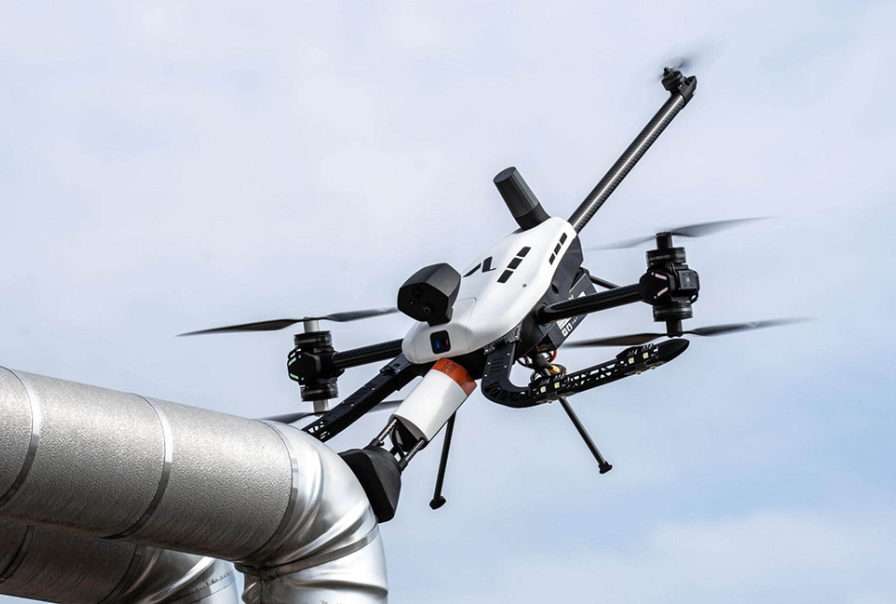
Voliro offers a drone-enabled PEC payload integrated with the Voliro T inspection drone, enabling PEC data collection on assets that are difficult, slow, or risky to access using traditional means.
The core value is access: when the best screening locations are elevated or require temporary infrastructure, an aerial workflow can reduce reliance on scaffolding, rope access, or lifts while still collecting contact-based inspection data.
Common uses:
- Insulated tanks, stacks, and other at-height assets where access drives most of the cost and schedule
- Screening programs where reducing work-at-height exposure is a priority
- Situations where you want to triage large vertical surfaces before committing to insulation removal
Learn more about PEC with the Voliro T.
Which Approach Is The Better Fit?
- Choose a ground-based PEC system when you have reasonable access and need efficient, repeatable screening across many locations.
- Choose drone-enabled PEC when access is the bottleneck—especially at height—so you can screen intelligently before investing in temporary infrastructure or insulation removal.
- Use both when your scope includes a mix of accessible pipework and hard-to-reach elevated assets, and you want one consistent screening-to-confirmation workflow.
What Is Corrosion Under Insulation (CUI)?
Corrosion under insulation (CUI) is corrosion that forms on the outside of a pipe, vessel, or other metal surface beneath insulation and its outer jacketing.
It’s a common problem in industries where insulation is used for temperature control, energy efficiency, and personnel protection—because insulation can also hide small leaks, trapped moisture, and coating damage that would otherwise be visible.
Why CUI Is So Often Missed
CUI is difficult to detect for a simple reason: you can’t see it.
Moisture can enter through seams, penetrations, damaged jacketing, or poorly sealed terminations. Once water gets in, it may stay trapped against the metal surface—creating wet/dry cycles that accelerate corrosion over time.
And because the insulation is doing its job (covering the surface), early-stage corrosion can progress quietly until it shows up as a leak, a thinning wall condition, or unexpected repair work.
How CUI Starts
CUI usually starts with a simple problem: water gets where it shouldn’t.
Insulation systems aren’t naturally “waterproof.” They rely on jacketing, sealants, and proper installation to keep moisture out. Over time, small failures in that system can let water in—and once it’s in, insulation can hold it against the metal surface.
How Moisture Gets Under Insulation
Common entry points include:
- Damaged jacketing (dents, punctures, tears, or degraded seams)
- Failed seals and terminations at ends, joints, and transitions
- Penetrations around supports, clamps, instruments, and brackets
- Maintenance work that opens the system and isn’t fully restored
- Process or utility leaks that repeatedly wet the insulation from above
Why Insulation Can Accelerate Corrosion
Once moisture is present, insulation can create the conditions that let corrosion progress quietly:
- Trapped moisture. Insulation can retain water and keep metal surfaces damp for extended periods.
- Wet/dry cycling. Even if a surface isn’t constantly wet, repeated wetting and drying can be more aggressive than steady-state conditions.
- Hidden coating damage. Small breaks in a coating system may not be visible externally, but they can become corrosion initiation points underneath insulation.
The result is a corrosion mechanism that’s hard to “eyeball” and easy to underestimate—especially when the outside of the insulation jacket still looks intact.
Where CUI Shows Up Most Often
CUI isn’t evenly distributed across an insulated system.
In practice, it tends to cluster around moisture entry points, geometry changes, and places where insulation and jacketing are disturbed. If you’re trying to prioritize inspection coverage, these are usually the best places to start.
Common CUI Hotspots
- Insulation terminations and transitions (ends, flanges, valves, reducers, equipment nozzles). These areas often have more seams and sealing complexity—making them more vulnerable to water ingress.
- Supports, clamps, and attachments. Brackets, pipe shoes, clamps, and other attachments can create gaps in jacketing and insulation, and can also trap moisture against the surface.
- Penetrations (instrument lines, small-bore connections, cable trays, and stand-offs). Any penetration through the jacket is a potential leak path if seals degrade.
- Low points and areas where water can pool. Even small geometry features can create “collection zones” where moisture sits longer.
- Damaged jacketing and seam lines. Dents, punctures, open laps, and degraded sealant are common root causes of moisture intrusion.
- Elbows, tees, and other geometry changes. These locations often have more complicated insulation fit-up and more seams—making long-term sealing harder.
CUI Screening Without Insulation Removal
One reason CUI is so expensive to manage is that the “traditional” approach often involves removing insulation to inspect the metal surface.
That can be effective—but it’s also disruptive, labor-intensive, and difficult to scale across a large plant or offshore facility.
That’s why many teams use a staged approach built around screening and confirmation.
Screening Vs. Confirmation
Screening is a fast way to cover more area and identify suspected locations where CUI may be present.
Confirmation is what you do next: targeted follow-up to verify the finding, quantify wall loss, and understand the extent of damage well enough to make a maintenance decision.
Quick take: How teams use PEC for CUI
If access and downtime are the bottlenecks, PEC is often the fastest way to screen for suspected CUI without removing insulation. The most common workflow is:
Screen broadly (PEC) → confirm (targeted follow-up where needed) → characterize (quantify severity and extent).
And if the “hard part” is simply reaching the inspection locations, drone-enabled PEC can let teams screen more spots more often—then focus hands-on confirmation only where it matters.
What PEC Is Used For In CUI Programs
Pulsed eddy current (PEC) is commonly used as a non-intrusive screening method for CUI. In many scenarios, it allows inspectors to screen for wall loss through insulation and coatings without immediately removing the insulation system.
That makes PEC especially useful when you have a lot of insulated piping or equipment to evaluate and you need to narrow the field to “where to look closer.”
At the same time, PEC is not a magic wand. Screening tools are designed to help you prioritize follow-up inspection—not replace it. When a screening result indicates potential wall loss, teams typically use targeted confirmation methods to verify severity and define repair scope.
Two Common PEC Workflows: Handheld Vs. Drone-Based
Most PEC screening falls into one of two workflows:
- Handheld PEC screening. A field team screens accessible lines and equipment from the ground or from conventional access (scaffolding, rope access, lifts).
- Drone-enabled PEC screening. A drone carries a PEC probe to screen locations that are difficult, slow, or risky to reach—helping teams expand coverage without building as much access.
See the PEC solutions section above for more on the two above approaches.
CUI Risk Factors Teams Use To Prioritize Inspection
Most facilities have more insulated piping and equipment than they can inspect invasively.
That’s why effective CUI programs start with risk-based prioritization: identifying which circuits are most likely to have CUI and most likely to create serious consequences if it’s missed.
While every site has its own history and constraints, these are the risk factors teams most commonly use to decide where to focus screening first.
Operating Temperature (Not Just “Is It Insulated?”)
Operating temperature influences how long moisture stays present and how aggressively corrosion can progress.
Some temperature ranges tend to create repeated wet/dry cycling (rather than “always dry” or “always wet”), which can accelerate CUI. This is why two adjacent insulated lines can behave very differently depending on their normal operating conditions and how often they cycle.
Environment And External Wetting
Even a well-built insulation system can struggle in harsh environments.
Risk tends to increase when insulation is regularly exposed to:
- Weather exposure (especially when jacketing and seams age)
- Coastal or marine environments (salt exposure and persistent humidity)
- Washdowns, steam cleaning, or spray that repeatedly wets the system
- Condensation-prone areas where moisture is common even without rain
Insulation And Jacketing Condition
The condition of the outer system matters as much as the material underneath it.
Circuits are typically higher risk when you see:
- Damaged jacketing (dents, punctures, tears)
- Degraded seams or sealants at laps and joints
- Frequent penetrations and complex fit-up that’s harder to keep sealed over time
- Signs of chronic wetting (staining, corrosion bleed-out, saturated insulation during spot checks)
Coatings, History, And “Known Bad Actors”
In the real world, the best predictor of future CUI is often past behavior.
Many teams will increase priority for circuits that have:
- Prior CUI findings or recurring repair locations
- Leak history (process leaks, steam leaks, or frequent wetting events)
- Coating system issues discovered during previous removals
- Geometry-driven hotspots like reminder points (supports, terminations, penetrations) that repeatedly show problems
Make It Actionable: A Simple Prioritization Mindset
If you need a practical way to rank circuits quickly, ask two questions:
- Likelihood: How likely is this circuit to have trapped moisture and wall loss under insulation?
- Consequence: If it does have CUI, how bad is the outcome (safety, environmental, production, repair scope)?
The 6 CUI Inspection Methods—And How to Choose
There isn’t one “best” CUI inspection method.
In practice, teams combine methods based on what they’re trying to accomplish (screening vs. confirmation), what access they have, and what level of disruption is acceptable.
Below is a practical overview of the most common options—what each is typically used for, and where it can fall short.
1. Visual Inspection With Insulation Removal
Best for: Definitive confirmation of surface condition, coating condition, and localized corrosion once insulation is removed.
Why teams use it: It’s the most direct way to see what’s actually happening on the surface, especially when you need to define repair scope or evaluate coating damage.
Watch-outs: Insulation removal is disruptive and expensive at scale. If you remove insulation “just to look,” you can quickly burn time and budget—especially across large, insulated systems.
2. Ultrasonic Thickness (UT) Through Plugs / Access Points
Best for: Targeted thickness readings at specific locations where you can access the metal surface.
Why teams use it: UT is familiar, widely available, and useful for confirmation once you’ve identified where to measure.
Watch-outs: UT is a spot check. If corrosion is localized or you miss the worst area by a few inches, your readings may look fine even when CUI is present nearby. You also need physical access to the surface (often via plugs or small removals).
3. Radiography (RT) Options
Best for: Non-intrusive evaluation of wall loss in certain geometries, especially when you can set up a safe shot and the technique matches the target.
Why teams use it: Radiography can provide useful information without removing insulation in some scenarios, and it can be valuable for confirmation when UT access is difficult.
Watch-outs: Radiography is highly situation-dependent. Setup, safety controls, access for source/detector placement, and interpretation constraints can limit where it’s practical. It also tends to be less “rapid coverage” than screening methods when you’re trying to evaluate many locations quickly.
4. Pulsed Eddy Current (PEC) Screening
Best for: Rapid screening for suspected wall loss under insulation and coatings—especially when you need coverage without widespread removal.
Why teams use it: PEC is commonly used as a first-pass tool to narrow down where confirmation inspections should focus. It often fits well when the challenge is scale: lots of insulated circuits, limited time, and a need to prioritize follow-up.
Watch-outs: PEC is a screening tool. Results typically inform where to confirm and characterize—not serve as the only basis for repair decisions. Practical limitations can also include access constraints, surface conditions, and scenarios where geometry or configuration makes readings less straightforward.
5. Guided Wave Ultrasonic Testing (GWUT)
Best for: Screening long lengths of piping from a test location, especially when you need to cover distance without touching every spot.
Why teams use it: GWUT can help identify areas of concern that warrant closer inspection, which can reduce the amount of insulation removal needed for broad coverage.
Watch-outs: Guided wave methods typically point you to “areas of interest” rather than fully characterizing localized damage. Follow-up methods are usually required to confirm severity and determine repair scope.
6. Moisture-Indicator Approaches (Finding Wet Insulation)
Best for: Identifying conditions that make CUI more likely (like water ingress and wet insulation) to help prioritize where to screen or open up.
Why teams use it: If you can find where insulation is chronically wet, you often find where CUI risk is elevated. This can be useful as a prioritization input, especially for large assets.
Watch-outs: Wet insulation doesn’t automatically mean wall loss has occurred—and dry insulation doesn’t guarantee the absence of corrosion. Moisture indicators are best used to guide next steps, not as proof of metal condition.
Which Method Should You Use?
The fastest way to get stuck on CUI is to search for a single “best” inspection method.
A better approach is to choose methods based on the decision you’re trying to make:
- Do you need to screen broadly to find suspects?
- Do you need to confirm a screening result?
- Do you need to characterize severity and extent to plan repairs?
Use the table below as a practical starting point.
CUI Method Selection Table
| Method | Best for | Access needs | Common limitations |
|---|---|---|---|
| PEC | Fast screening to narrow down suspects without widespread insulation removal | Probe access to the insulated surface; coverage depends on physical reach | Screening output typically requires targeted confirmation for repair decisions |
| UT thickness (via plugs / access) | Confirmation at specific points; tracking thickness at known locations | Direct access to metal (often via plugs or small removals) | Spot check risk; can miss localized corrosion between readings |
| Radiography (RT) | Non-intrusive evaluation in select geometries where setup is practical | Safe shot setup; positioning constraints for source/detector | Safety controls + setup complexity; not always efficient for broad coverage |
| GWUT | Screening long pipe runs from a test point | Access for collar placement; suitability depends on configuration | Typically identifies areas of interest; follow-up needed to quantify damage |
| Visual + insulation removal | Definitive confirmation, coating evaluation, repair scope definition | Requires removal and restoration of insulation system | Disruptive and expensive at scale; best used selectively |
Common Workflows Used in The Field
Most effective CUI programs use combinations like these:
Workflow 1: Broad screening → targeted confirmation
Use a screening method to cover more locations quickly, then confirm only where results indicate elevated risk. This reduces “open-and-look” work while still driving confident decisions.
Workflow 2: Risk-ranked circuits → screening campaign → repair planning
Start with a prioritized circuit list (temperature, environment, history), run a focused screening campaign, then use confirmation and selective insulation removal to define repair scope and budgeting.
Workflow 3: Hard-to-access locations → remote screening → hands-on follow-up
When access is the limiting factor, screen hard-to-reach areas first so hands-on teams spend time only where screening suggests wall loss or elevated concern.
CUI Monitoring
In day-to-day integrity work, “CUI monitoring” usually doesn’t mean a sensor watching every insulated asset in real time.
More often, it means two practical things:
- Periodic re-screening of prioritized circuits to catch new or progressing wall loss
- Program tracking so you can see where CUI is recurring, where mitigation is working, and where your risk model needs updating
Monitoring Is Often Just Repeatable Screening
Once you’ve screened a circuit and taken action (or decided no action is needed right now), the next value comes from doing it again later—especially on higher-risk circuits.
Over time, repeated screening helps you answer practical questions like:
- Are findings recurring in the same locations?
- Are repairs and insulation restoration reducing repeat issues—or are the same ingress paths still present?
- Are certain units or services consistently generating the majority of CUI work?
What To Track Over Time
If you want monitoring to be more than a spreadsheet exercise, track a few simple categories consistently:
- Circuit list + priority (your risk-ranked “who gets attention first” list)
- Findings by location (what was found, where, and how it was confirmed)
- Repair and mitigation history (what changed, what was restored, what ingress paths were addressed)
- Repeat findings (same circuit, same hotspot types, recurring wet insulation indicators)
- Access notes (what was hard to reach, what drove cost/schedule)
This helps you prioritize smarter next time—because your inspection plan is based on real site behavior, not generic assumptions.
Practical Triggers For Re-Screening
Re-screening isn’t just “every X months.” Teams often adjust based on triggers like:
- After repairs or insulation work (to rebaseline and confirm restoration quality)
- After known wetting events (leaks, repeated washdowns, weather exposure changes)
- When jacketing damage is observed during routine walkdowns
- When operating conditions change (temperature swings, cycling, service changes)
- When similar circuits start showing findings (a pattern worth acting on)
Corrosion Under Insulation FAQ
What Does CUI Stand For?
CUI stands for corrosion under insulation. It describes corrosion that occurs on the outside of metal surfaces beneath insulation and its jacketing, where damage can progress without being visible.
What Causes Corrosion Under Insulation?
CUI typically starts when moisture gets under the insulation system through damaged jacketing, failed seals, penetrations, or disturbed insulation. Once water is present, insulation can retain moisture against the metal surface and create wet/dry cycles that accelerate corrosion over time.
How Do You Detect CUI Without Removing Insulation?
Many teams use non-intrusive methods to screen for suspected wall loss without widespread insulation removal. PEC is a common screening method for this purpose, and other approaches (like radiography or guided wave in certain scenarios) may also be used depending on the asset and access constraints.
What Is The Best Inspection Method For CUI?
There isn’t one best method. The most effective approach is usually a combination: screen broadly to identify suspects, then confirm and characterize selectively to quantify severity and define repair scope. The right mix depends on access, coverage needs, and the type of decision you’re trying to make.
Is PEC Accurate For CUI?
PEC is widely used as a screening tool for suspected wall loss under insulation and coatings. Like other screening methods, it’s best used to prioritize where to follow up with targeted confirmation—especially when results indicate elevated risk or potential wall loss that could drive maintenance decisions.
Can CUI Happen On Stainless Steel?
Yes, corrosion under insulation can affect stainless steels and other alloys, depending on service conditions and the environment under insulation. In practice, material selection, operating conditions, and exposure to contaminants all influence the type of corrosion mechanisms that may occur beneath insulation.
Where Is CUI Most Likely To Occur?
CUI commonly clusters around moisture entry points and areas that retain water—like terminations, penetrations, supports, clamps, seam lines, and geometry changes such as elbows and tees. These locations often have more complex insulation fit-up and more opportunities for seals to degrade.
What’s The Difference Between Screening And Confirmation?
Screening is a fast way to cover more locations and identify suspected problem areas. Confirmation is targeted follow-up inspection to verify the finding, quantify severity, and understand extent well enough to make a maintenance decision.
How Do You Prioritize CUI Inspection Locations?
Most teams prioritize based on likelihood and consequence. Likelihood is influenced by factors like operating temperature behavior, environmental exposure, insulation/jacketing condition, and history. Consequence reflects what happens if the circuit leaks or fails (safety, environmental impact, production, repair scope).
What Is CUI Monitoring?
In most programs, CUI monitoring means periodic re-screening of prioritized circuits plus consistent tracking of findings, repairs, and repeat problem areas. The goal is to make future inspections more targeted and to reduce repeat surprises by learning from site-specific patterns over time.
 English
  English (Canada)
  Français du Canada